Xue Baojian, Yin Haifeng, Guo Fang, Beltz Terry G, Thunhorst Robert L, Johnson Alan Kim
From the Departments of Psychological and Brain Sciences (B.X., F.G., T.G.B., R.L.T., A.K.J.), Pharmacology (A.K.J.), and the Francois M. Abboud Cardiovascular Research Center (B.X., A.K.J.), University of Iowa, Iowa City; and Department of Biology, Hebei North University, China (H.Y.).
Hypertension. 2017 Apr;69(4):669-677. doi: 10.1161/HYPERTENSIONAHA.116.08597. Epub 2017 Feb 21.
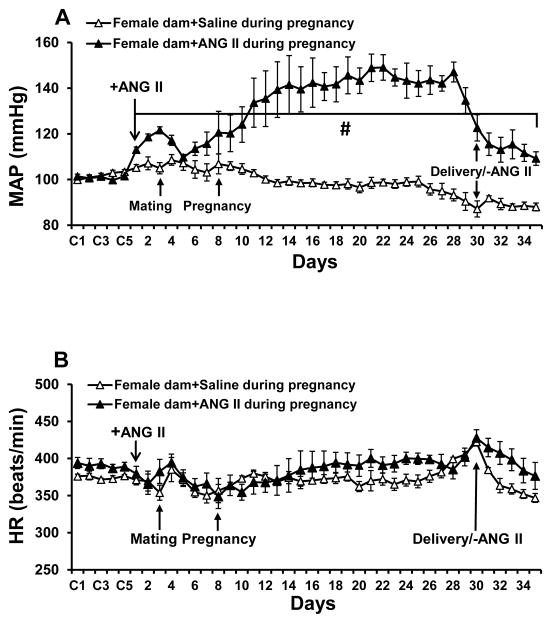
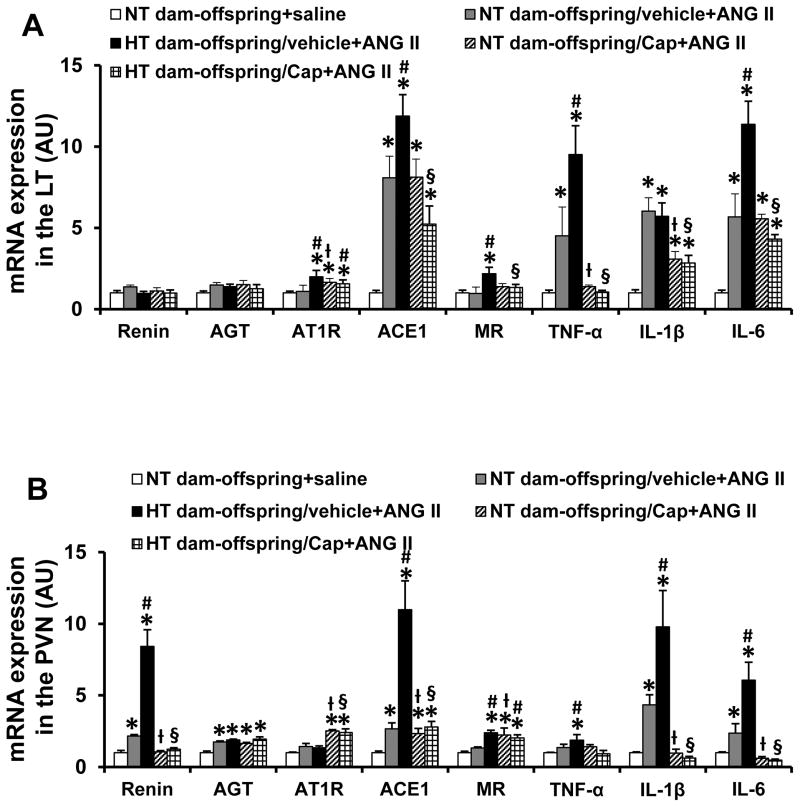
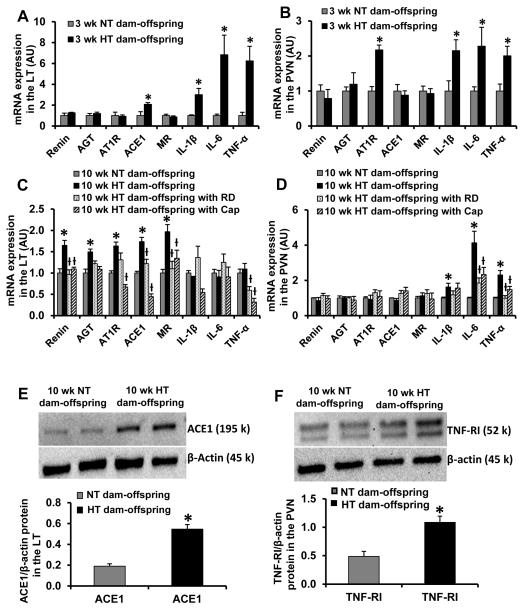
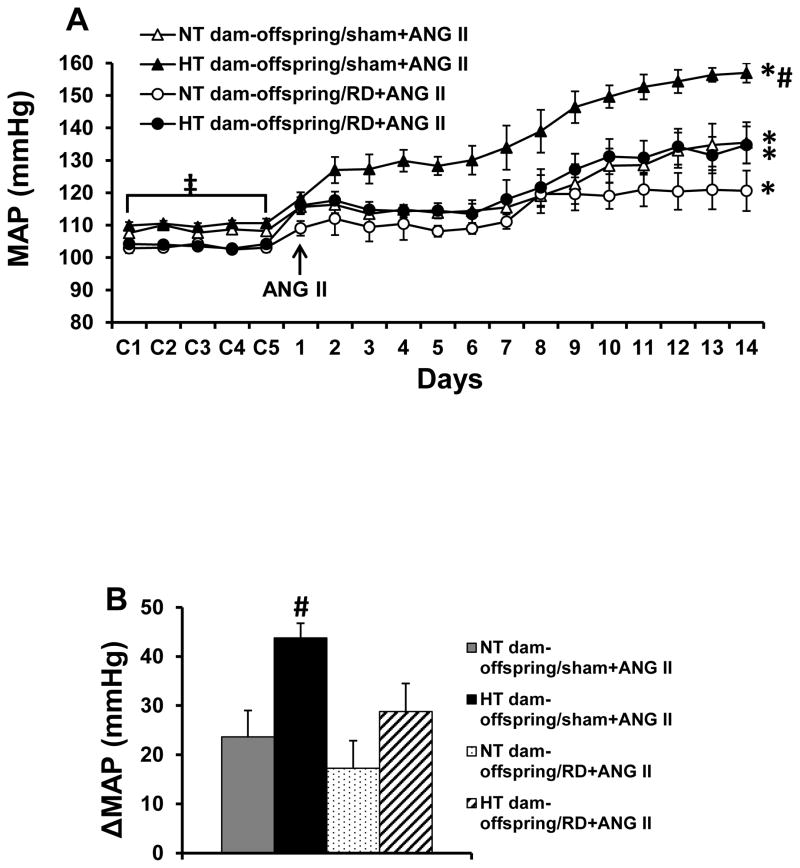
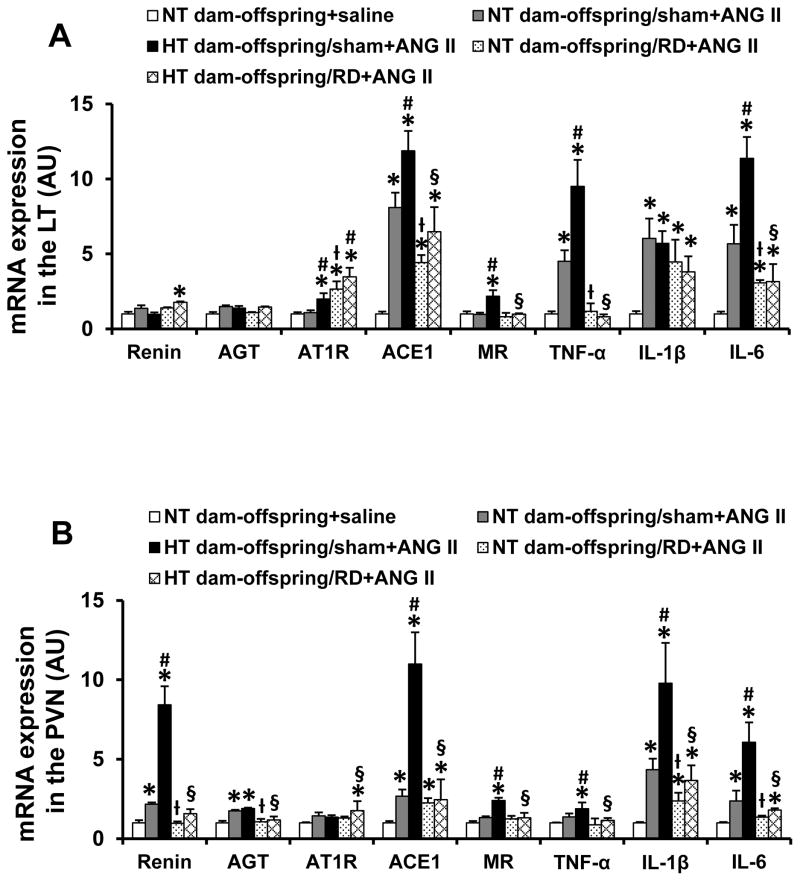
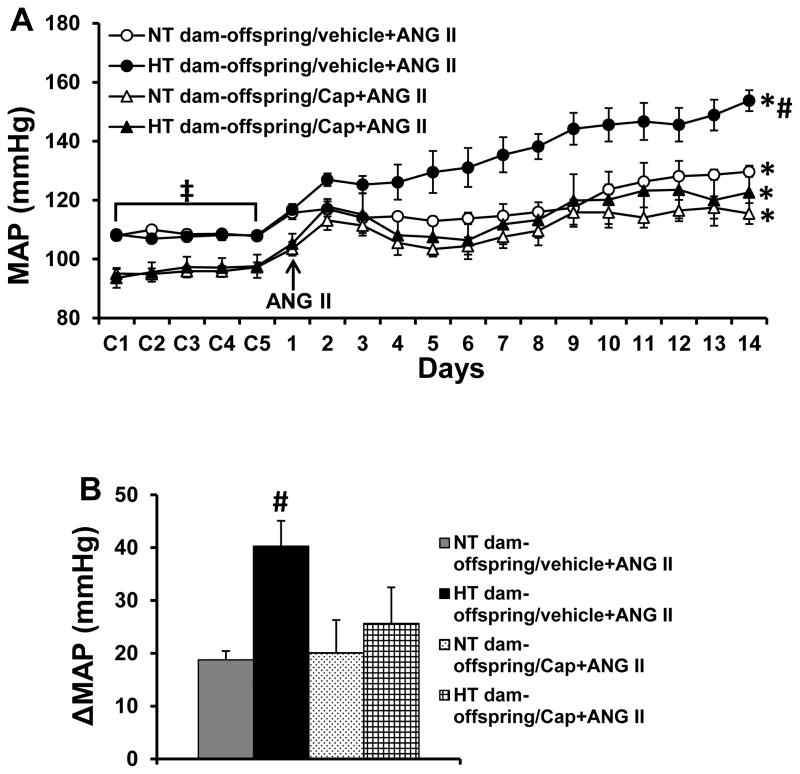
Numerous findings demonstrate that there is a strong association between maternal health during pregnancy and cardiovascular disease in adult offspring. The purpose of the present study was to test whether maternal gestational hypertension modulates brain renin-angiotensin-aldosterone system (RAAS) and proinflammatory cytokines that sensitizes angiotensin II-elicited hypertensive response in adult offspring. In addition, the role of renal nerves and the RAAS in the sensitization process was investigated. Reverse transcription polymerase chain reaction analyses of structures of the lamina terminalis and paraventricular nucleus indicated upregulation of mRNA expression of several RAAS components and proinflammatory cytokines in 10-week-old male offspring of hypertensive dams. Most of these increases were significantly inhibited by either renal denervation performed at 8 weeks of age or treatment with an angiotensin-converting enzyme inhibitor, captopril, in drinking water starting at weaning. When tested beginning at 10 weeks of age, a pressor dose of angiotensin II resulted in enhanced upregulation of mRNA expression of RAAS components and proinflammatory cytokines in the lamina terminalis and paraventricular nucleus and an augmented pressor response in male offspring of hypertensive dams. The augmented blood pressure change and most of the increases in gene expression in the offspring were abolished by either renal denervation or captopril. The results suggest that maternal hypertension during pregnancy enhances pressor responses to angiotensin II through overactivity of renal nerves and the RAAS in male offspring and that upregulation of the brain RAAS and proinflammatory cytokines in these offspring may contribute to maternal gestational hypertension-induced sensitization of the hypertensive response to angiotensin II.
大量研究结果表明,孕期母亲的健康状况与成年子代患心血管疾病之间存在密切关联。本研究的目的是检测母亲妊娠期高血压是否会调节大脑肾素 - 血管紧张素 - 醛固酮系统(RAAS)以及促炎细胞因子,这些因素会使成年子代对血管紧张素 II 引发的高血压反应更加敏感。此外,还研究了肾神经和 RAAS 在这一敏感化过程中的作用。对终板和室旁核结构进行的逆转录聚合酶链反应分析表明,高血压母鼠 10 周龄雄性子代中几种 RAAS 成分和促炎细胞因子的 mRNA 表达上调。这些增加中的大多数在 8 周龄时进行肾去神经支配或从断奶开始在饮水中使用血管紧张素转换酶抑制剂卡托普利进行治疗后受到显著抑制。从 10 周龄开始测试时,血管紧张素 II 的升压剂量导致终板和室旁核中 RAAS 成分和促炎细胞因子的 mRNA 表达上调增强,并且高血压母鼠雄性子代的升压反应增强。肾去神经支配或卡托普利消除了子代血压变化的增强以及基因表达的大多数增加。结果表明,孕期母亲高血压通过肾神经和 RAAS 的过度活动增强了雄性子代对血管紧张素 II 的升压反应,并且这些子代中大脑 RAAS 和促炎细胞因子的上调可能导致母亲妊娠期高血压诱导的对血管紧张素 II 高血压反应的敏感化。