Alzuman Sitah N, Al-Humaidan Abdullah S
Pharmacy Department, King Khaled Eye Specialist Hospital, Riyadh, Saudi Arabia.
Saudi Pharm J. 2017 Jan;25(1):70-75. doi: 10.1016/j.jsps.2015.07.002. Epub 2015 Aug 4.
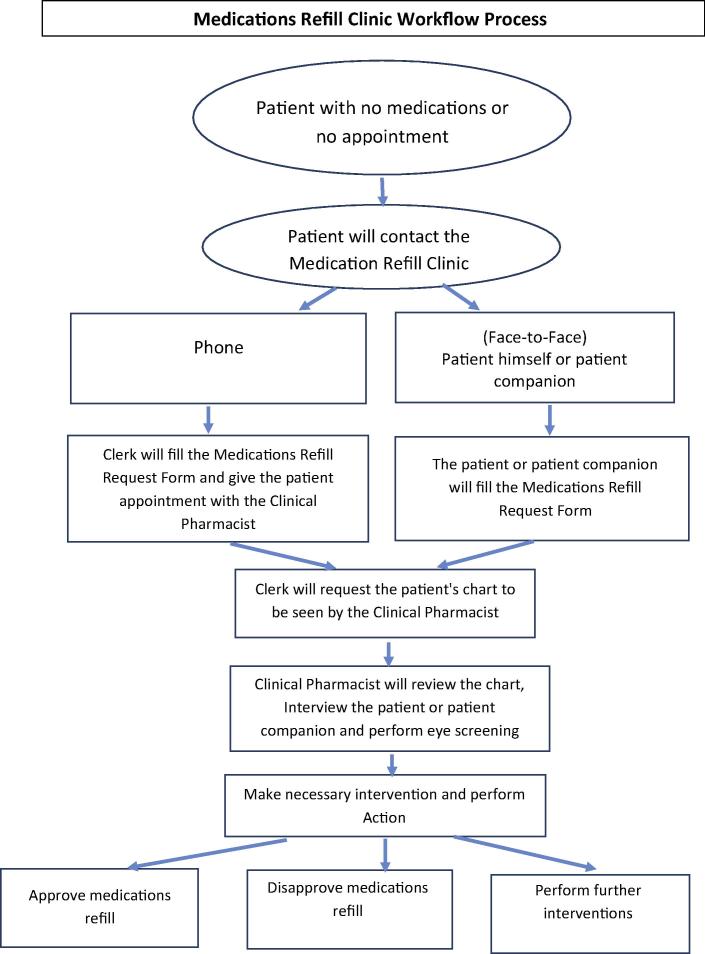
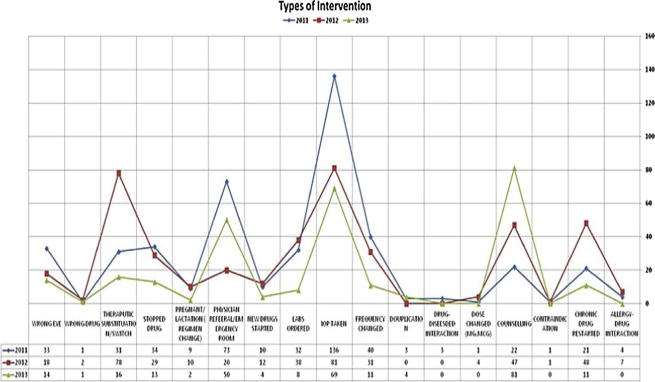
To describe the role of Clinical Pharmacists in the Medication Refill Clinic area as a part of a multidisciplinary team in which he/she can provide education to patients and caregivers on the safe and appropriate use of medications, counsel on medication compliance, monitor and manage medication side effects, as well as screen for dangerous drug interactions. The data of this prospective, single-centered, chart review based study have been collected since the clinic launched in June 2011 till December 2013 in King Khalid Eye Specialist Hospital which is a Tertiary Hospital in KSA. Types of interventions documented during the patient-pharmacist visit are categorized as medication review and patient compliance. Out of the total 16,417 patients, 3641 (22.2%) are noncompliant. The Clinical Pharmacist identified 18 intervention types. The most frequent interventions are as follows: Eye screening (24.8%), Counseling (13%), Physician/ER referral (12.4%), Therapeutic substitution/switch (10.8%), and Frequency changed (7%). This prospective analysis is a document evidence showing Clinical Pharmacist positive outcomes in the management of ophthalmic patients. Dissemination of this information would be valuable because it could raise the awareness of other Healthcare Professionals regarding Pharmacist as effective clinicians in care of ophthalmic patients.
描述临床药师在药物续方门诊区域作为多学科团队一员的作用,在此团队中,他/她能够就药物的安全合理使用向患者及护理人员提供教育,就药物依从性提供咨询,监测和管理药物副作用,以及筛查危险的药物相互作用。这项前瞻性、单中心、基于病历回顾的研究数据自2011年6月门诊开设至2013年12月在沙特阿拉伯王国一家三级医院——哈立德国王眼科专科医院收集。在患者与药师问诊期间记录的干预类型分为药物审查和患者依从性。在总共16417名患者中,3641名(22.2%)不依从。临床药师确定了18种干预类型。最常见的干预措施如下:眼部筛查(24.8%)、咨询(13%)、转诊至医生/急诊室(12.4%)、治疗性替代/更换(10.8%)以及更改用药频率(7%)。这项前瞻性分析是一份文件证据,表明临床药师在眼科患者管理中取得了积极成果。传播此信息将很有价值,因为它可以提高其他医疗保健专业人员对药师作为眼科患者护理中有效临床医生的认识。