Agume Aurelie Solange Ntso, Njintang Nicolas Yanou, Mbofung Carl Moses F
Department of Food Sciences and Quality Control, Institut Universitaire de Technologie (IUT), University of Ngaoundere, P.O. Box 455, Ngaoundere, Cameroon.
Department of Biological Sciences, Faculty of Science, University of Ngaoundere, P.O. Box 454, Ngaoundere, Cameroon.
Foods. 2017 Feb 10;6(2):12. doi: 10.3390/foods6020012.
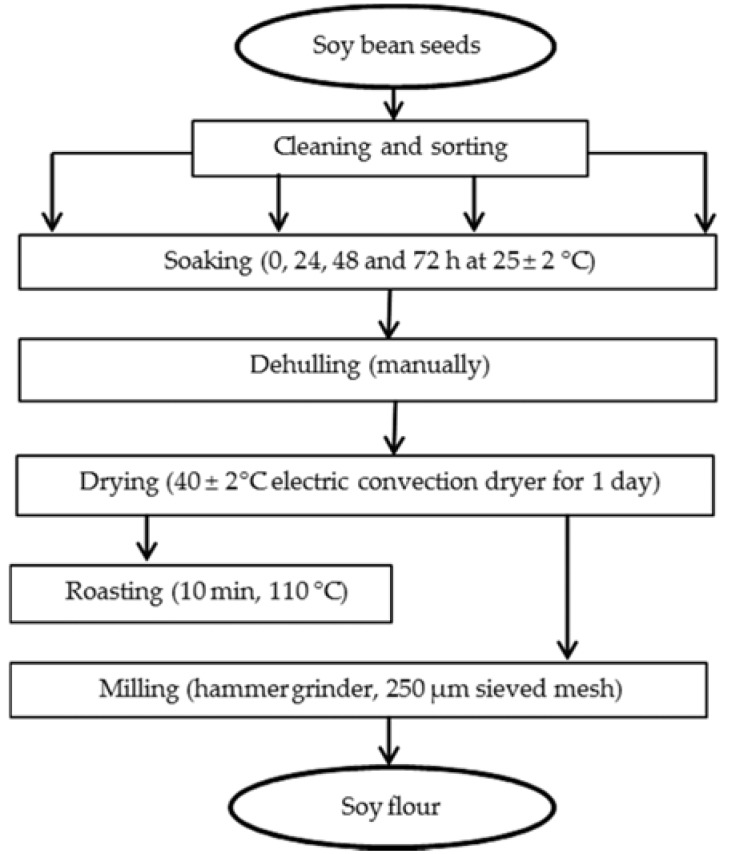
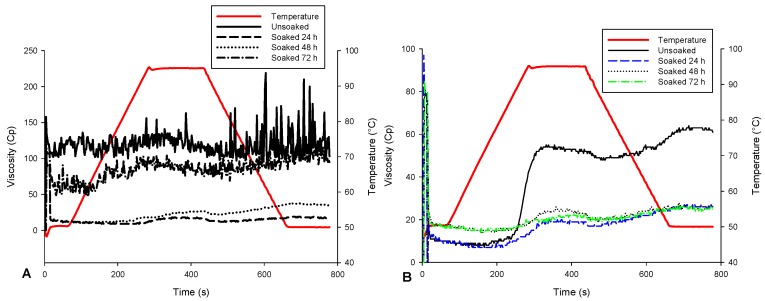
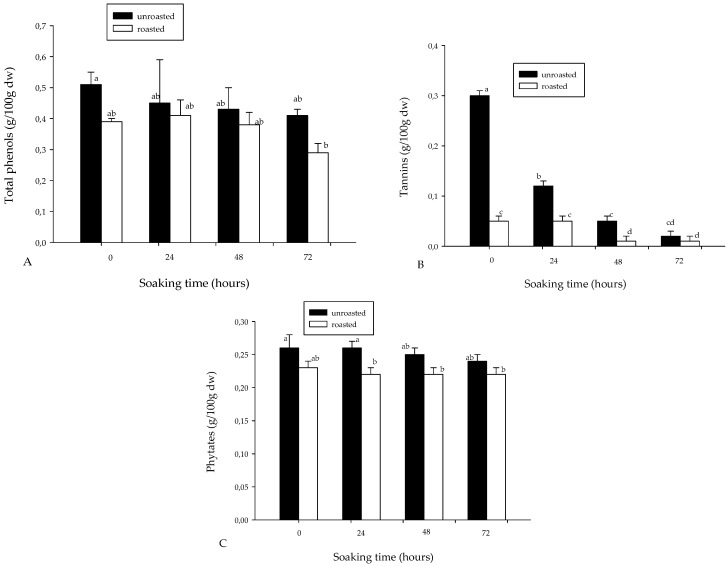
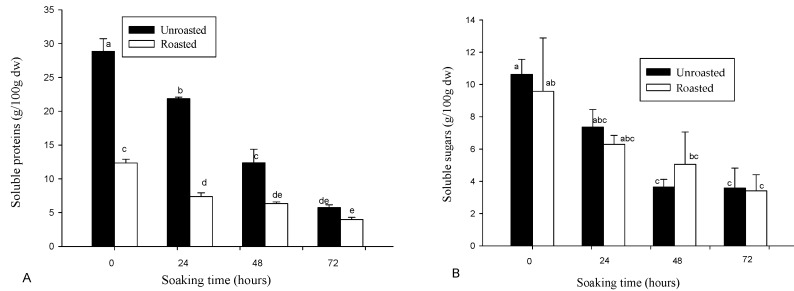
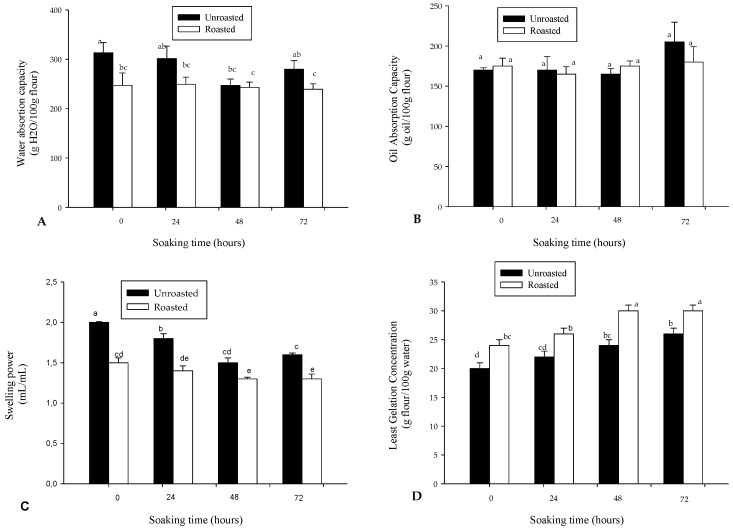
The effects of soaking and roasting on the physicochemical and pasting properties of soybean flour were evaluated. Soybean seeds were soaked overnight in tap water for 0-72 h, hand dehulled, dried, and part of the sample was roasted. Roasted and unroasted soy beans were milled into flour and analyzed. The results showed that the total carbohydrates (22.8-27.9 g/100 g), the ash content (3.5-3.6 g/100 g), and the total polyphenols (0.29-0.51 g/100g) did not significantly change during both the soaking and roasting processes. However, the total proteins (35.8-46.0 g/100 g) and lipid contents (21.4-29.5 g/100 g) were significantly (p < 0.05) affected only by soaking, with a decrease in total protein and an increase in lipid contents. Phytate content (0.22-0.26 g/100 g) decreased significantly (p < 0.05) only with roasting. The tannins (0.01-0.30 g/100 g) and soluble proteins (4.0-29.0 g/100 g) significantly (p < 0.05) diminished with both treatments. There was a significant increase in the least gelation concentration (20-30 g/100 mL), a decrease in the swelling power (1.3-2.0 mL/mL), and consequently, reduction in the viscosity (range peak viscosity 18-210 cP) of the flour slurry after soaking and roasting. All these qualities-needed for producing nutritious flour for infants-highlighted the efficiency of these endogenous technologies.
评估了浸泡和烘焙对大豆粉理化性质及糊化特性的影响。大豆种子在自来水中浸泡过夜0至72小时,手工去皮、干燥,部分样品进行烘焙。将烘焙和未烘焙的大豆磨成粉并进行分析。结果表明,在浸泡和烘焙过程中,总碳水化合物(22.8 - 27.9克/100克)、灰分含量(3.5 - 3.6克/100克)和总多酚(0.29 - 0.51克/100克)均无显著变化。然而,总蛋白质(35.8 - 至46.0克/100克)和脂质含量(21.4 - 29.5克/100克)仅受浸泡显著(p < 0.05)影响,总蛋白质减少,脂质含量增加。植酸含量(0.22 - 0.26克/100克)仅在烘焙时显著(p < 0.05)降低。单宁(0.01 - 0.30克/100克)和可溶性蛋白质(4.0 - 29.0克/100克)在两种处理下均显著(p < 0.05)减少。浸泡和烘焙后,面粉糊的最小凝胶浓度显著增加(20 - 30克/100毫升),膨胀力降低(1.3 - 2.0毫升/毫升),因此粘度降低(峰值粘度范围为18 - 210厘泊)。所有这些为婴儿生产营养面粉所需的品质凸显了这些内源技术的有效性。