Wu Han, Zhao Xiang, Wang Fei, Jiang Qian, Shi Lili, Gong Maolei, Liu Weihua, Gao Bo, Song Chengyi, Li Qihan, Chen Yongmei, Han Daishu
School of Basic Medicine, Peking Union Medical College, Institute of Basic Medical Sciences, Chinese Academy of Medical Sciences, Beijing, China; Joint International Research Laboratory of Agriculture and Agri-Product Safety, College of Animal Science and Technology, Institute of Epigenetics and Epigenomics, Yangzhou University, Yangzhou, China.
School of Basic Medicine, Peking Union Medical College, Institute of Basic Medical Sciences, Chinese Academy of Medical Sciences , Beijing , China.
Front Immunol. 2017 Feb 10;8:117. doi: 10.3389/fimmu.2017.00117. eCollection 2017.
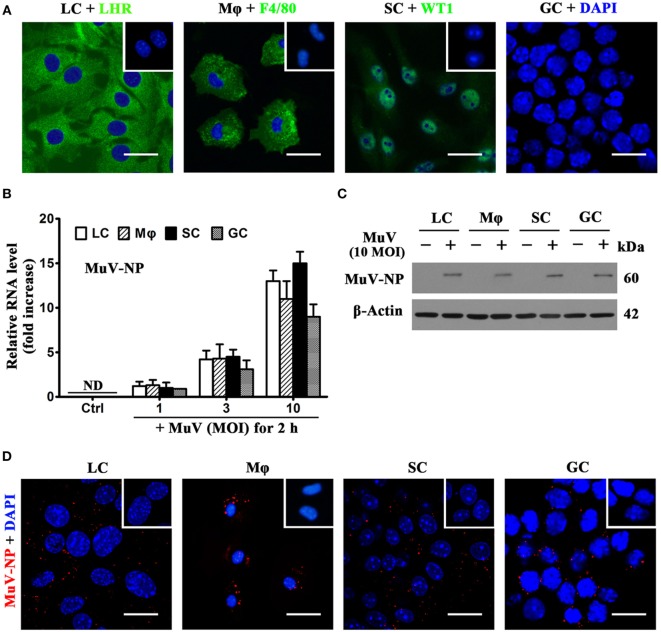
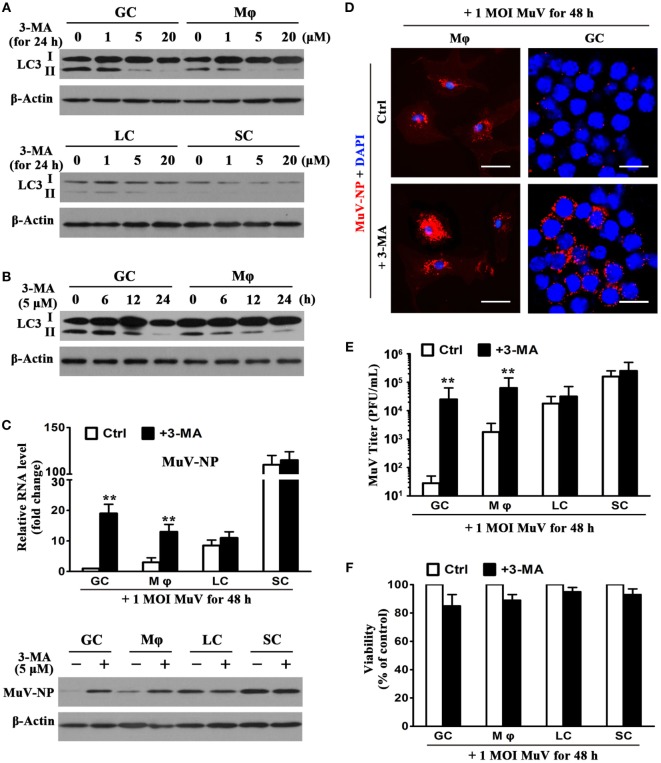
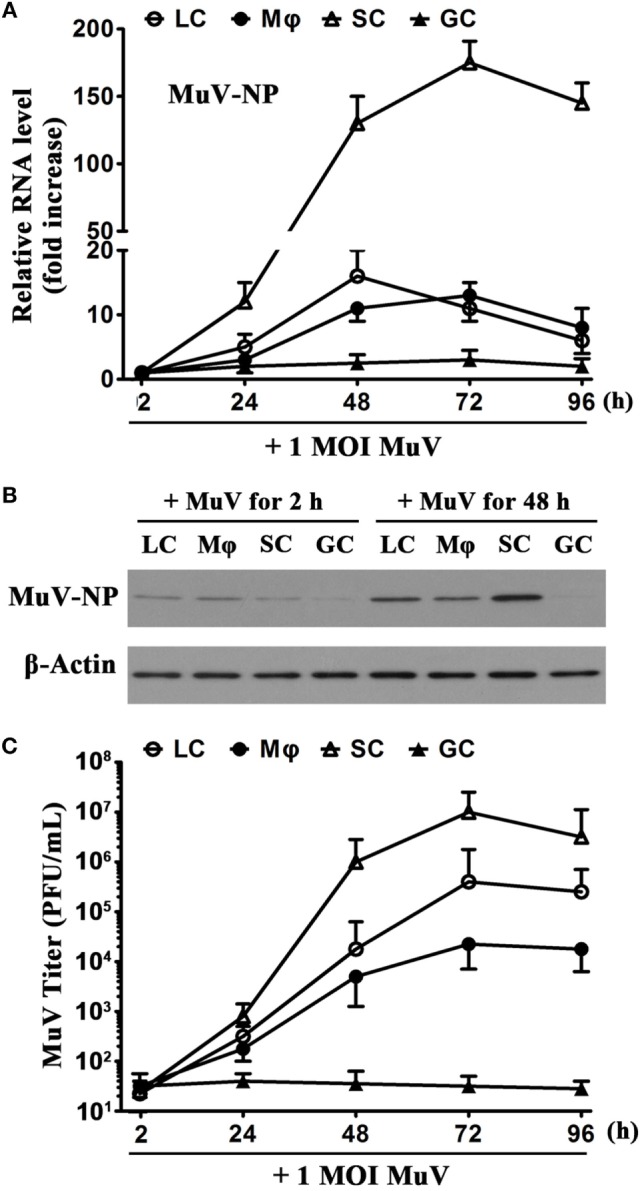
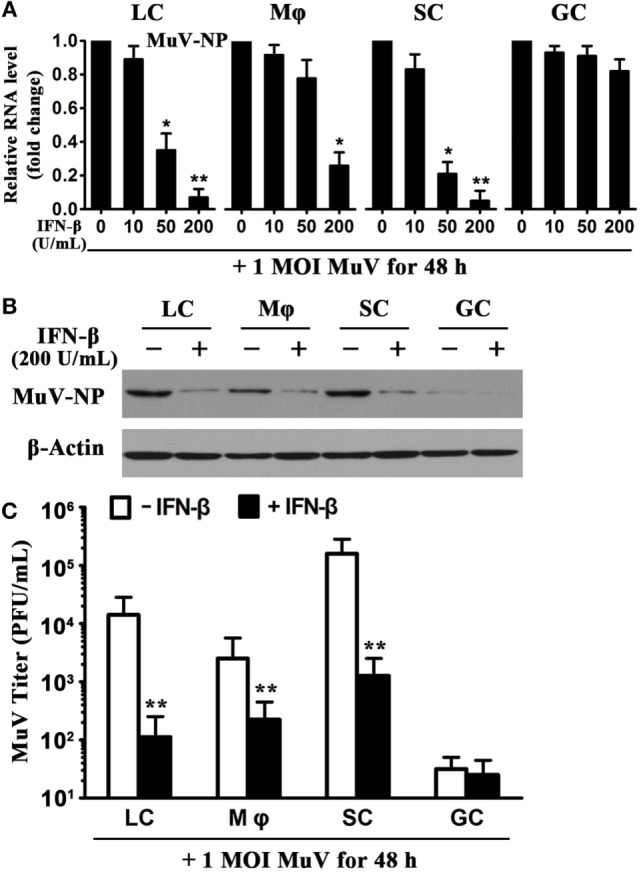
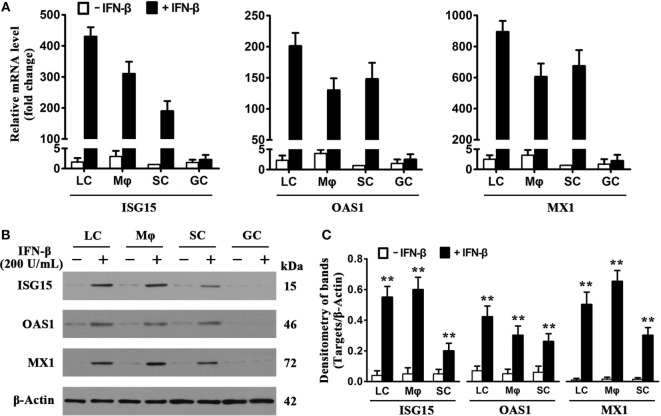
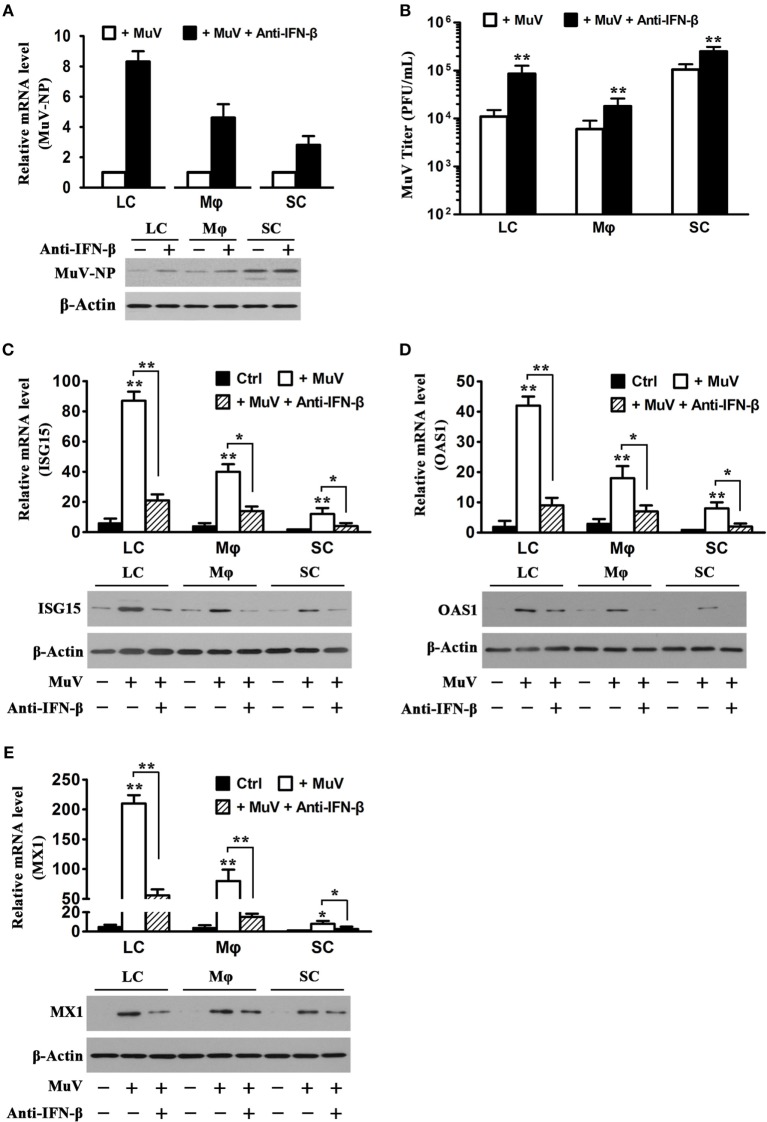
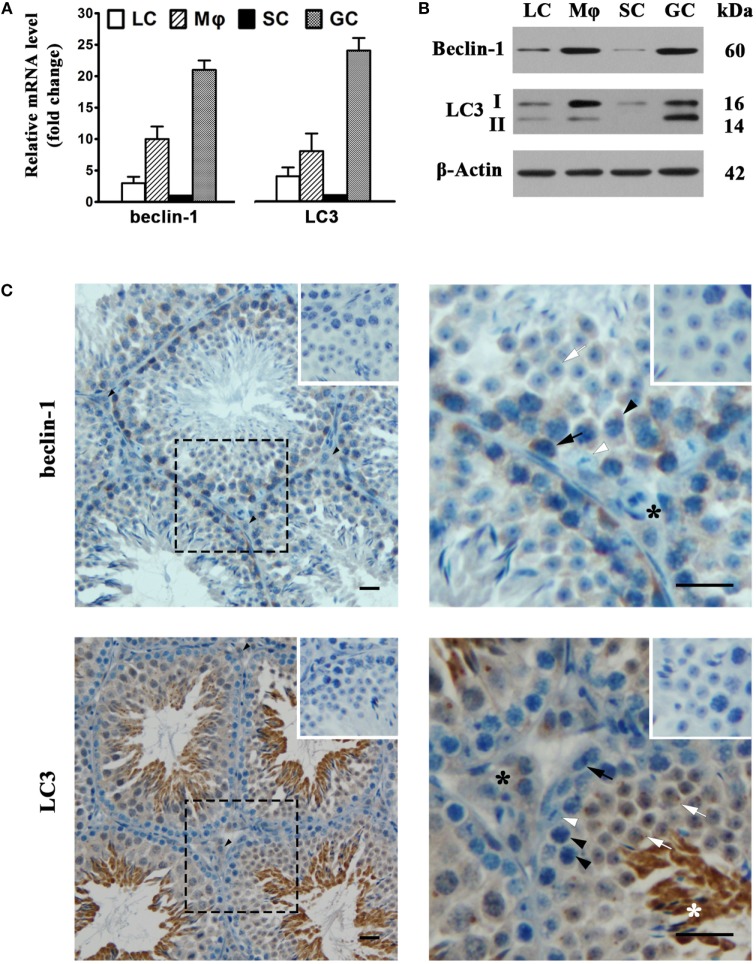
Mumps virus (MuV) infection has high tropism to the testis and usually leads to orchitis, an etiological factor in male infertility. However, MuV replication in testicular cells and the cellular antiviral responses against MuV are not fully understood. The present study showed that MuV infected the majority of testicular cells, including Leydig cells (LC), testicular macrophages, Sertoli cells (SC), and male germ cells (GC). MuV was replicated at relatively high efficiencies in SC compared with LC and testicular macrophages. In contrast, MuV did not replicate in male GC. Notably, testicular cells exhibited different innate antiviral responses against MuV replication. We showed that interferon β (IFN-β) inhibited MuV replication in LC, macrophages, and SC, which were associated with the upregulation of major antiviral proteins. We provided primary evidence that autophagy plays a role in blocking MuV replication in male GC. Autophagy was also involved in limiting MuV replication in testicular macrophages but not in Leydig and SC. These findings indicate the involvement of the innate defense against MuV replication in testicular cells.
腮腺炎病毒(MuV)感染对睾丸具有高度嗜性,通常会导致睾丸炎,这是男性不育的一个病因。然而,MuV在睾丸细胞中的复制以及细胞对MuV的抗病毒反应尚未完全明确。本研究表明,MuV感染了大多数睾丸细胞,包括睾丸间质细胞(LC)、睾丸巨噬细胞、支持细胞(SC)和雄性生殖细胞(GC)。与LC和睾丸巨噬细胞相比,MuV在SC中以相对较高的效率进行复制。相反,MuV在雄性GC中不复制。值得注意的是,睾丸细胞对MuV复制表现出不同的先天性抗病毒反应。我们发现,干扰素β(IFN-β)抑制MuV在LC、巨噬细胞和SC中的复制,这与主要抗病毒蛋白的上调有关。我们提供了初步证据表明自噬在阻断MuV在雄性GC中的复制中起作用。自噬也参与限制MuV在睾丸巨噬细胞中的复制,但不参与在睾丸间质细胞和SC中的复制。这些发现表明先天性防御参与了睾丸细胞中MuV复制的过程。