Färber Jacqueline, Illiger Sebastian, Berger Fabian, Gärtner Barbara, von Müller Lutz, Lohmann Christoph H, Bauer Katja, Grabau Christina, Zibolka Stefanie, Schlüter Dirk, Geginat Gernot
Institute of Medical Microbiology, Infection Control and Prevention, Otto-von-Guericke University of Magdeburg, Leipziger Straße 44, 39120 Magdeburg, Germany.
Department of Orthopedic Surgery, Otto-von-Guericke University of Magdeburg, Magdeburg, Germany.
Antimicrob Resist Infect Control. 2017 Feb 15;6:22. doi: 10.1186/s13756-017-0181-4. eCollection 2017.
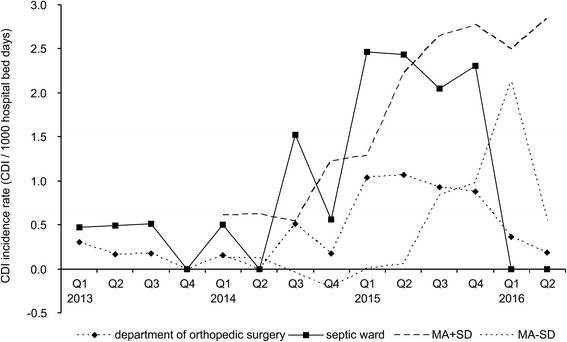
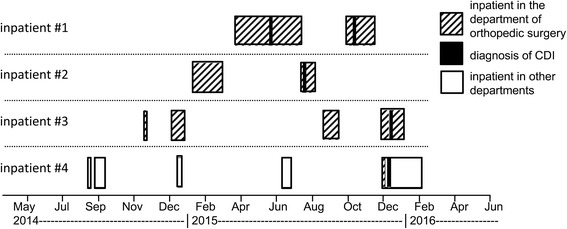
Here we describe a cluster of hospital-acquired infections (CDI) among 26 patients with osteoarticular infections. The aim of the study was to define the source of and to evaluate the impact of general infection control measures and antibiotic stewardship on the incidence of CDI.
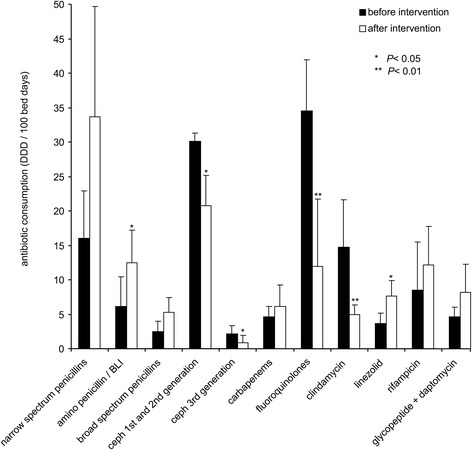
Epidemiological analysis included typing of strains and analysis of possible patient to patient transmission. Infection control measures comprised strict isolation of CDI patients, additional hand washings, and intensified environmental cleaning with sporicidal disinfection. In addition an antibiotic stewardship program was implemented in order to prevent the use of CDI high risk antimicrobials such as fluoroquinolones, clindamycin, and cephalosporins.
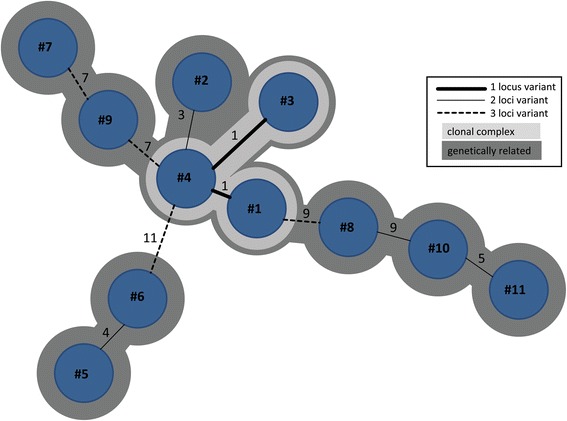
The majority of CDI ( = 15) were caused by ribotype 027 (RT027). Most RT027 isolates ( = 9) showed high minimal inhibitory concentrations (MIC) for levofloxacin, clindamycin, and remarkably to rifampicin, which were all used for the treatment of osteoarticular infections. Epidemiological analysis, however, revealed no closer genetic relationship among the majority of RT027 isolates. The incidence of CDI was reduced only when a significant reduction in the use of fluoroquinolones ( = 0.006), third generation cephalosporins ( = 0.015), and clindamycin ( = 0.001) was achieved after implementation of an intensified antibiotic stewardship program which included a systematic review of all antibiotic prescriptions.
The successful reduction of the CDI incidence demonstrates the importance of antibiotic stewardship programs focused on patients treated for osteoarticular infections.
在此,我们描述了26例骨关节炎感染患者中发生的一组医院获得性感染(艰难梭菌感染,CDI)。本研究的目的是确定感染源,并评估一般感染控制措施和抗生素管理对CDI发病率的影响。
流行病学分析包括菌株分型以及对可能的患者间传播进行分析。感染控制措施包括对CDI患者进行严格隔离、增加洗手次数以及加强环境清洁并使用杀孢子消毒剂。此外,实施了抗生素管理计划,以防止使用CDI高风险抗菌药物,如氟喹诺酮类、克林霉素和头孢菌素类。
大多数CDI(n = 15)由核糖体分型027(RT027)引起。大多数RT027分离株(n = 9)对左氧氟沙星、克林霉素以及对利福平显示出高最低抑菌浓度(MIC),这些药物均用于治疗骨关节炎感染。然而,流行病学分析显示,大多数RT027分离株之间没有更密切的遗传关系。只有在实施强化抗生素管理计划(包括对所有抗生素处方进行系统审查)后,氟喹诺酮类(P = 0.006)、第三代头孢菌素类(P = 0.015)和克林霉素(P = 0.001)的使用量显著减少时,CDI的发病率才会降低。
CDI发病率的成功降低证明了针对骨关节炎感染患者的抗生素管理计划的重要性。