Experimental and Clinical Research Center, Charité - Universitätsmedizin Berlin, Max Delbrück Center for Molecular Medicine in the Helmholtz Association, Berlin, Germany.
Experimental and Clinical Research Center, Charité - Universitätsmedizin Berlin, Max Delbrück Center for Molecular Medicine in the Helmholtz Association, MDC, Berlin, Germany.
Sci Rep. 2017 Feb 27;7:43328. doi: 10.1038/srep43328.
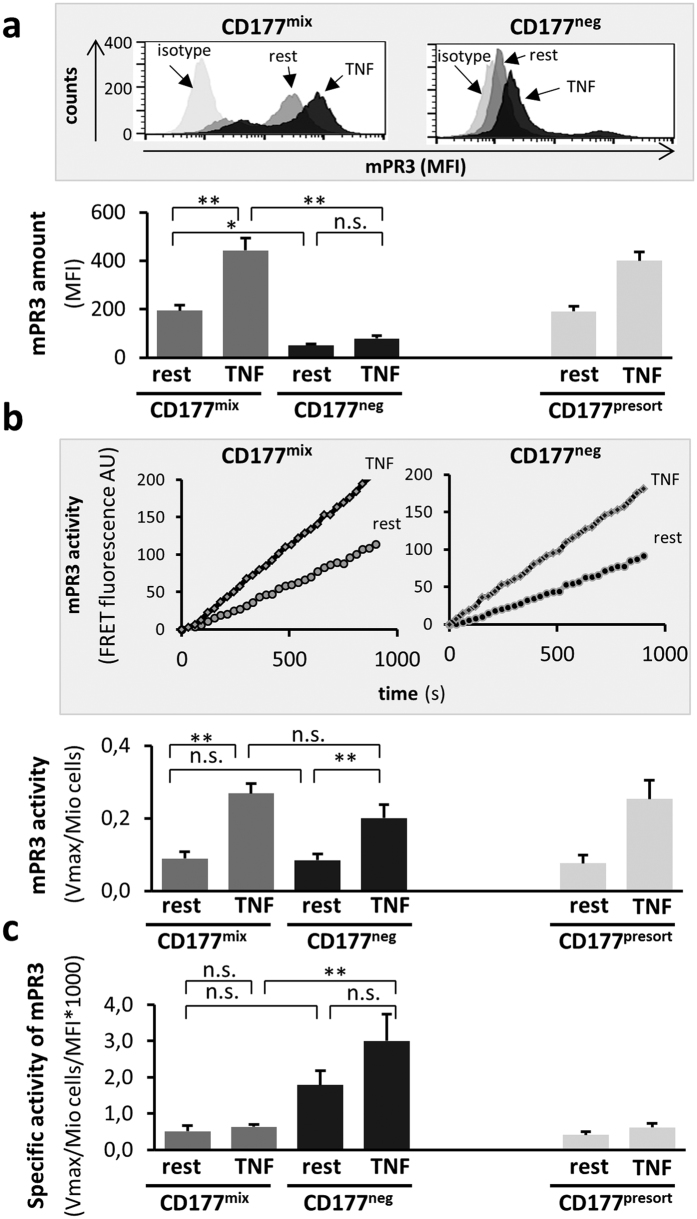
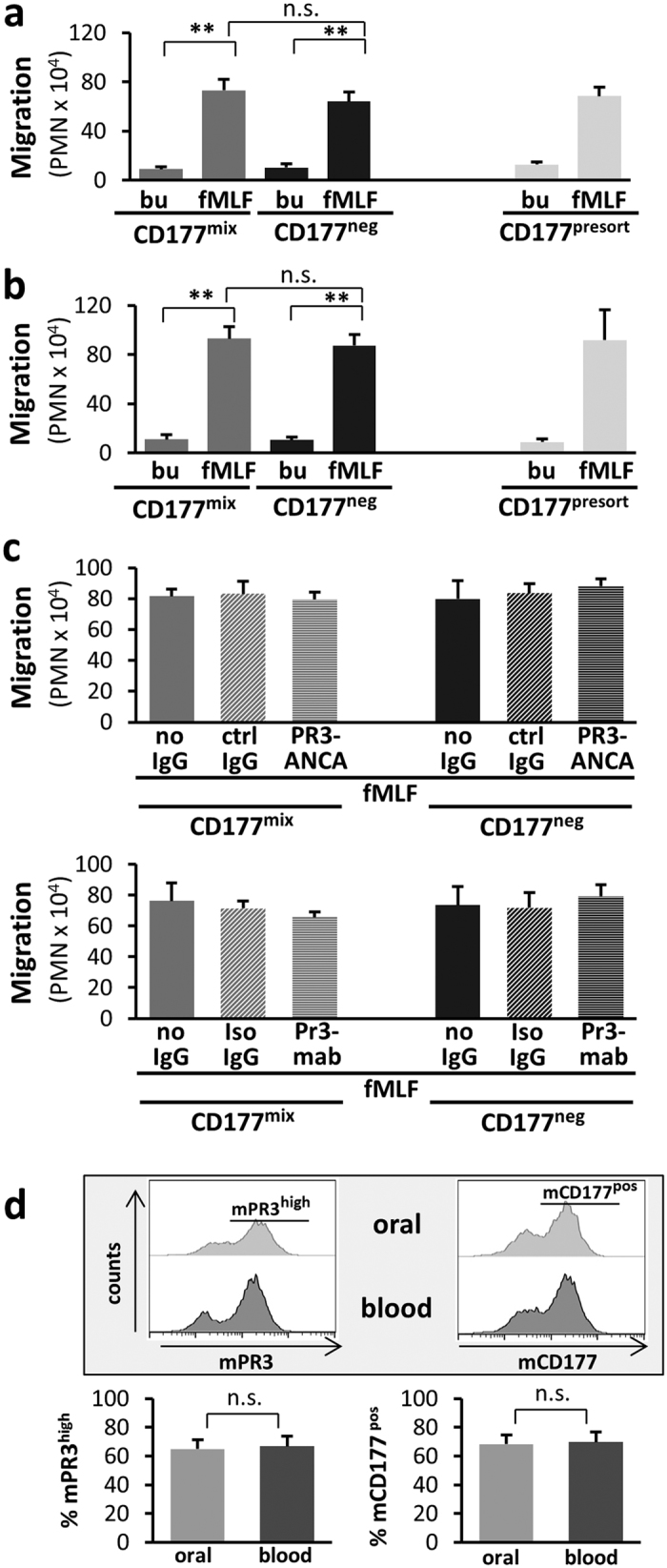
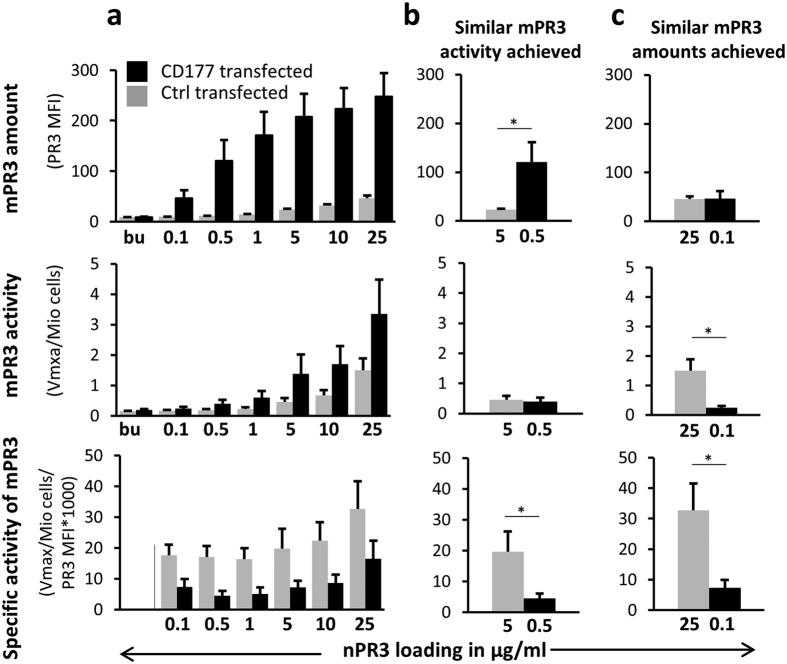
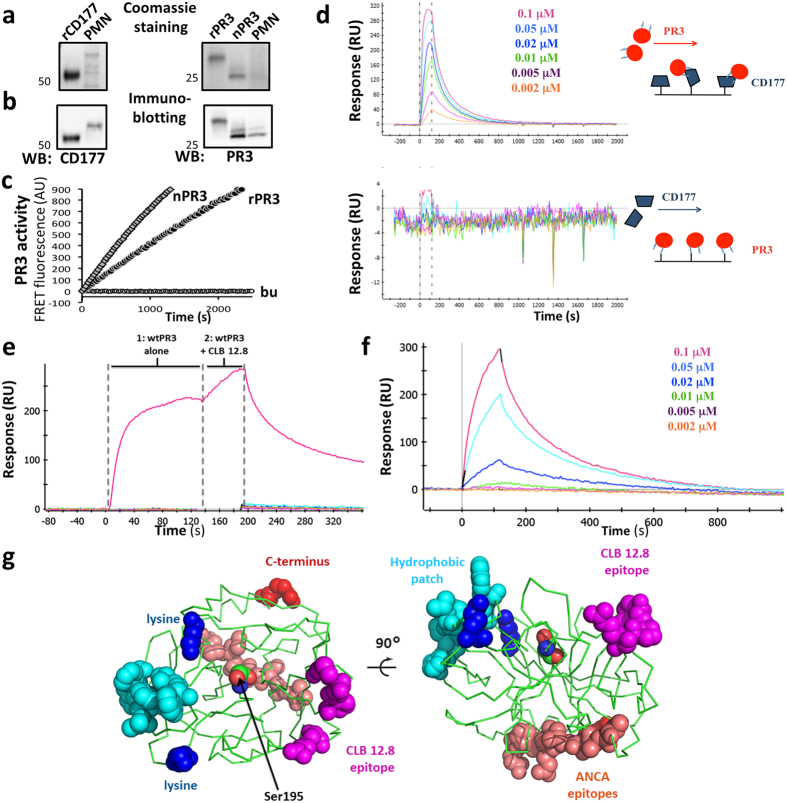
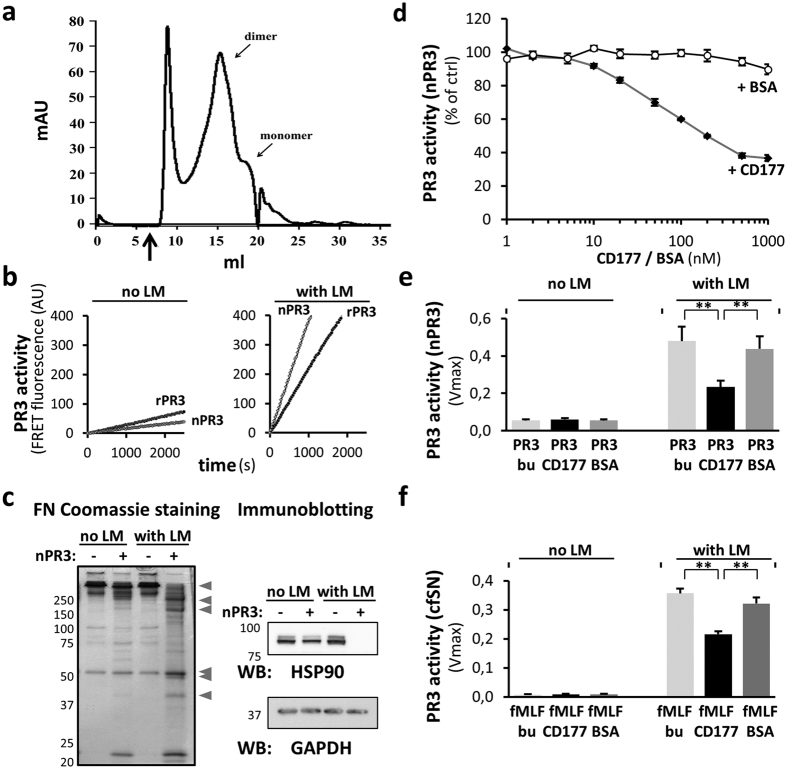
Proteinase 3 is a serine protease found in neutrophil granules and on the extracellular neutrophil membrane (mPR3). mPR3 is a major antigen for anti-neutrophil cytoplasmic antibodies (PR3-ANCAs), autoantibodies causing fatal autoimmune diseases. In most individuals, a subpopulation of neutrophils also produce CD177, proposed to present additional PR3 on the surface, resulting in CD177/mPR3 and CD177/mPR3 neutrophil subsets. A positive correlation has been shown between mPR3 abundance, disease incidence, and clinical outcome. We present here a detailed investigation of the PR3:CD177 complex, verifying the interaction, demonstrating the effect of binding on PR3 proteolytic activity and explaining the accessibility of major PR3-ANCA epitopes. We observed high affinity PR3:CD177 complex formation by surface plasmon resonance. Using flow cytometry and a PR3-specific FRET assay, we found that CD177 binding reduced the proteolytic activity of PR3 in vitro using purified proteins, in neutrophil degranulation supernatants containing wtPR3 and directly on mPR3 neutrophils and PR3-loaded HEK cells. Finally, CD177/mPR3 neutrophils showed no migration advantage in vitro or in vivo when migrating from the blood into the oral cavity. We illuminate details of the PR3:CD177 interaction explaining mPR3 membrane orientation and proteolytic activity with relevance to ANCA activation of the distinct mPR3 neutrophil populations.
蛋白酶 3 是一种丝氨酸蛋白酶,存在于中性粒细胞颗粒和细胞外中性粒细胞膜上(mPR3)。mPR3 是抗中性粒细胞胞质抗体(PR3-ANCAs)的主要抗原,这种自身抗体导致致命的自身免疫性疾病。在大多数个体中,一部分中性粒细胞也会产生 CD177,据推测 CD177 会在表面呈现额外的 PR3,从而形成 CD177/mPR3 和 CD177/mPR3 中性粒细胞亚群。已经表明 mPR3 丰度、疾病发生率和临床结果之间存在正相关。我们在这里详细研究了 PR3:CD177 复合物,验证了相互作用,证明了结合对 PR3 蛋白水解活性的影响,并解释了主要 PR3-ANCAs 表位的可及性。我们通过表面等离子体共振观察到 PR3:CD177 复合物的高亲和力形成。使用流式细胞术和 PR3 特异性 FRET 测定法,我们发现 CD177 结合使用纯化蛋白、含有 wtPR3 的中性粒细胞脱颗粒上清液以及直接在 mPR3 中性粒细胞和负载 PR3 的 HEK 细胞上,降低了 PR3 的体外蛋白水解活性。最后,当从血液迁移到口腔时,CD177/mPR3 中性粒细胞在体外或体内均未显示出迁移优势。我们详细阐明了 PR3:CD177 相互作用的细节,解释了 mPR3 膜取向和蛋白水解活性与 ANCAs 激活不同 mPR3 中性粒细胞群体的相关性。