Liu Mingjuan, Yao Ming, Wang Hanqi, Xu Longsheng, Zheng Ying, Huang Bing, Ni Huadong, Xu Shijie, Zhou Xuyan, Lian Qingquan
Department of Anesthesiology and Pain Medicine, The First Hospital of Jiaxing, The First Affiliated Hospital of Jiaxing University, Jiaxing.
Department of Anesthesiology and Pain Medicine, The First Hospital of Jiaxing, The First Affiliated Hospital of Jiaxing University, Jiaxing; Department of Anesthesiology, The Second Affiliated Hospital of Wenzhou Medical University, Wenzhou, People's Republic of China.
J Pain Res. 2017 Feb 16;10:417-426. doi: 10.2147/JPR.S124326. eCollection 2017.
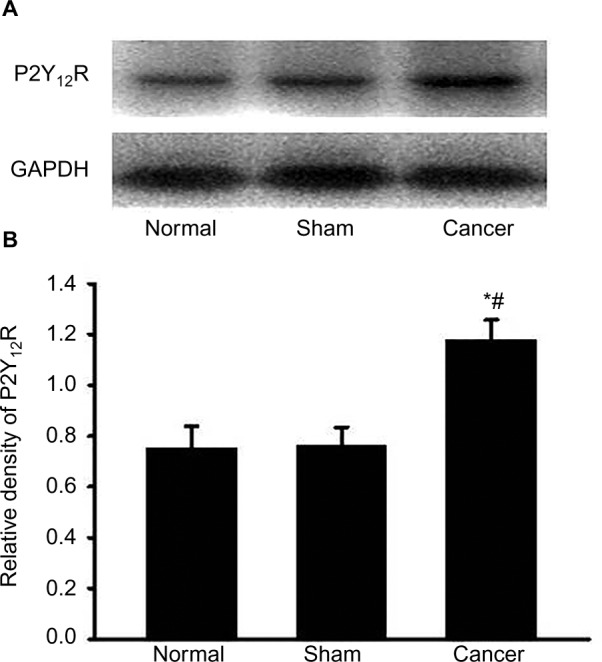
Cancer-induced bone pain (CIBP) is one of the most challenging clinical problems due to a lack of understanding the mechanisms. Recent evidence has demonstrated that activation of microglial G-protein-coupled P2Y receptor (P2YR) and proinflammatory cytokine production play an important role in neuropathic pain generation and maintenance. However, whether P2YR is involved in CIBP remains unknown.
The purpose of this study was to investigate the role of P2YR in CIBP and its molecular mechanisms. Using the bone cancer model inoculated with Walker 256 tumor cells into the left tibia of Sprague Dawley rat, we blocked spinal P2YR through intrathecal administration of its selective antagonist MRS2395 (400 pmol/µL, 15 µL).
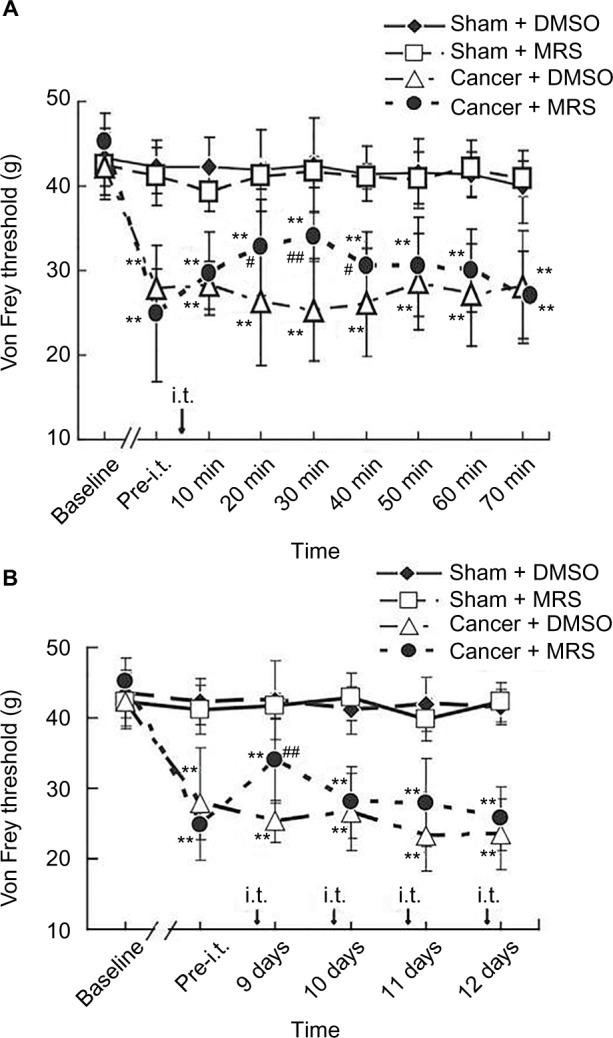
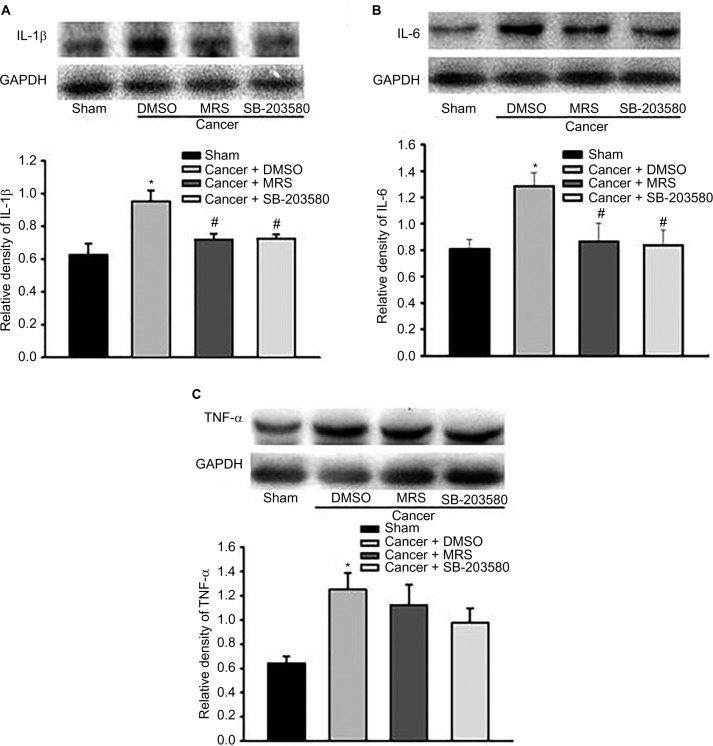
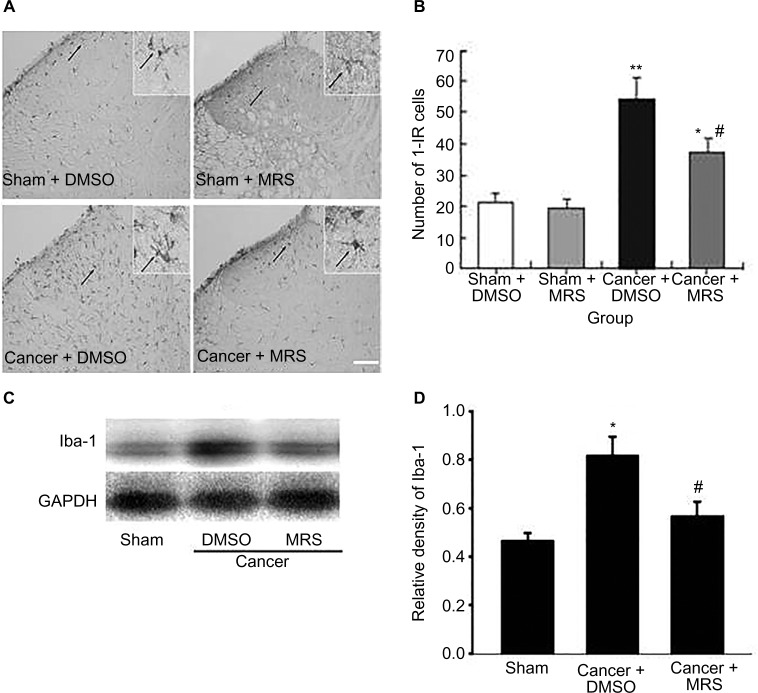
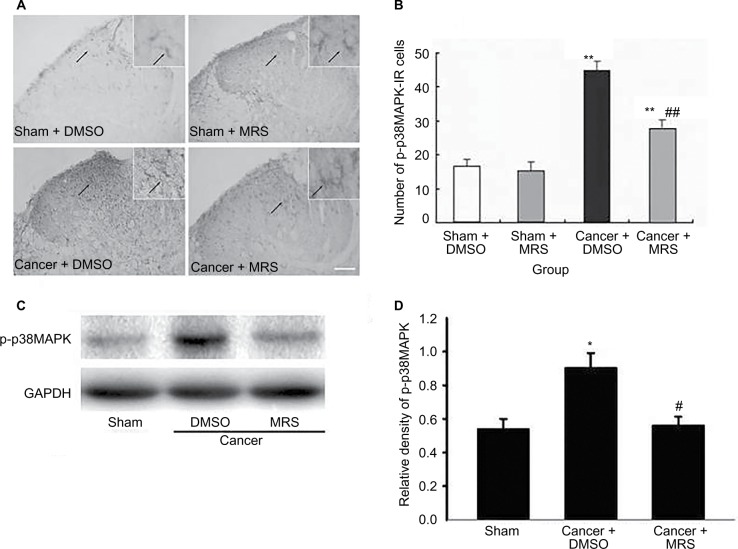
We found that not only the ionized calcium-binding adapter molecule 1 (Iba-1)-positive microglia in the ipsilateral spinal cord but also mechanical allodynia was significantly inhibited. Furthermore, it decreased the phosphorylation of p38 mitogen-activated protein kinase (p38 MAPK) and the production of proinflammatory cytokines interleukin-1β (IL-1β) and interleukin-6 (IL-6), whereas it increased tumor necrosis factor-α (TNF-α).
Taken together, our present results suggest that microglial P2YR in the spinal cord may contribute to CIBP by the activation of spinal microglia and p38MAPK pathway, thus identifying a potential therapeutic target for the treatment of CIBP.
由于对其机制缺乏了解,癌症诱导的骨痛(CIBP)是最具挑战性的临床问题之一。最近的证据表明,小胶质细胞G蛋白偶联P2Y受体(P2YR)的激活和促炎细胞因子的产生在神经性疼痛的产生和维持中起重要作用。然而,P2YR是否参与CIBP仍不清楚。
本研究的目的是探讨P2YR在CIBP中的作用及其分子机制。通过将Walker 256肿瘤细胞接种到Sprague Dawley大鼠的左胫骨建立骨癌模型,我们通过鞘内注射其选择性拮抗剂MRS2395(400 pmol/µL,15 µL)来阻断脊髓P2YR。
我们发现,不仅同侧脊髓中离子钙结合衔接分子1(Iba-1)阳性小胶质细胞减少,而且机械性异常性疼痛也显著受到抑制。此外,它降低了p38丝裂原活化蛋白激酶(p38 MAPK)的磷酸化以及促炎细胞因子白细胞介素-1β(IL-1β)和白细胞介素-6(IL-6)的产生,而肿瘤坏死因子-α(TNF-α)增加。
综上所述,我们目前的结果表明,脊髓中的小胶质细胞P2YR可能通过激活脊髓小胶质细胞和p38MAPK途径导致CIBP,从而确定了一个治疗CIBP的潜在治疗靶点。