Dutt Riana, Rabinovitz Harold S, Singh Rajendra, Scope Alon
Department of Dermatology and Pathology, Icahn School of Medicine at Mount Sinai, New York NY, USA.
Department of Dermatology, University of Miami School of Medicine, Miami FL, USA.
Dermatol Pract Concept. 2017 Jan 31;7(1):55-58. doi: 10.5826/dpc.0701a11. eCollection 2017 Jan.
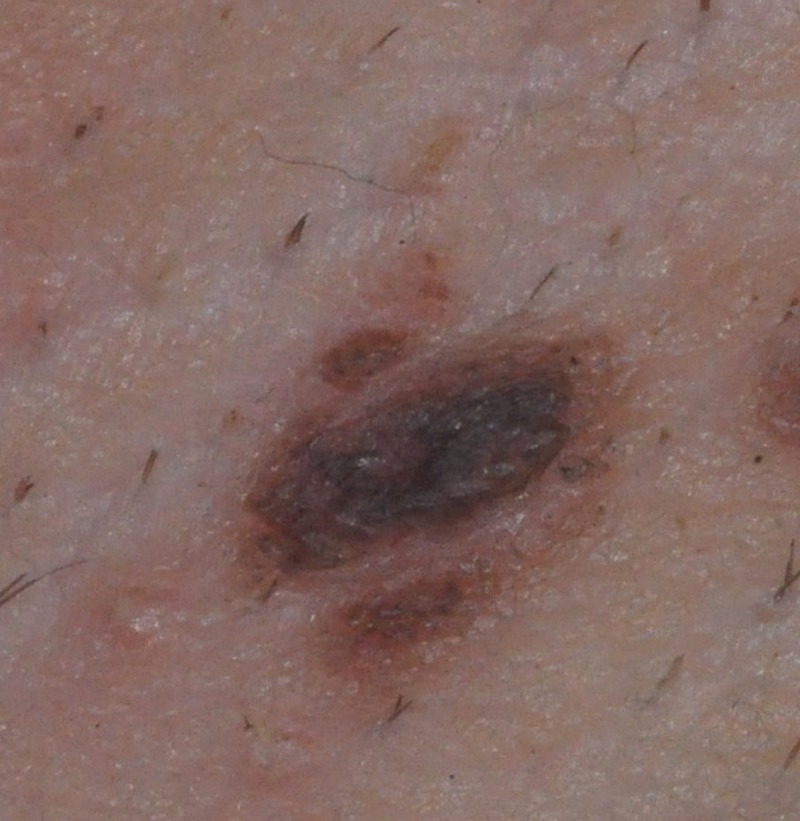
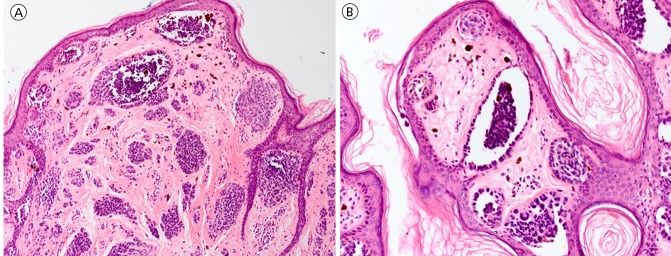
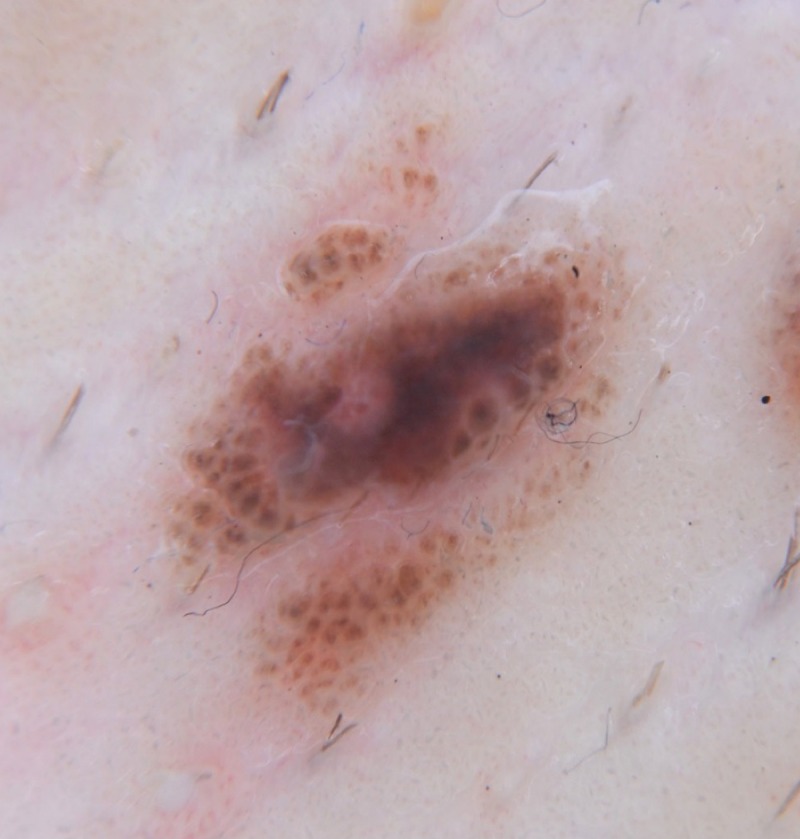
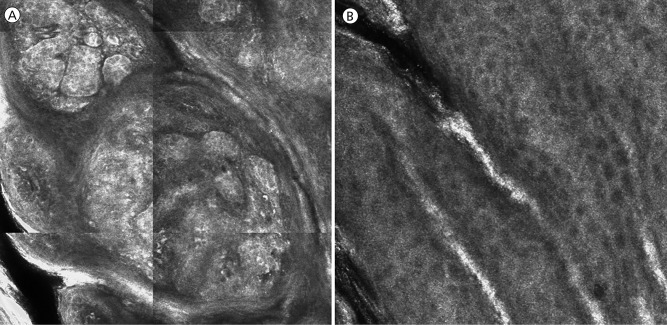
"Nevi of special sites" is a term that denotes melanocytic nevi presenting in specific anatomic locations including the scalp, genital area, flexural sites, and acral sites [1]. Nevi from these anatomic sites display at times histopathologic features that may lead the reading pathologist to recommend re-excision of these benign nevi. Reflectance confocal microscopy (RCM) is a noninvasive imaging tool that allows for visualization of epidermal, dermal-epidermal junctional (DEJ), and superficial dermal tissue structures at cellular level resolution. RCM features of special site nevi have not been previously described in the literature. Defining the RCM characteristics of special site nevi may increase diagnostic accuracy and assist in ruling out melanoma. Here, we report a case of a pigmented lesion appearing in the axilla of a patient with a recently diagnosed melanoma. Dermoscopic and histopathologic results were consistent with the diagnosis of nevus in flexural anatomic sites. In this case, RCM showed a regular honeycomb pattern of epidermal keratinocytes and enlarged, non-homogenous, discohesive nests at the DEJ, a pattern that corresponded well with the histopathologic findings. Larger studies are needed to establish RCM features of special site nevi in order to reliably rule out melanoma and lower the rate of unnecessary excisions of these benign nevi.
“特殊部位痣”是一个术语,指的是出现在特定解剖位置的黑素细胞痣,这些位置包括头皮、生殖器区域、屈侧部位和肢端部位[1]。来自这些解剖部位的痣有时会表现出组织病理学特征,这可能会导致阅片病理学家建议对这些良性痣进行再次切除。反射式共聚焦显微镜(RCM)是一种非侵入性成像工具,能够在细胞水平分辨率下可视化表皮、真皮-表皮交界处(DEJ)和浅表真皮组织结构。特殊部位痣的RCM特征此前尚未在文献中描述。明确特殊部位痣的RCM特征可能会提高诊断准确性,并有助于排除黑色素瘤。在此,我们报告一例近期诊断为黑色素瘤的患者腋窝出现色素沉着病变的病例。皮肤镜和组织病理学结果与屈侧解剖部位痣的诊断一致。在该病例中,RCM显示表皮角质形成细胞呈规则的蜂窝状模式,且DEJ处有增大、不均匀、不黏附的巢状结构,这种模式与组织病理学发现高度相符。需要开展更大规模的研究来确定特殊部位痣的RCM特征,以便可靠地排除黑色素瘤并降低这些良性痣不必要的切除率。