Department of Pharmacology, College of Pharmacy, Third Military Medical University, Chongqing, 400038, China.
Sci Rep. 2017 Mar 3;7(1):62. doi: 10.1038/s41598-017-00108-9.
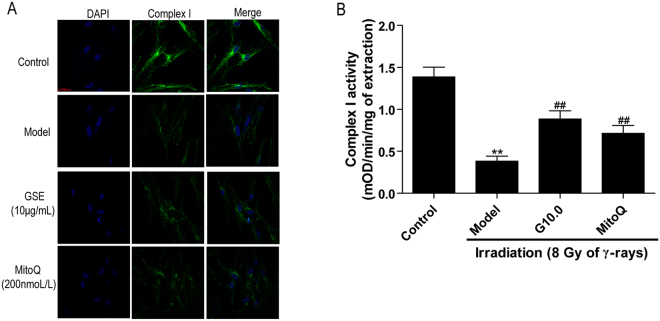
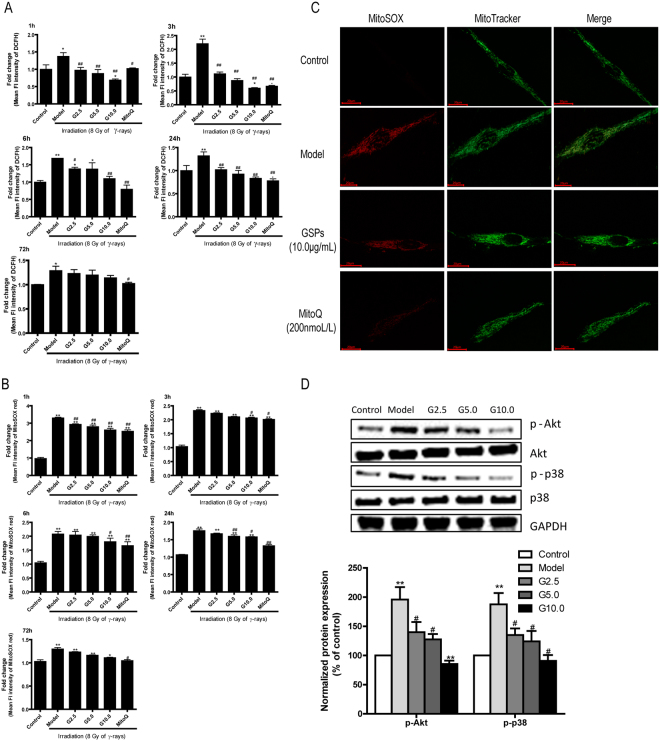
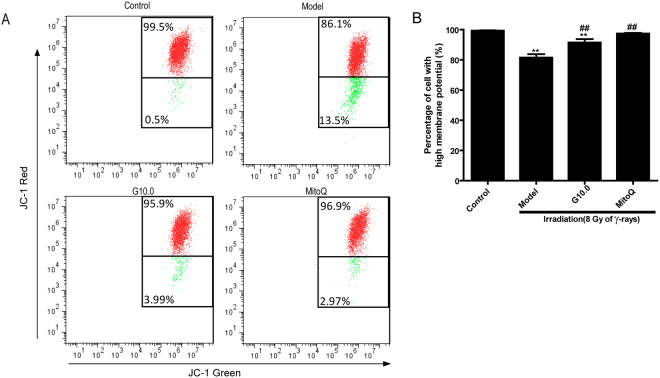
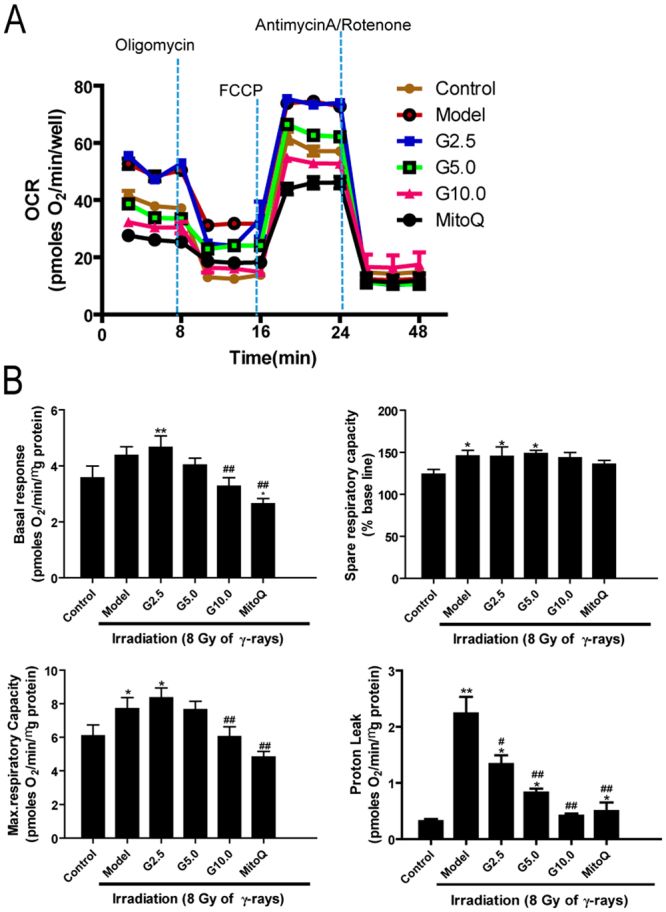
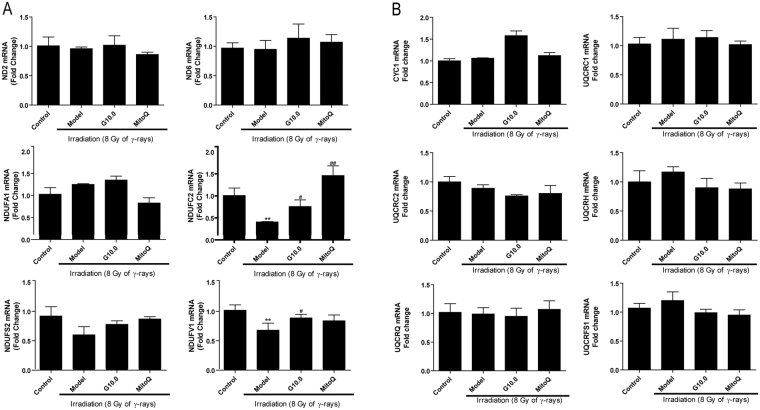
Radiation-induced lung fibrosis (RILF) is a long-term adverse effect of curative radiotherapy. The accumulation of myofibroblasts in fibroblastic foci is a pivotal feature of RILF. In the study, we found the inhibitory effect of grape seed proanthocyanidins (GSPs) on irradiation-induced differentiation of human fetal lung fibroblasts (HFL1). To explore the mechanism by which GSPs inhibit fibroblast differentiation, we measured the reactive oxygen species (ROS) levels, mitochondrial function, mitochondrial dynamics, glycolysis and the signaling molecules involved in fibroblast transdifferentiation. GSPs significantly reduced the production of cellular and mitochondrial ROS after radiation. The increases in mitochondrial respiration, proton leak, mitochondrial ATP production, lactate release and glucose consumption that occurred in response to irradiation were ameliorated by GSPs. Furthermore, GSPs increased the activity of complex I and improved the mitochondrial dynamics, which were disturbed by irradiation. In addition, the elevation of phosphorylation of p38MAPK and Akt, and Nox4 expression induced by irradiation were attenuated by GSPs. Blocking Nox4 attenuated irradiation-mediated fibroblast differentiation. Taken together, these results indicate that GSPs have the ability to inhibit irradiation-induced fibroblast-to-myofibroblast differentiation by ameliorating mitochondrial dynamics and mitochondrial complex I activity, regulating mitochondrial ROS production, ATP production, lactate release, glucose consumption and thereby inhibiting p38MAPK-Akt-Nox4 pathway.
放射性肺纤维化(RILF)是根治性放疗的一种长期不良反应。成纤维细胞灶中肌成纤维细胞的积累是 RILF 的一个关键特征。在这项研究中,我们发现葡萄籽原花青素(GSPs)对人胎肺成纤维细胞(HFL1)照射诱导分化具有抑制作用。为了探讨 GSPs 抑制成纤维细胞分化的机制,我们测量了活性氧(ROS)水平、线粒体功能、线粒体动力学、糖酵解以及参与成纤维细胞转分化的信号分子。GSPs 可显著降低照射后细胞和线粒体 ROS 的产生。GSPs 减轻了照射引起的线粒体呼吸、质子泄漏、线粒体 ATP 产生、乳酸释放和葡萄糖消耗的增加。此外,GSPs 增加了复合物 I 的活性并改善了线粒体动力学,而线粒体动力学在照射下受到干扰。此外,GSPs 减弱了照射诱导的 p38MAPK 和 Akt 的磷酸化以及 Nox4 的表达升高。阻断 Nox4 可减弱照射介导的成纤维细胞分化。综上所述,这些结果表明,GSPs 通过改善线粒体动力学和线粒体复合物 I 活性、调节线粒体 ROS 产生、ATP 产生、乳酸释放、葡萄糖消耗以及抑制 p38MAPK-Akt-Nox4 通路,具有抑制照射诱导的成纤维细胞向肌成纤维细胞分化的能力。