Malchenko Sergey, Sredni Simone Treiger, Bi Yingtao, Margaryan Naira V, Boyineni Jerusha, Mohanam Indra, Tomita Tadanori, Davuluri Ramana V, Soares Marcelo B
Department of Cancer Biology & Pharmacology, University of Illinois College of Medicine, Peoria, Illinois, United States of America.
Department of Surgery, Division of Pediatric Neurosurgery, Feinberg School of Medicine, Northwestern University, Chicago, Illinois, United States of America.
PLoS One. 2017 Mar 1;12(3):e0173106. doi: 10.1371/journal.pone.0173106. eCollection 2017.
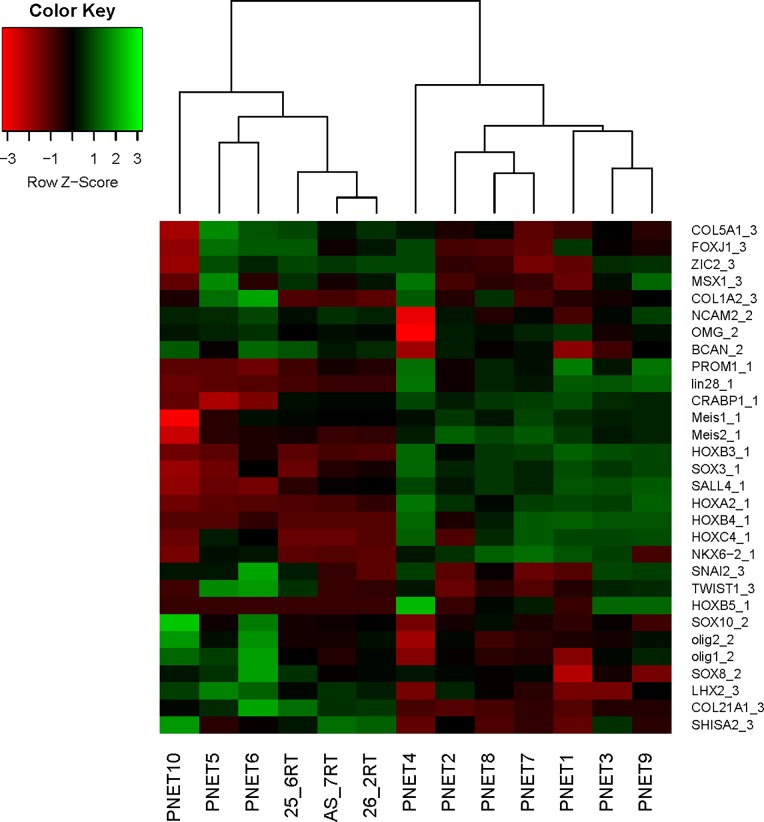
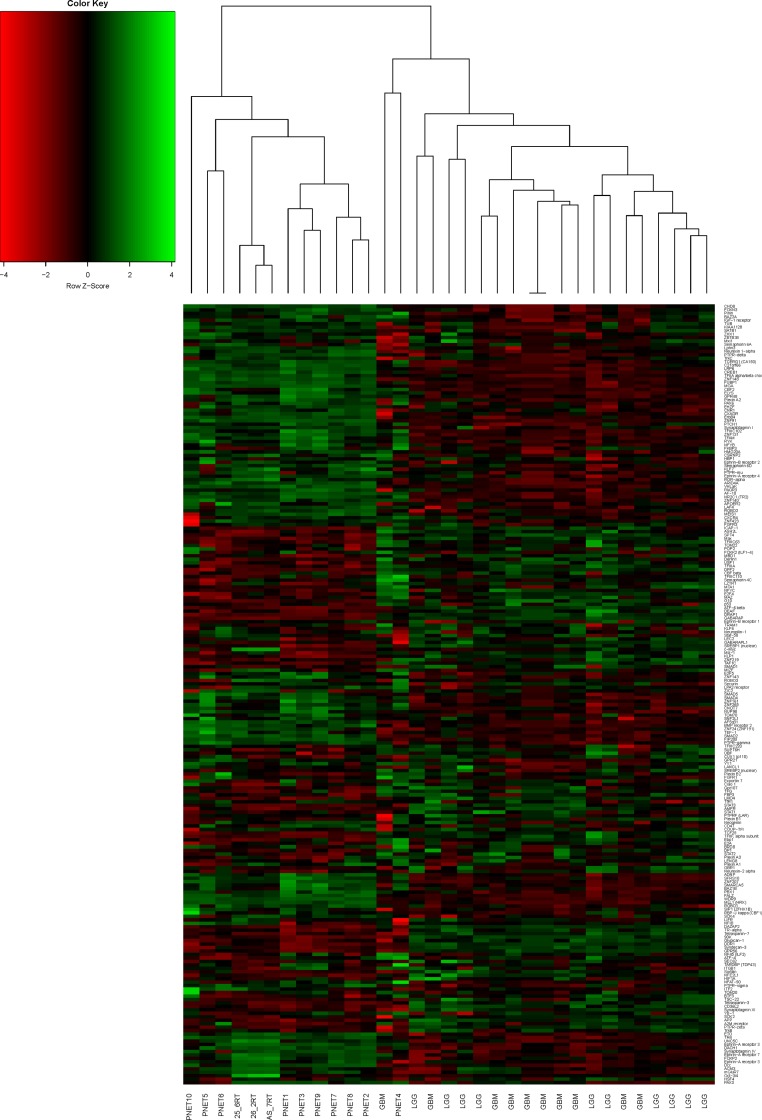
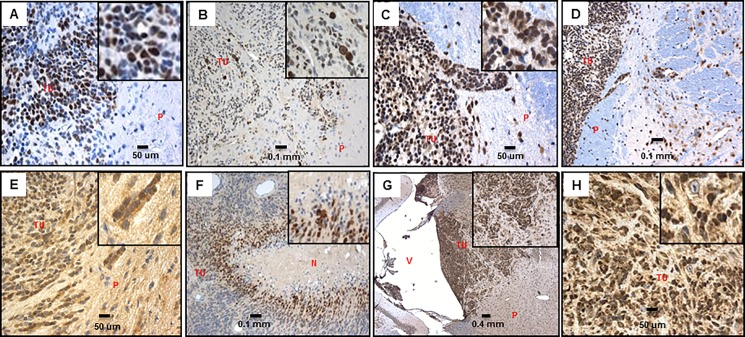
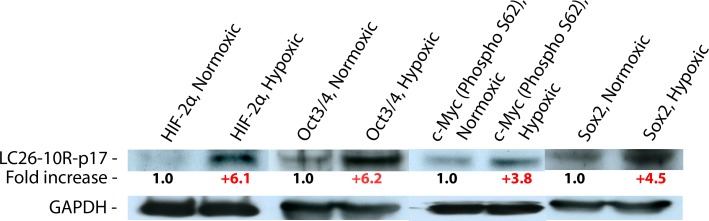
Recently, we described a new animal model of CNS primitive neuroectodermal tumors (CNS-PNET), which was generated by orthotopic transplantation of human Radial Glial (RG) cells into NOD-SCID mice's brain sub-ventricular zone. In the current study we conducted comprehensive RNA-Seq analyses to gain insights on the mechanisms underlying tumorigenesis in this mouse model of CNS-PNET. Here we show that the RNA-Seq profiles derived from these tumors cluster with those reported for patients' PNETs. Moreover, we found that (i) stabilization of HIF-1α and HIF-2α, which are involved in mediation of the hypoxic responses in the majority of cell types, (ii) up-regulation of MYCC, a key onco-protein whose dysregulation occurs in ~70% of human tumors, and (iii) accumulation of stabilized p53, which is commonly altered in human cancers, constitute hallmarks of our tumor model, and might represent the basis for CNS-PNET tumorigenesis in this model. We discuss the possibility that these three events might be interconnected. These results indicate that our model may prove invaluable to uncover the molecular events leading to MYCC and TP53 alterations, which would be of broader interest considering their relevance to many human malignancies. Lastly, this mouse model might prove useful for drug screening targeting MYCC and related members of its protein interaction network.
最近,我们描述了一种新的中枢神经系统原始神经外胚层肿瘤(CNS-PNET)动物模型,它是通过将人放射状胶质(RG)细胞原位移植到NOD-SCID小鼠脑室内下区而产生的。在当前研究中,我们进行了全面的RNA测序分析,以深入了解这种CNS-PNET小鼠模型中肿瘤发生的潜在机制。在这里我们表明,源自这些肿瘤的RNA测序图谱与已报道的患者PNETs的图谱聚类。此外,我们发现:(i)HIF-1α和HIF-2α的稳定化,它们参与大多数细胞类型中缺氧反应的介导;(ii)MYCC的上调,MYCC是一种关键的癌蛋白,其失调发生在约70%的人类肿瘤中;以及(iii)稳定化p53的积累,p53在人类癌症中通常发生改变,这些构成了我们肿瘤模型的特征,并且可能代表了该模型中CNS-PNET肿瘤发生的基础。我们讨论了这三个事件可能相互关联的可能性。这些结果表明,我们的模型可能对于揭示导致MYCC和TP53改变的分子事件具有不可估量的价值,考虑到它们与许多人类恶性肿瘤的相关性,这将具有更广泛的意义。最后,这种小鼠模型可能对于针对MYCC及其蛋白质相互作用网络的相关成员进行药物筛选有用。