Pejša Vlatko, Prka Željko, Lucijanić Marko, Mitrović Zdravko, Piršić Mario, Jakšić Ozren, Ajduković Radmila, Kušec Rajko
Vlatko Pejša, Department of Hematology, University Hospital Dubrava, Av. Gojka Šuška 6, 10000 Zagreb, Croatia,
Croat Med J. 2017 Feb 28;58(1):40-48. doi: 10.3325/cmj.2017.58.40.
To assess the benefit of rituximab with dose-adjusted etoposide, prednisone, vincristine, cyclophosphamide, and doxorubicin (R-DA-EPOCH) regimen as a first-line treatment for patients with diffuse large B-cell lymphoma (DLBCL) presenting with unfavorable or aggressive features, and autologous stem cell transplantation (ASCT) as a part of the first-line treatment for selected DLBCL patients with additional aggressive features.
We retrospectively analyzed 75 newly diagnosed DLBCL patients with Ki-67+≥80% or International Prognostic Index ≥2 who were treated with R-DA-EPOCH between 2005 and 2015. Of 24 DLBCL patients with additional aggressive features (Ki-67+≥90% or age-adjusted IPI≥2) who were planned to receive consolidation with ASCT, 17 patients underwent the procedure. We determined the overall response rate (ORR), complete remission (CR), partial remission (PR), 5-year overall survival (OS), and progression free survival (PFS) in all DLBCL patients and specifically those planned to receive ASCT.
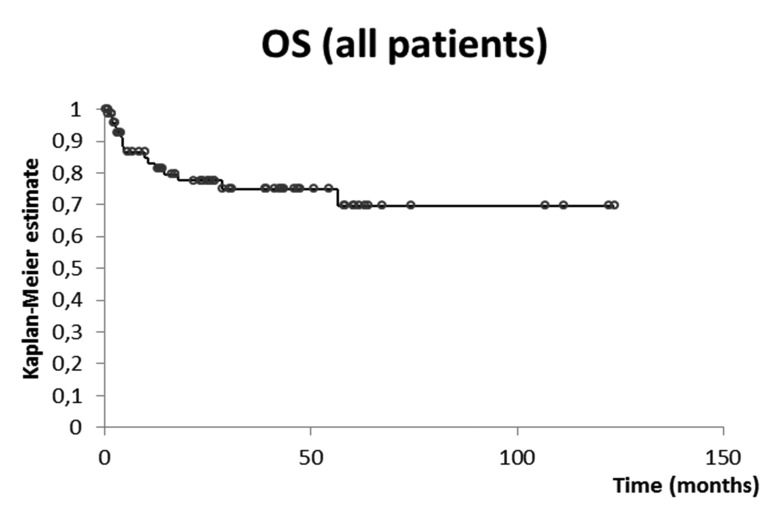
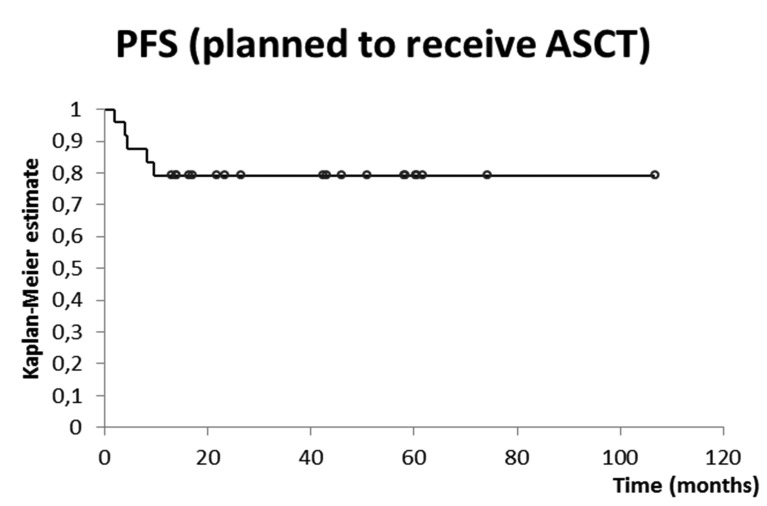
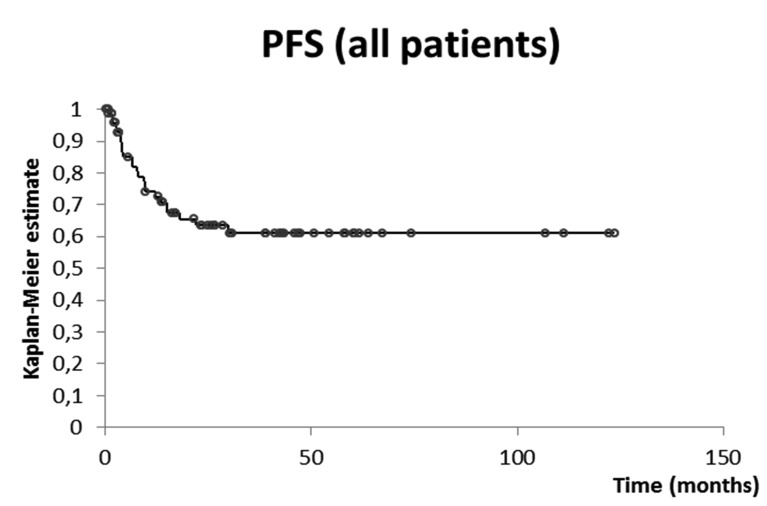
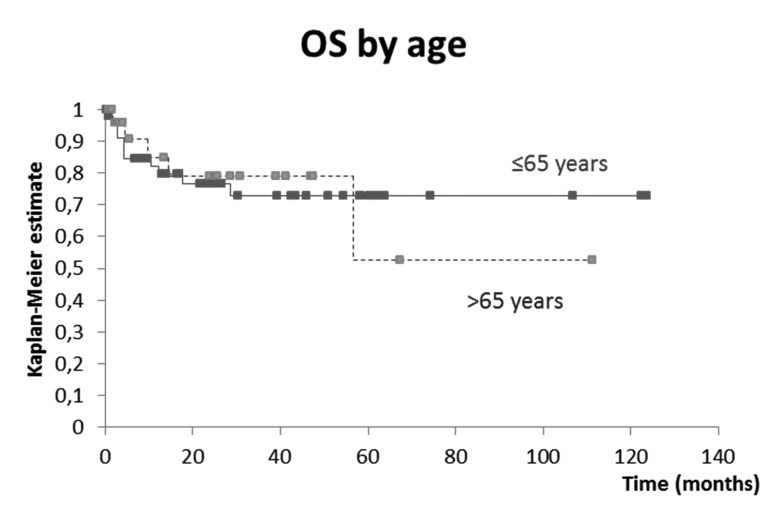
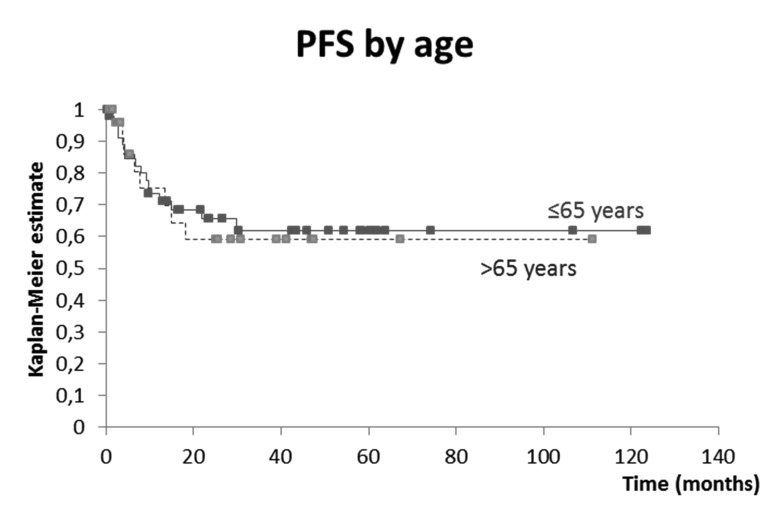
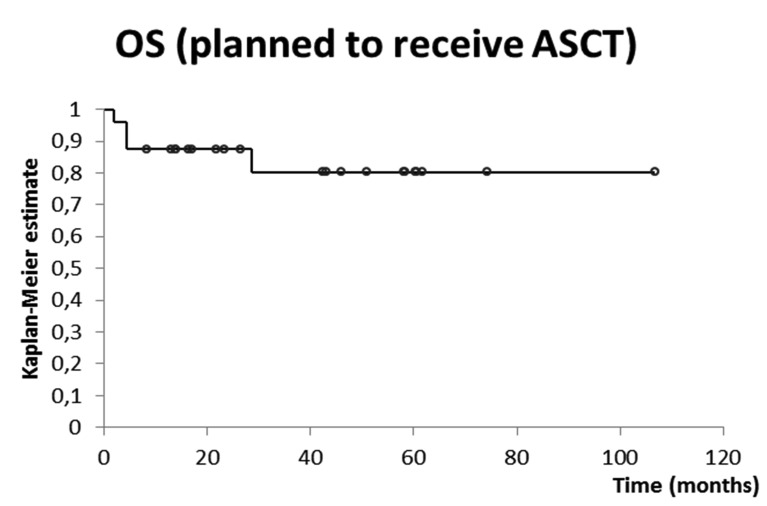
All 75 patients included in the analysis started one or more cycles of therapy. The ORR, CR, and PR rates were 80%, 55%, and 25%, respectively. The response was non-evaluable in 10 of 75 patients due to treatment discontinuation. The OS and PFS rates for all 75 patients were 70% and 61%, respectively, and 80% and 79%, respectively, for 24 planned-to-receive-ASCT patients. Age (≤65 vs >65 years) had no prognostic impact on OS and PFS (P=0.994 and P=0.827, respectively).
Our retrospective analysis of one of the largest DLBCL patient cohorts outside the US National Cancer Institute showed that R-DA-EPOCH is a very effective therapeutic option as a first-line treatment of DLBCL patients with unfavorable prognostic features irrespective of their age. ASCT provided additional benefit for DLBCL patients with additional aggressive features.
评估利妥昔单抗联合剂量调整的依托泊苷、泼尼松、长春新碱、环磷酰胺和多柔比星(R-DA-EPOCH)方案作为一线治疗方案对具有不良或侵袭性特征的弥漫性大B细胞淋巴瘤(DLBCL)患者的疗效,以及自体干细胞移植(ASCT)作为部分具有额外侵袭性特征的DLBCL患者一线治疗的一部分的疗效。
我们回顾性分析了2005年至2015年间接受R-DA-EPOCH治疗的75例新诊断的Ki-67+≥80%或国际预后指数≥2的DLBCL患者。在计划接受ASCT巩固治疗的24例具有额外侵袭性特征(Ki-67+≥90%或年龄调整后的IPI≥2)的DLBCL患者中,17例接受了该手术。我们确定了所有DLBCL患者以及计划接受ASCT的患者的总缓解率(ORR)、完全缓解(CR)、部分缓解(PR)、5年总生存率(OS)和无进展生存率(PFS)。
纳入分析的所有75例患者均开始了一个或多个周期的治疗。ORR、CR和PR率分别为80%、55%和25%。由于治疗中断,75例患者中有10例的缓解情况无法评估。所有75例患者的OS和PFS率分别为70%和61%,计划接受ASCT的24例患者的OS和PFS率分别为80%和79%。年龄(≤65岁与>65岁)对OS和PFS无预后影响(P分别为0.994和0.827)。
我们对美国国立癌症研究所以外最大的DLBCL患者队列之一进行的回顾性分析表明,R-DA-EPOCH作为一线治疗具有不良预后特征的DLBCL患者是一种非常有效的治疗选择,无论其年龄如何。ASCT为具有额外侵袭性特征的DLBCL患者提供了额外的益处。