Saultier Paul, Vidal Léa, Canault Matthias, Bernot Denis, Falaise Céline, Pouymayou Catherine, Bordet Jean-Claude, Saut Noémie, Rostan Agathe, Baccini Véronique, Peiretti Franck, Favier Marie, Lucca Pauline, Deleuze Jean-François, Olaso Robert, Boland Anne, Morange Pierre Emmanuel, Gachet Christian, Malergue Fabrice, Fauré Sixtine, Eckly Anita, Trégouët David-Alexandre, Poggi Marjorie, Alessi Marie-Christine
Aix Marseille Univ, INSERM, INRA, NORT, Marseille, France
Aix Marseille Univ, INSERM, INRA, NORT, Marseille, France.
Haematologica. 2017 Jun;102(6):1006-1016. doi: 10.3324/haematol.2016.153577. Epub 2017 Mar 2.
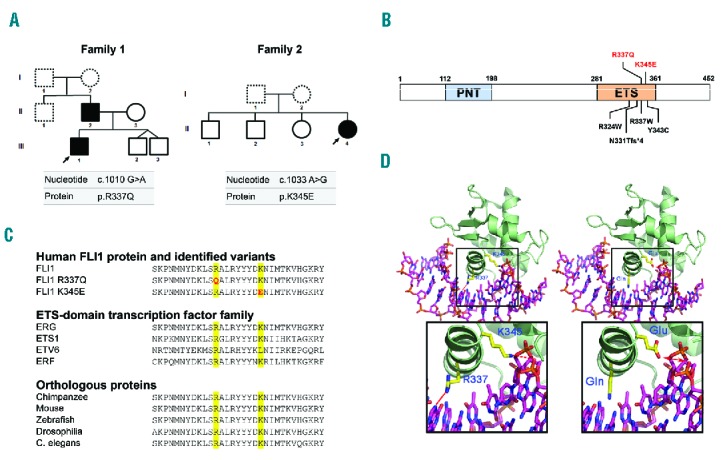
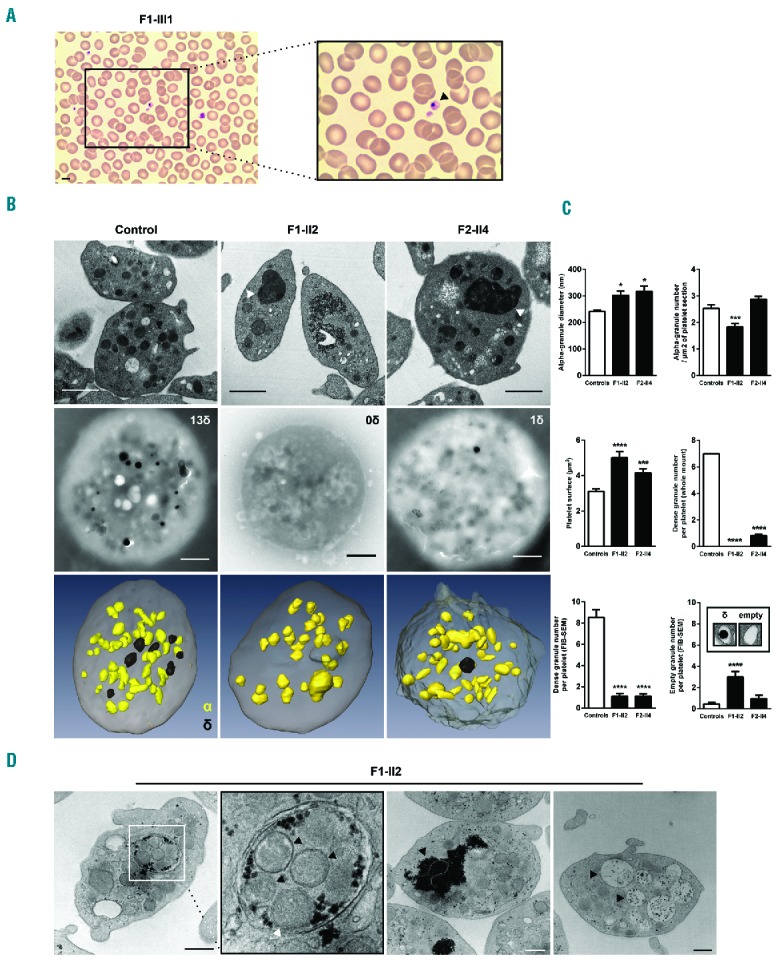
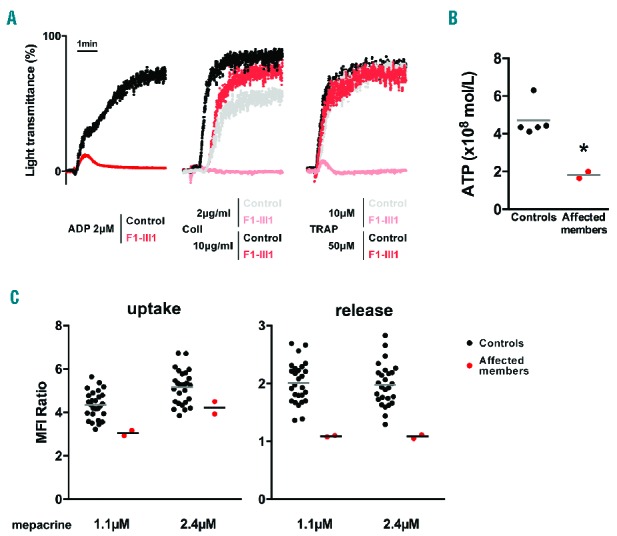
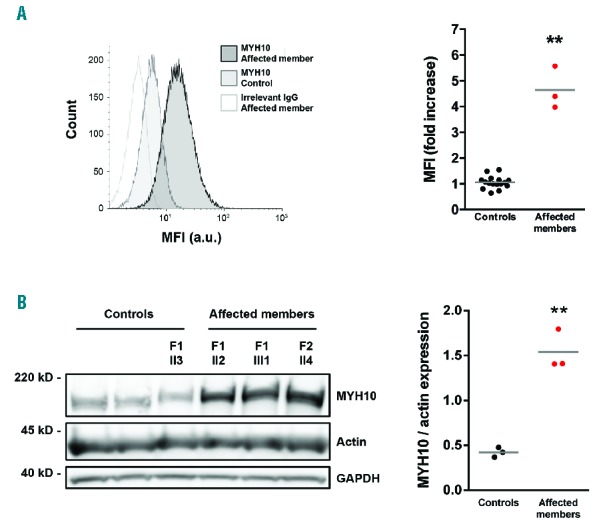
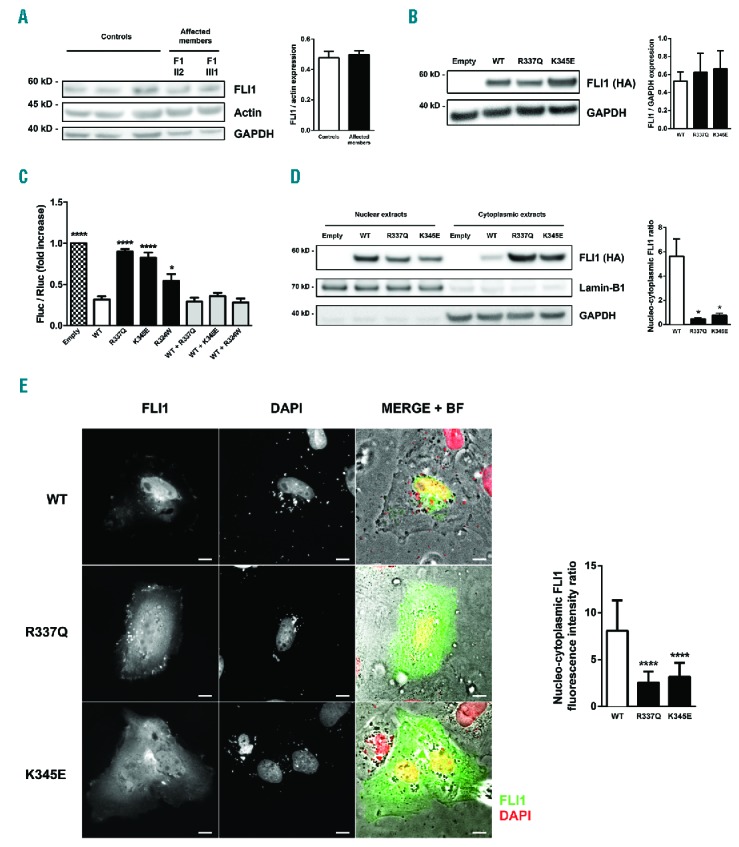
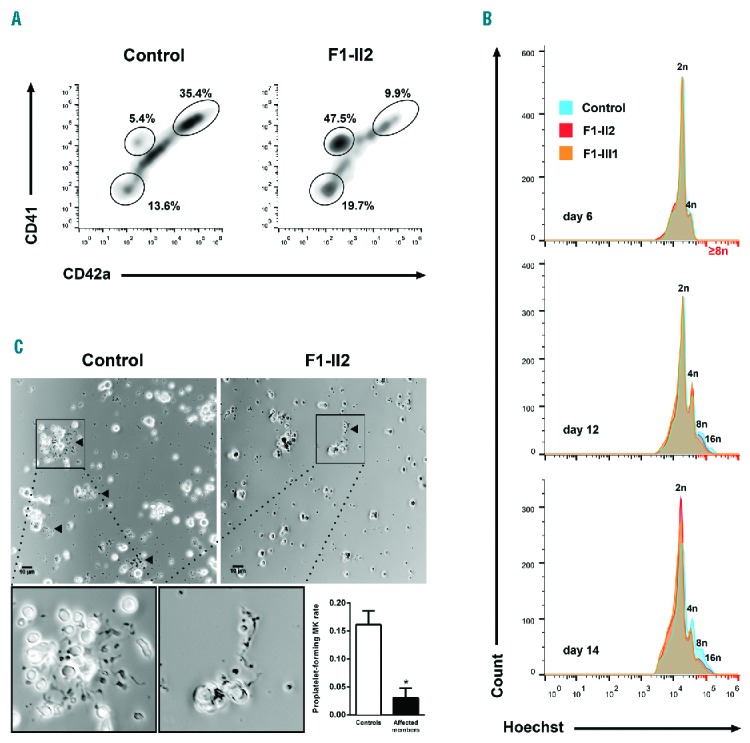
Congenital macrothrombocytopenia is a family of rare diseases, of which a significant fraction remains to be genetically characterized. To analyze cases of unexplained thrombocytopenia, 27 individuals from a patient cohort of the Bleeding and Thrombosis Exploration Center of the University Hospital of Marseille were recruited for a high-throughput gene sequencing study. This strategy led to the identification of two novel variants (c.1010G>A and c.1033A>G) responsible for macrothrombocytopenia. The variant carriers' platelets exhibited a defect in aggregation induced by low-dose adenosine diphosphate (ADP), collagen and thrombin receptor-activating peptide (TRAP), a defect in adenosine triphosphate (ATP) secretion, a reduced mepacrine uptake and release and a reduced CD63 expression upon TRAP stimulation. Precise ultrastructural analysis of platelet content was performed using transmission electron microscopy and focused ion beam scanning electron microscopy. Remarkably, dense granules were nearly absent in the carriers' platelets, presumably due to a biogenesis defect. Additionally, 25-29% of the platelets displayed giant α-granules, while a smaller proportion displayed vacuoles (7-9%) and autophagosome-like structures (0-3%). study of megakaryocytes derived from circulating CD34 cells of the carriers revealed a maturation defect and reduced proplatelet formation potential. The study of the variants revealed a significant reduction in protein nuclear accumulation and transcriptional activity properties. Intraplatelet flow cytometry efficiently detected the biomarker MYH10 in variant carriers. Overall, this study provides new insights into the phenotype, pathophysiology and diagnosis of variant-associated thrombocytopenia.
先天性大血小板减少症是一类罕见疾病,其中很大一部分仍有待进行基因特征分析。为了分析不明原因的血小板减少症病例,招募了来自马赛大学医院出血与血栓探索中心患者队列的27名个体进行高通量基因测序研究。这一策略导致鉴定出两个导致大血小板减少症的新变体(c.1010G>A和c.1033A>G)。变体携带者的血小板在低剂量二磷酸腺苷(ADP)、胶原蛋白和凝血酶受体激活肽(TRAP)诱导的聚集方面存在缺陷,在三磷酸腺苷(ATP)分泌方面存在缺陷,在甲胺摄取和释放方面减少,以及在TRAP刺激后CD63表达降低。使用透射电子显微镜和聚焦离子束扫描电子显微镜对血小板内容物进行了精确的超微结构分析。值得注意的是,携带者的血小板中几乎没有致密颗粒,推测是由于生物发生缺陷。此外,25%-29% 的血小板显示有巨大的α颗粒,而较小比例的血小板显示有空泡(7%-9%)和自噬体样结构(0%-3%)。对来自携带者循环CD34细胞的巨核细胞进行的研究揭示了成熟缺陷和前血小板形成潜力降低。对这些变体的研究揭示了蛋白质核积累和转录活性特性的显著降低。血小板内流式细胞术有效地检测到了变体携带者中的生物标志物MYH10。总体而言,这项研究为变体相关血小板减少症的表型、病理生理学和诊断提供了新的见解。