Department of Mechanical, Aerospace, and Biomedical Engineering, University of Tennessee, Knoxville, Tennessee, USA.
Manufacturing Demonstration Facility, Oak Ridge National Laboratory, Knoxville, TN, USA.
Sci Rep. 2017 Mar 3;7:43554. doi: 10.1038/srep43554.
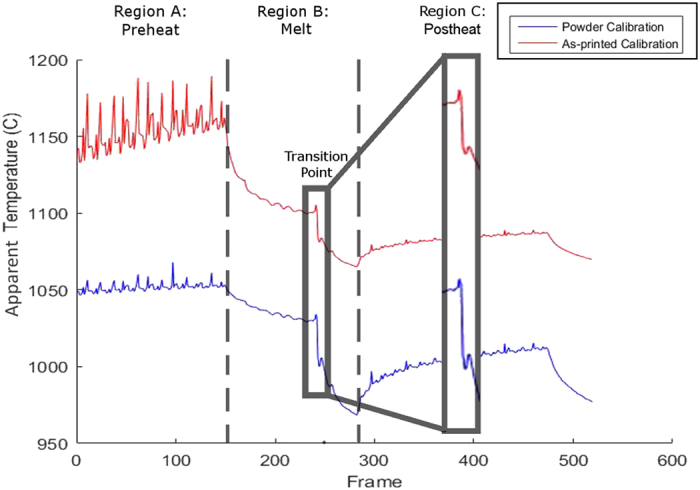
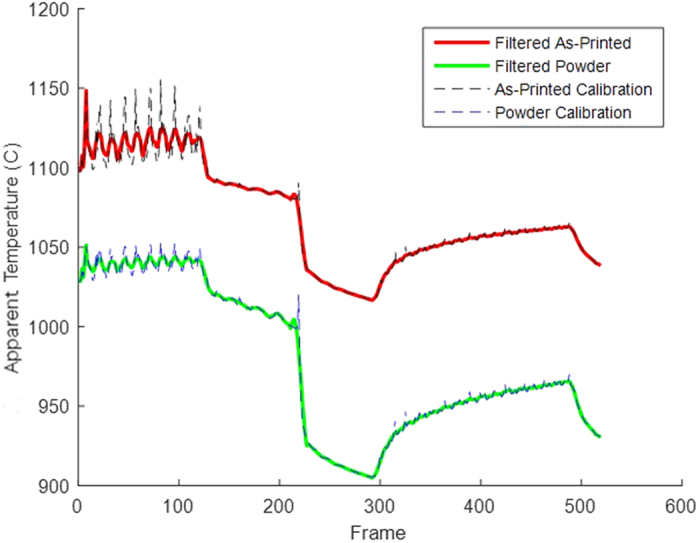
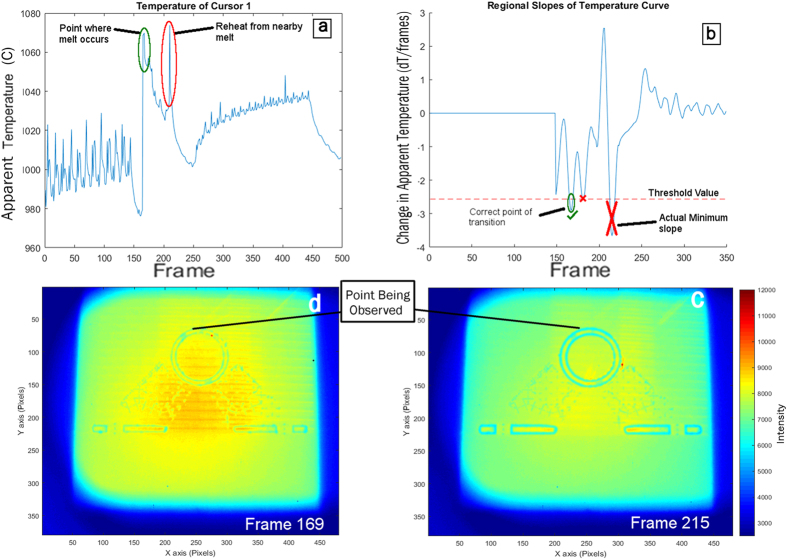
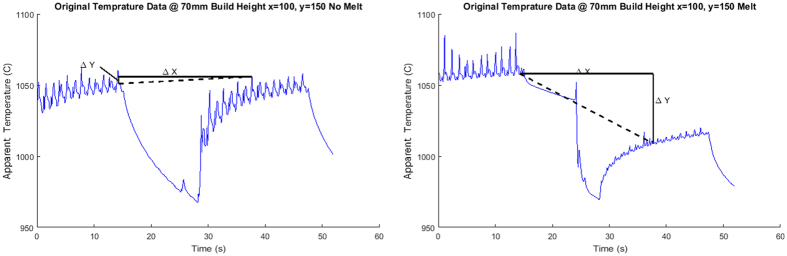
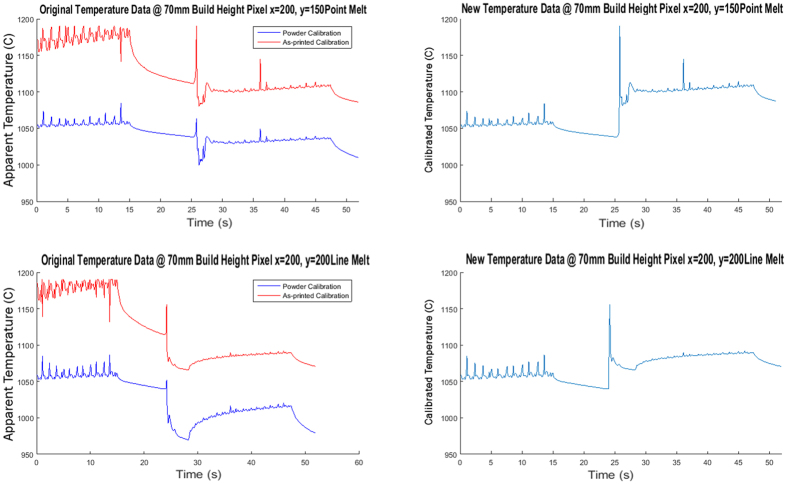
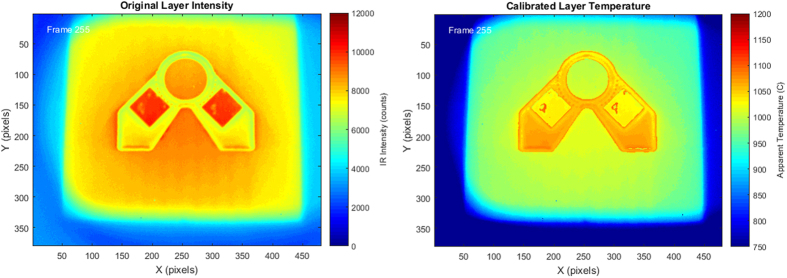
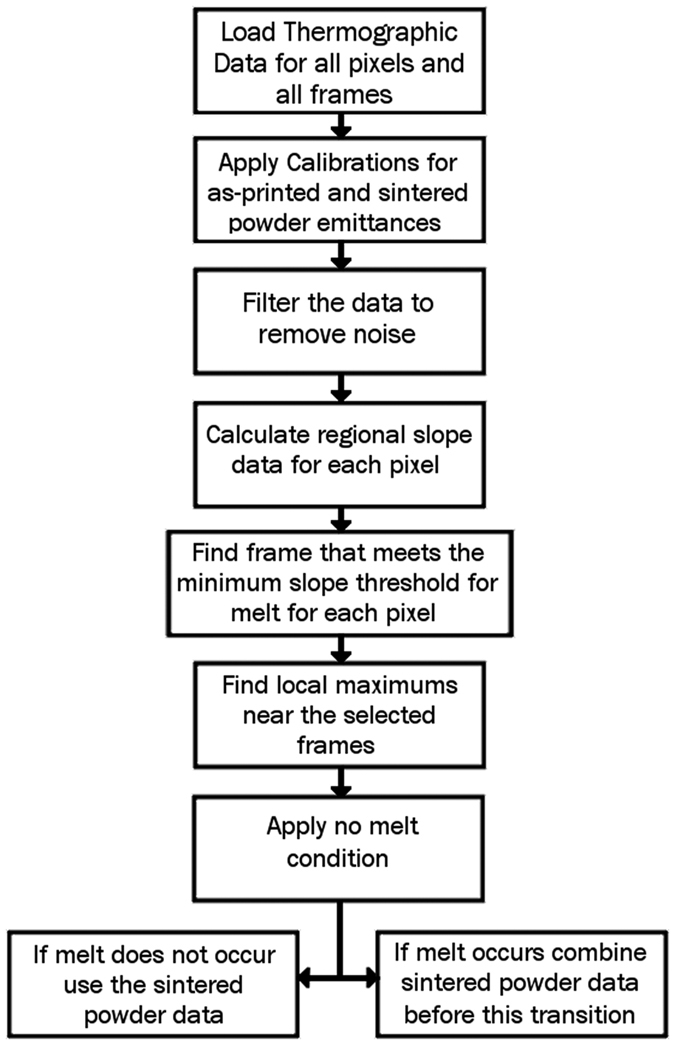
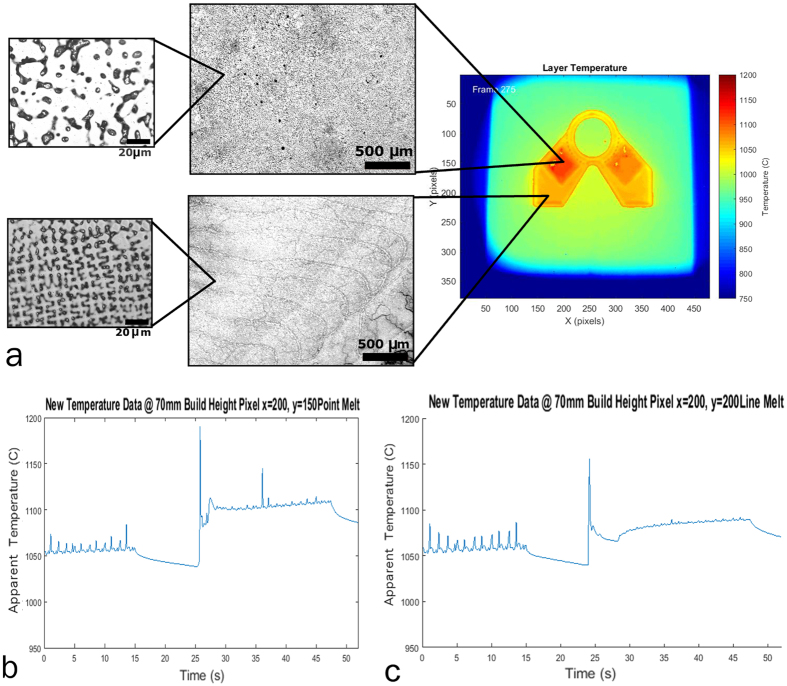
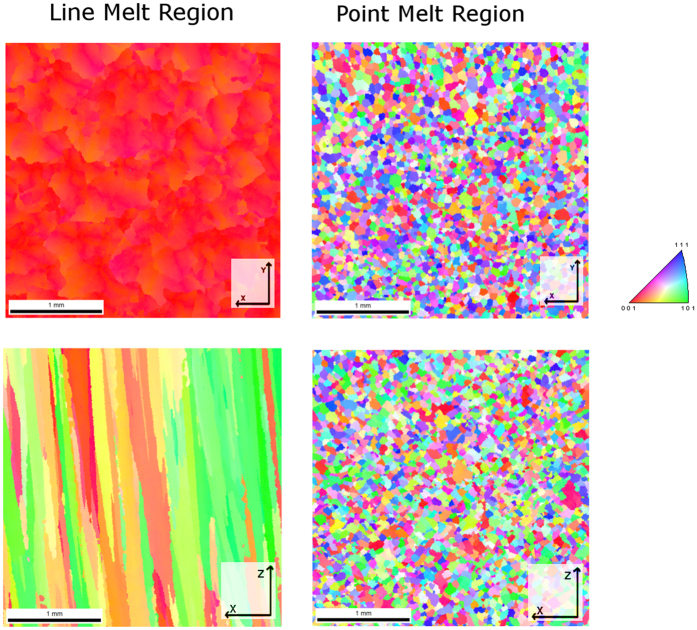
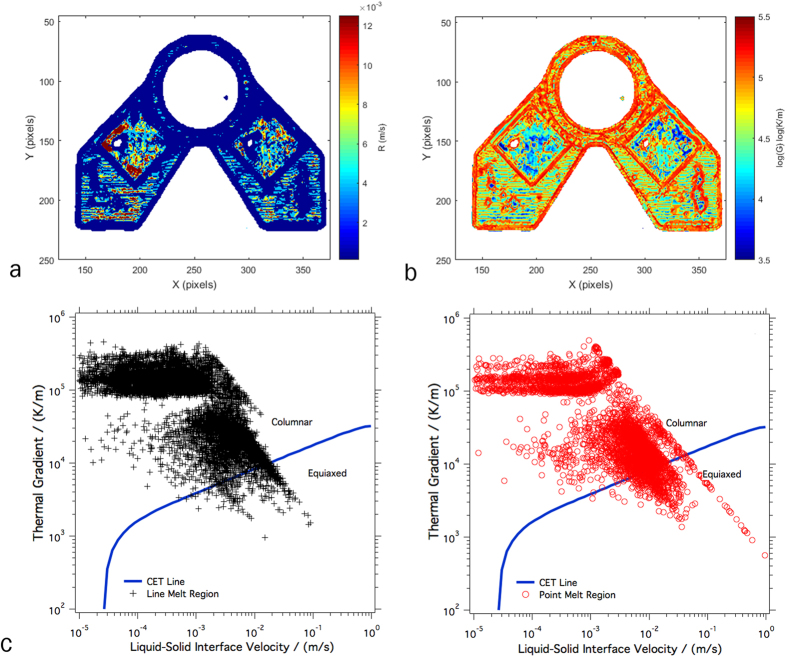
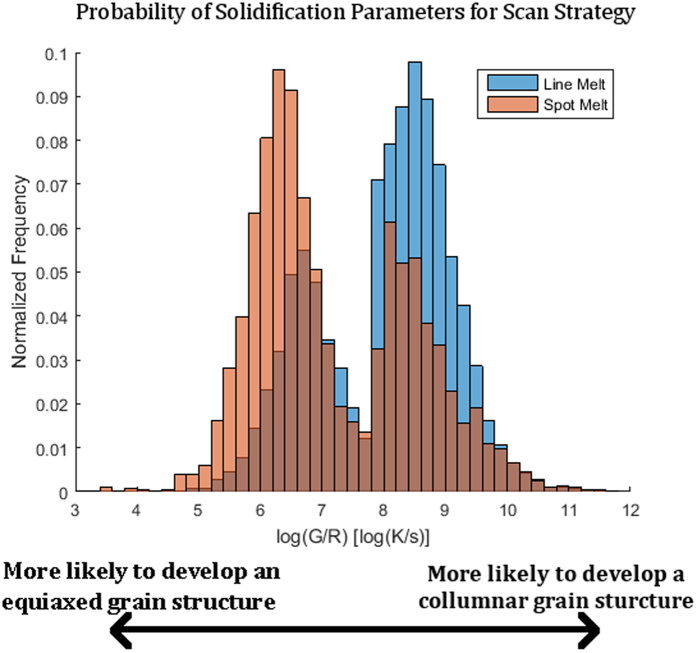
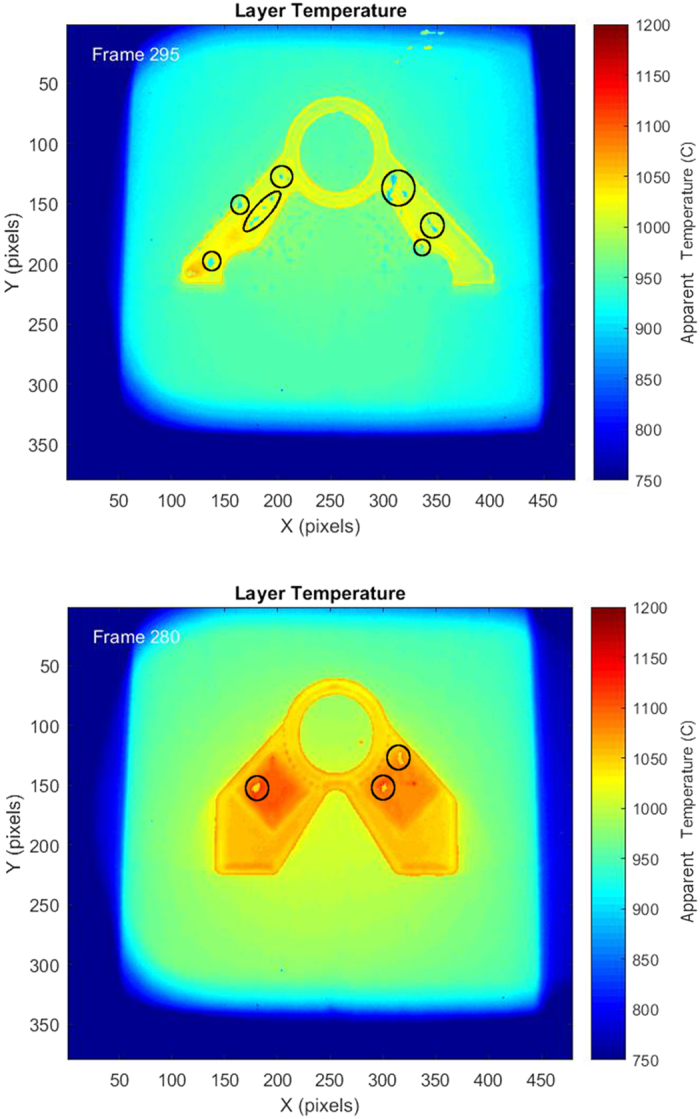
To reduce the uncertainty of build performance in metal additive manufacturing, robust process monitoring systems that can detect imperfections and improve repeatability are desired. One of the most promising methods for in situ monitoring is thermographic imaging. However, there is a challenge in using this technology due to the difference in surface emittance between the metal powder and solidified part being observed that affects the accuracy of the temperature data collected. The purpose of the present study was to develop a method for properly calibrating temperature profiles from thermographic data to account for this emittance change and to determine important characteristics of the build through additional processing. The thermographic data was analyzed to identify the transition of material from metal powder to a solid as-printed part. A corrected temperature profile was then assembled for each point using calibrations for these surface conditions. Using this data, the thermal gradient and solid-liquid interface velocity were approximated and correlated to experimentally observed microstructural variation within the part. This work shows that by using a method of process monitoring, repeatability of a build could be monitored specifically in relation to microstructure control.
为了降低金属增材制造中构建性能的不确定性,需要稳健的过程监测系统来检测缺陷并提高可重复性。原位监测最有前途的方法之一是热成像。然而,由于正在观察的金属粉末和凝固部分之间的表面发射率存在差异,这会影响所收集温度数据的准确性,因此在使用这项技术时存在挑战。本研究的目的是开发一种从热成像数据中正确校准温度曲线的方法,以考虑这种发射率变化,并通过额外的处理来确定构建的重要特性。对热成像数据进行了分析,以确定材料从金属粉末到打印零件的固相转变。然后,针对每种情况,使用这些表面条件的校准来组装一个校正后的温度曲线。使用这些数据,我们可以近似热梯度和固液界面速度,并将其与零件内部实验观察到的微观结构变化相关联。这项工作表明,通过使用一种过程监测方法,可以特别针对微观结构控制来监测构建的可重复性。