Matos Cátia, Petrovan Silviu, Ward Alastair I, Wheeler Philip
School of Environmental Sciences, University of Hull, Hull, North Yorkshire, United Kingdom; Centre for Environmental and Marine Sciences (CEMS), University of Hull, Scarborough, North Yorkshire, United Kingdom.
Froglife , Peterborough , United Kingdom.
PeerJ. 2017 Feb 28;5:e2922. doi: 10.7717/peerj.2922. eCollection 2017.
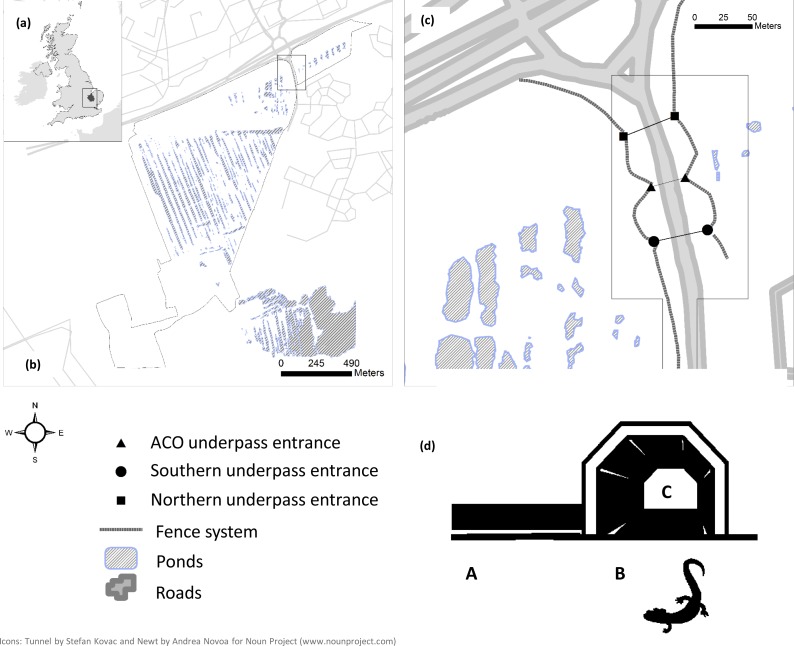
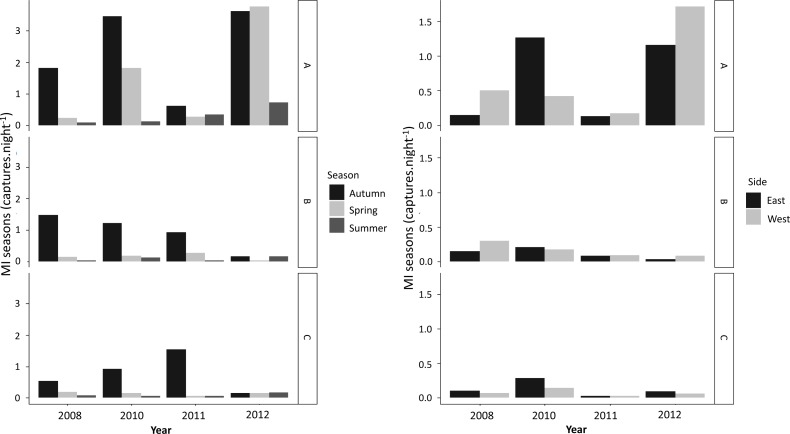
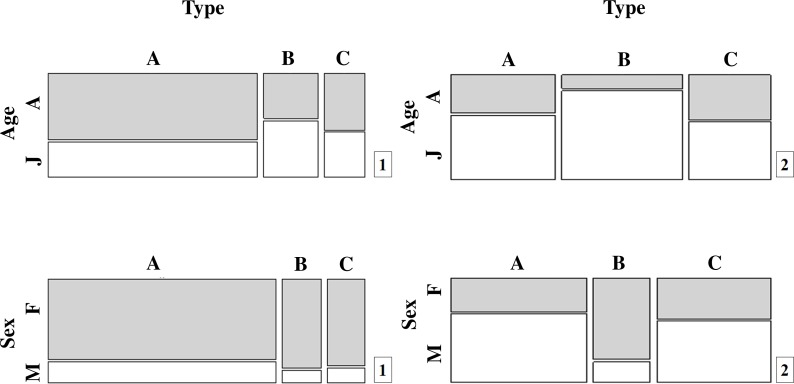
Amphibian populations are highly vulnerable to road mortality and habitat fragmentation caused by road networks. Wildlife road tunnels are considered the most promising road mitigation measure for amphibians yet generally remain inadequately monitored, resulting in mixed success rates in the short-term and uncertain conservation benefits in the long-term. We monitored a complex multi-tunnel and fence system over five years and investigated the impact of the scheme on movement patterns of two newt species, including the largest known UK population of the great crested newt () a European Protected Species. We used a stage descriptive approach based on capture positions to quantify newt movement patterns. Newt species successfully used the mitigation but the system constituted a bottleneck to movements from the fences to the tunnels. Crossing rates varied widely among years and were skewed towards autumn dispersal rather than spring breeding migration. There was a substantial negative bias against adult male great crested newts using the system. This study indicates that road tunnels could partially mitigate wider connectivity loss and fragmentation at the landscape scale for newt species. However, the observed bottleneck effects and seasonal bias could have population-level effects which must be better understood, especially for small populations, so that improvements can be made. Current requirements for monitoring mitigation schemes post-implementation are probably too short to assess their effectiveness in maintaining connectivity and to adequately understand their population-level impacts.
两栖动物种群极易受到道路网络造成的道路死亡和栖息地破碎化的影响。野生动物道路隧道被认为是对两栖动物最有前景的道路缓解措施,但总体上仍缺乏充分监测,导致短期内成功率参差不齐,长期来看保护效益也不确定。我们对一个复杂的多隧道和围栏系统进行了为期五年的监测,并研究了该方案对两种蝾螈物种移动模式的影响,其中包括已知英国最大种群的大冠蝾螈(一种欧洲保护物种)。我们采用基于捕获位置的阶段描述方法来量化蝾螈的移动模式。蝾螈物种成功利用了缓解措施,但该系统构成了从围栏到隧道移动的瓶颈。穿越率在不同年份差异很大,且偏向秋季扩散而非春季繁殖迁徙。成年雄性大冠蝾螈使用该系统存在显著的负偏差。这项研究表明,道路隧道可以在景观尺度上部分缓解蝾螈物种更广泛的连通性丧失和破碎化问题。然而,观察到的瓶颈效应和季节性偏差可能会对种群水平产生影响,必须更好地理解这些影响,特别是对于小种群,以便做出改进。目前对缓解方案实施后进行监测的要求可能太短,无法评估其在维持连通性方面的有效性,也无法充分了解其对种群水平的影响。