Graduate School of Engineering, Yokohama National University, Japan.
Department of Electronics, Information and Bioengineering, Politecnico di Milano, Italy.
Sci Rep. 2017 Mar 7;7:43375. doi: 10.1038/srep43375.
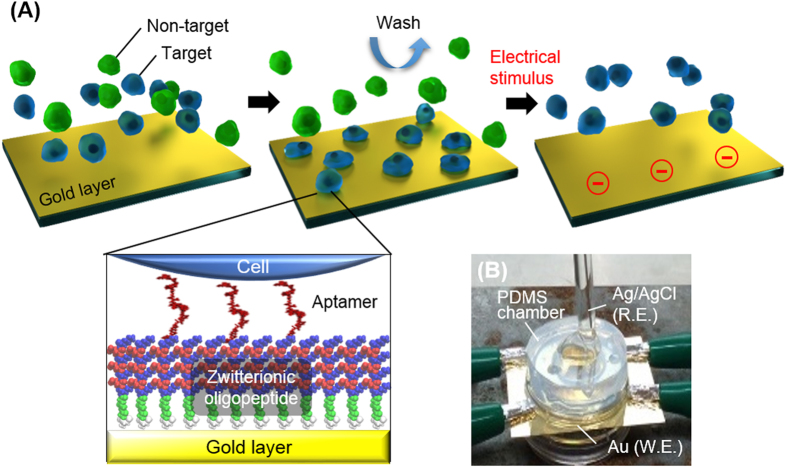
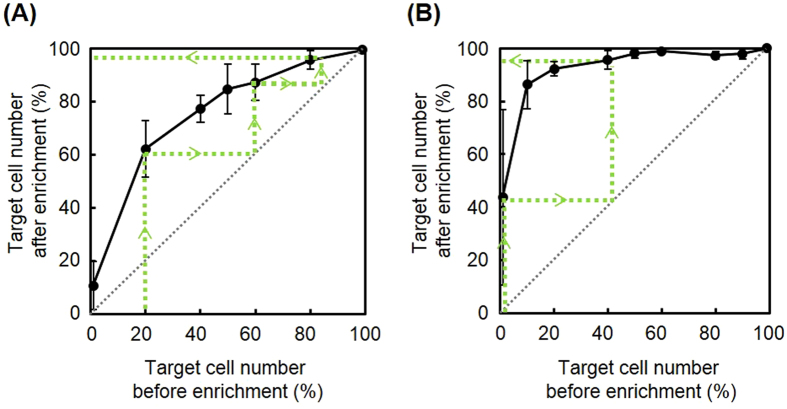
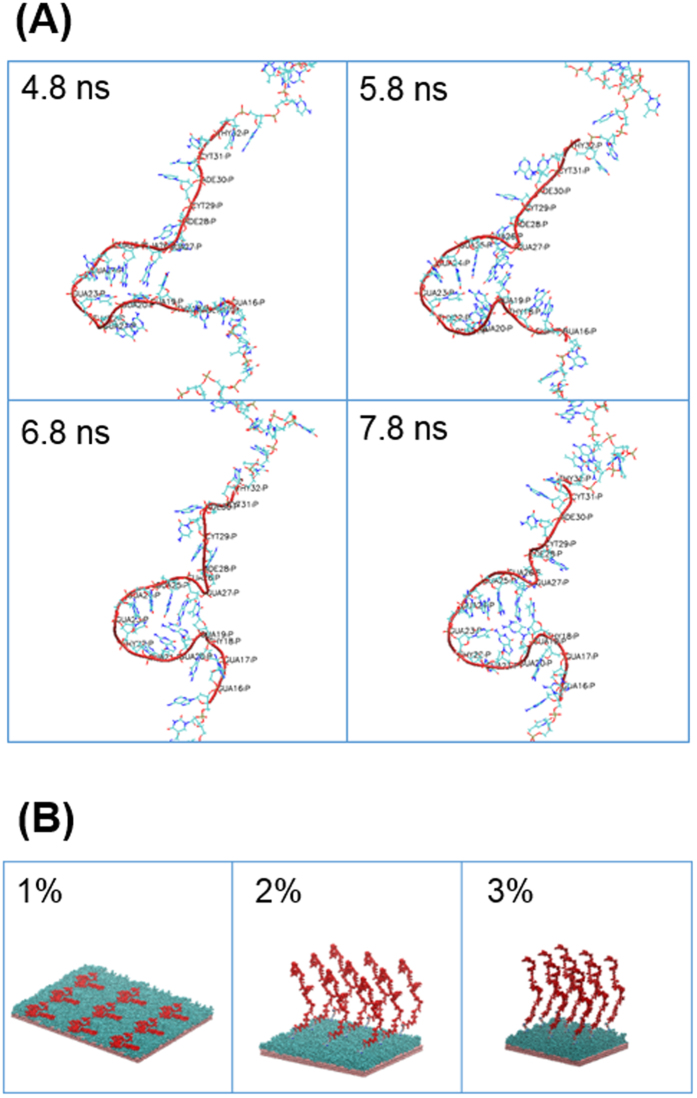
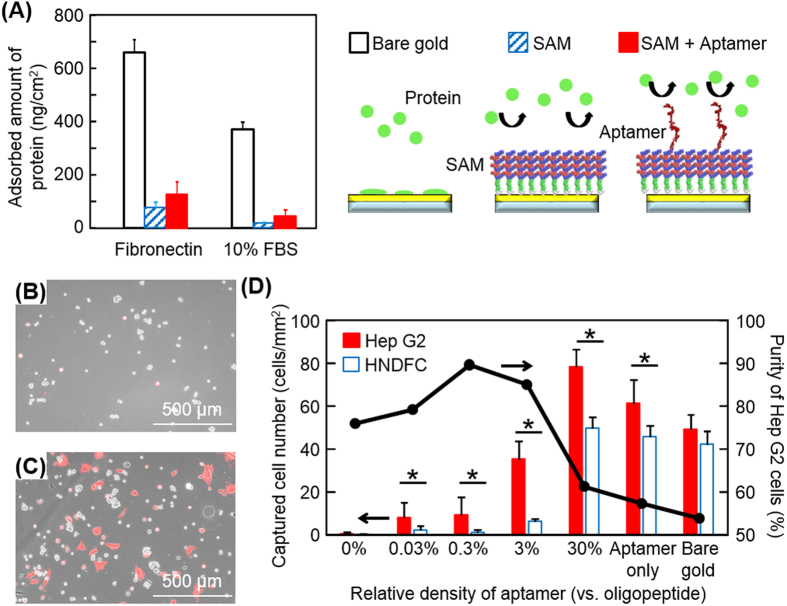
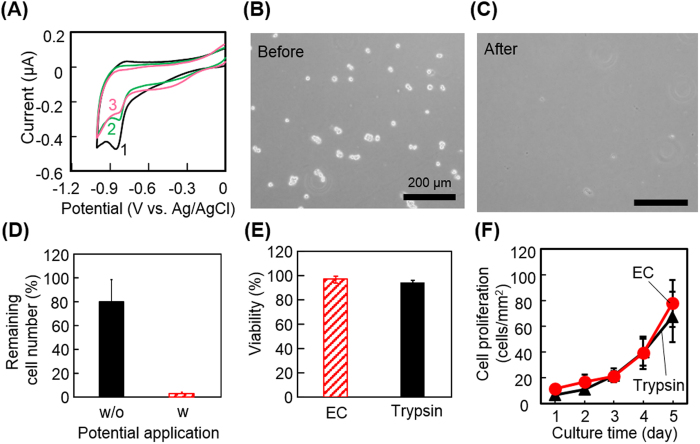
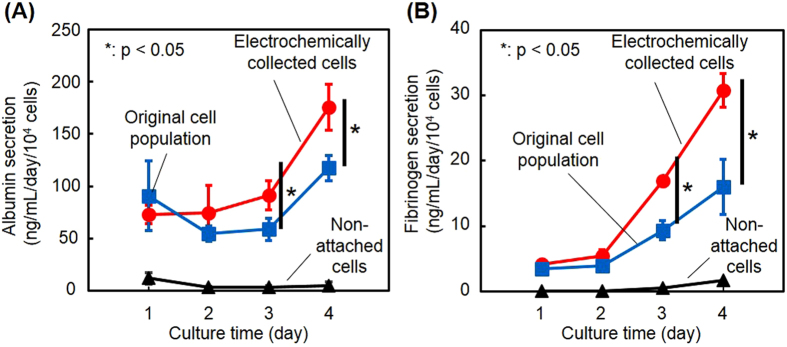
Nucleic acid aptamers possess attractive features such as specific molecular recognition, high-affinity binding, and rapid acquisition and replication, which could be feasible components for separating specific cells from other cell types. This study demonstrates that aptamers conjugated to an oligopeptide self-assembled monolayer (SAM) can be used to selectively trap human hepatic cancer cells from cell mixtures containing normal human hepatocytes or human fibroblasts. Molecular dynamics calculations have been performed to understand how the configurations of the aptamers are related to the experimental results of selective cell capture. We further demonstrate that the captured hepatic cancer cells can be detached and collected along with electrochemical desorption of the oligopeptide SAM, and by repeating these catch-and-release processes, target cells can be enriched. This combination of capture with aptamers and detachment with electrochemical reactions is a promising tool in various research fields ranging from basic cancer research to tissue engineering applications.
核酸适体具有独特的分子识别、高亲和力结合以及快速获取和复制等特点,这使其成为从其他细胞类型中分离特定细胞的可行组成部分。本研究表明,连接到寡肽自组装单层(SAM)上的适体可用于从含有正常人类肝细胞或人成纤维细胞的细胞混合物中选择性地捕获人类肝癌细胞。进行了分子动力学计算,以了解适体的构象如何与选择性细胞捕获的实验结果相关。我们进一步证明,通过电化学解吸寡肽 SAM,可以将捕获的肝癌细胞与电化学解吸一起分离和收集,并且通过重复这些捕获-释放过程,可以富集靶细胞。这种结合适体的捕获和电化学反应的释放是一种很有前途的工具,可应用于从基础癌症研究到组织工程应用等各个研究领域。