Fragale Jennifer E C, Beck Kevin D, Pang Kevin C H
Graduate School of Biomedical Sciences, Rutgers Biomedical and Health Sciences Newark, NJ, USA.
Graduate School of Biomedical Sciences, Rutgers Biomedical and Health SciencesNewark, NJ, USA; Neurobehavioral Research Lab, Department of Veteran Affairs Medical Center-New Jersey Health Care SystemEast Orange, NJ, USA; Department of Pharmacology, Physiology and Neurosciences, New Jersey Medical School-Rutgers Biomedical and Health SciencesNewark, NJ, USA.
Front Neurosci. 2017 Feb 21;11:77. doi: 10.3389/fnins.2017.00077. eCollection 2017.
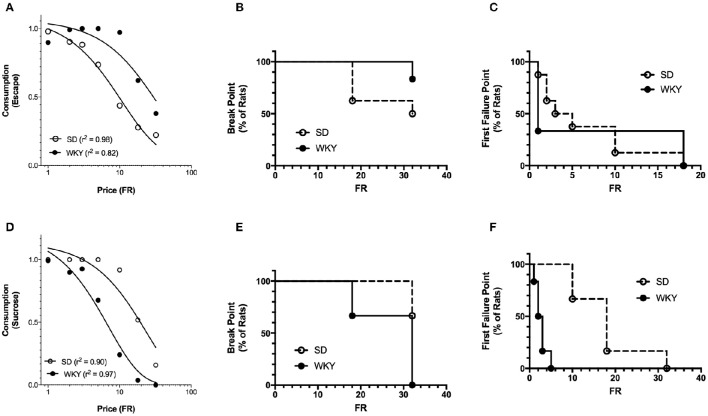
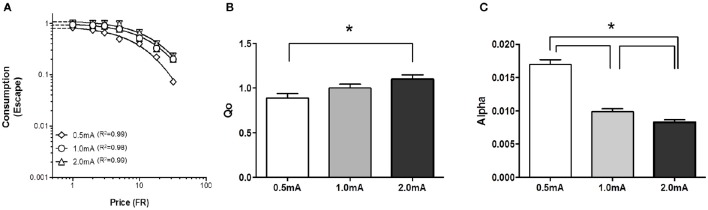
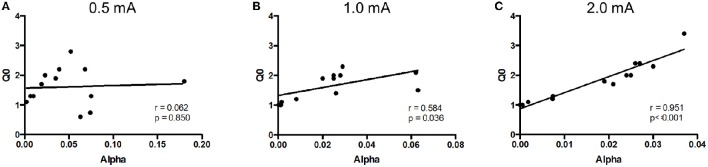
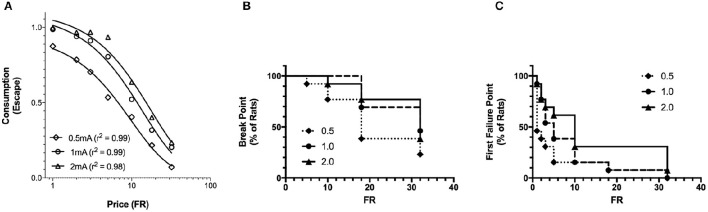
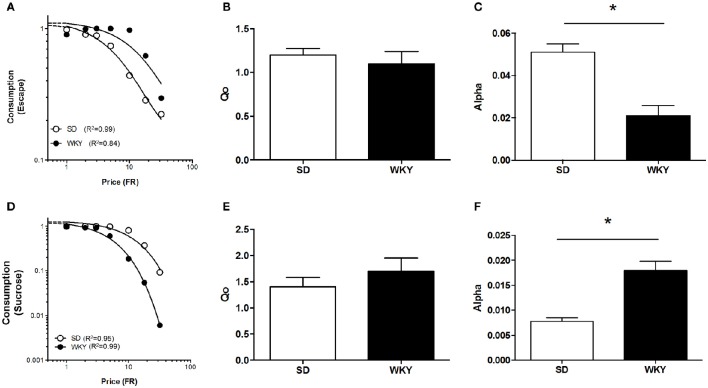
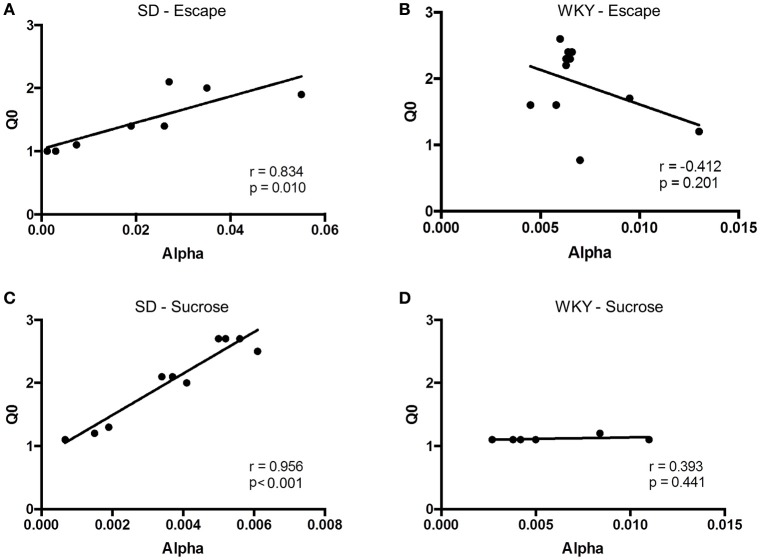
Abnormal motivation and hedonic assessment of aversive stimuli are symptoms of anxiety and depression. Symptoms influenced by motivation and anhedonia predict treatment success or resistance. Therefore, a translational approach to the study of negatively motivated behaviors is needed. We describe a novel use of behavioral economics demand curve analysis to investigate negative reinforcement in animals that separates hedonic assessment of footshock termination (i.e., relief) from motivation to escape footshock. In outbred Sprague Dawley (SD) rats, relief increased as shock intensity increased. Likewise, motivation to escape footshock increased as shock intensity increased. To demonstrate the applicability to anxiety disorders, hedonic and motivational components of negative reinforcement were investigated in anxiety vulnerable Wistar Kyoto (WKY) rats. WKY rats demonstrated increased motivation for shock cessation with no difference in relief as compared to control SD rats, consistent with a negative bias for motivation in anxiety vulnerability. Moreover, motivation was positively correlated with relief in SD, but not in WKY. This study is the first to assess the hedonic and motivational components of negative reinforcement using behavioral economic analysis. This procedure can be used to investigate positive and negative reinforcement in humans and animals to gain a better understanding of the importance of motivated behavior in stress-related disorders.
对厌恶刺激的异常动机和享乐评估是焦虑和抑郁的症状。受动机和快感缺失影响的症状可预测治疗的成功或抵抗情况。因此,需要一种转化方法来研究负性动机行为。我们描述了一种行为经济学需求曲线分析的新用途,以研究动物中的负性强化,该方法将足部电击终止的享乐评估(即缓解)与逃避足部电击的动机区分开来。在远交系斯普拉格-道利(SD)大鼠中,随着电击强度的增加,缓解感增强。同样,逃避足部电击的动机也随着电击强度的增加而增强。为了证明该方法对焦虑症的适用性,我们在易患焦虑症的Wistar Kyoto(WKY)大鼠中研究了负性强化的享乐和动机成分。与对照SD大鼠相比,WKY大鼠表现出更强的电击停止动机,但缓解感无差异,这与焦虑易感性中动机的负性偏差一致。此外,在SD大鼠中,动机与缓解感呈正相关,但在WKY大鼠中并非如此。本研究首次使用行为经济学分析评估负性强化的享乐和动机成分。该程序可用于研究人类和动物中的正性和负性强化,以更好地理解动机行为在应激相关障碍中的重要性。