Henry Brandon Michael, Sanna Beatrice, Graves Matthew J, Sanna Silvia, Vikse Jens, Tomaszewska Iwona M, Tubbs R Shane, Tomaszewski Krzysztof A
International Evidence-Based Anatomy Working Group, Krakow, Poland; Department of Anatomy, Jagiellonian University Medical College, Krakow, Poland.
Faculty of Medicine and Surgery, University of Cagliari, Sardinia, Italy.
Biomed Res Int. 2017;2017:4357591. doi: 10.1155/2017/4357591. Epub 2017 Feb 8.
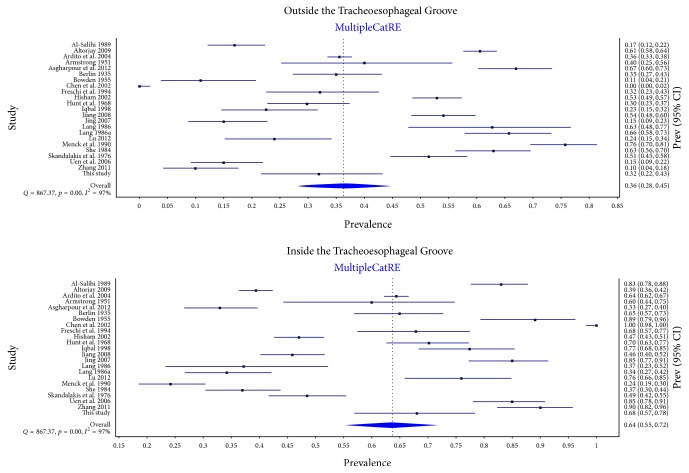
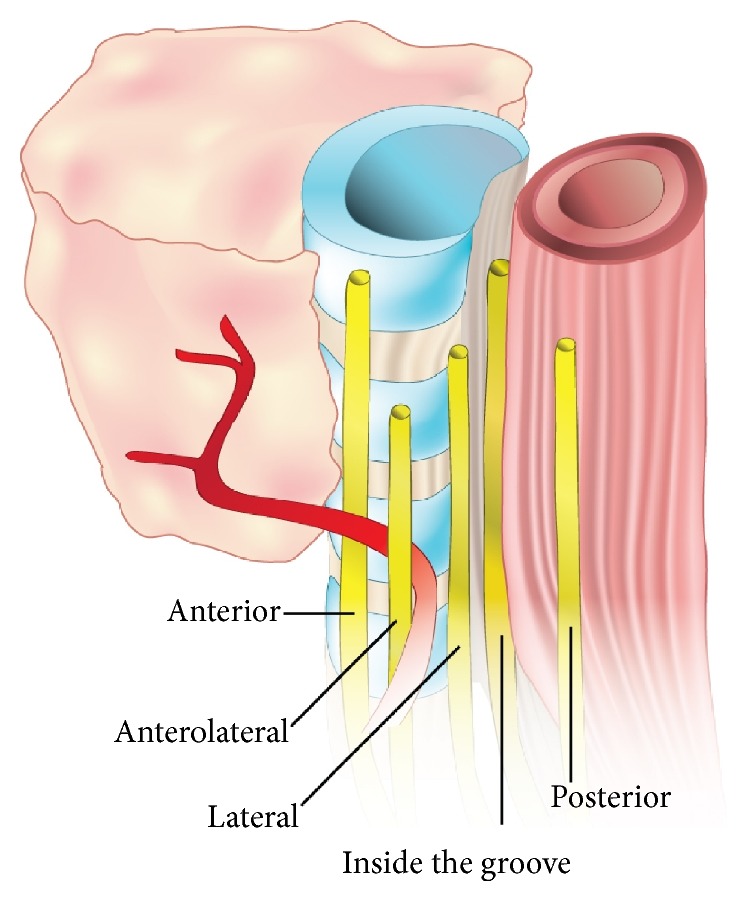
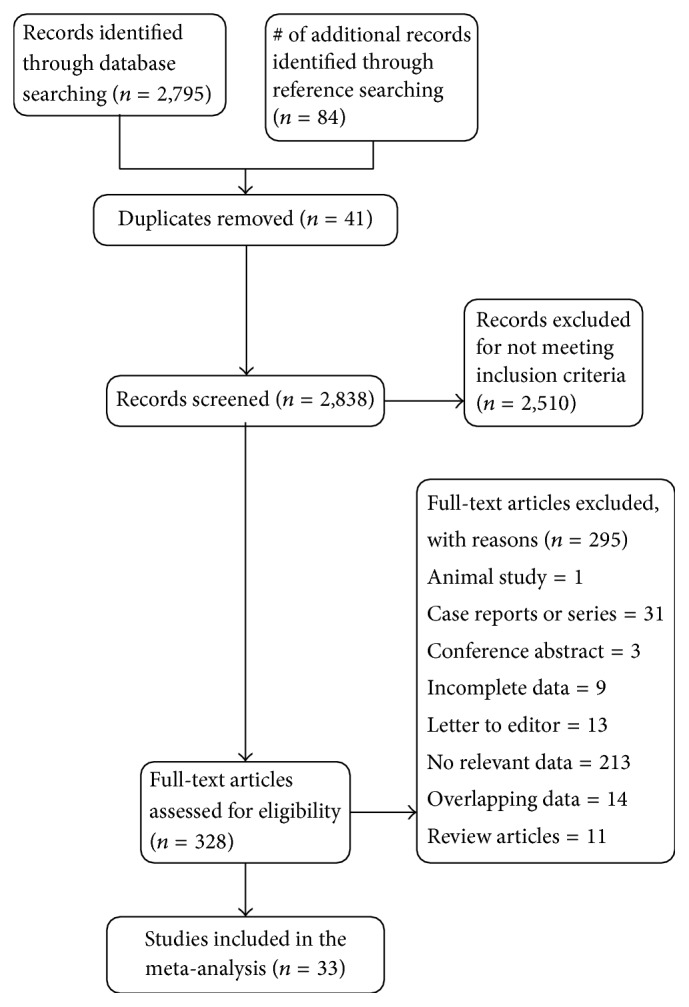
. The aim of this meta-analysis was to provide a comprehensive evidence-based assessment, supplemented by cadaveric dissections, of the value of using the Ligament of Berry and Tracheoesophageal Groove as anatomical landmarks for identifying the Recurrent Laryngeal Nerve. . Seven major databases were searched to identify studies for inclusion. Eligibility was judged by two reviewers. Suitable studies were identified and extracted. MetaXL was used for analysis. All pooled prevalence rates were calculated using a random effects model. Heterogeneity among included studies was assessed using the Chi test and the statistic. . Sixteen studies ( = 2,470 nerves), including original cadaveric data, were analyzed for the BL/RLN relationship. The RLN was most often located superficial to the BL with a pooled prevalence estimate of 78.2% of nerves, followed by deep to the BL in 14.8%. Twenty-three studies ( = 5,970 nerves) examined the RLN/TEG relationship. The RLN was located inside the TEG in 63.7% (95% CI: 55.3-77.7) of sides. . Both the BL and TEG are landmarks that can help surgeons provide patients with complication-free procedures. Our analysis showed that the BL is a more consistent anatomical landmark than the TEG, but it is necessary to use both to prevent iatrogenic RLN injuries during thyroidectomies.
本荟萃分析的目的是通过尸体解剖补充,对使用Berry韧带和气管食管沟作为识别喉返神经的解剖标志的价值进行全面的循证评估。检索了七个主要数据库以确定纳入研究。由两名评审员判断纳入标准。确定并提取合适的研究。使用MetaXL进行分析。所有合并患病率均采用随机效应模型计算。使用卡方检验和I²统计量评估纳入研究之间的异质性。对16项研究(n = 2470条神经),包括原始尸体数据,分析了Berry韧带/喉返神经的关系。喉返神经最常位于Berry韧带的浅面,合并患病率估计为78.2%的神经,其次是位于Berry韧带深面的占14.8%。23项研究(n = 5970条神经)检查了喉返神经/气管食管沟的关系。喉返神经位于气管食管沟内的占6