Malmegrim Kelen C R, de Azevedo Júlia T C, Arruda Lucas C M, Abreu Joana R F, Couri Carlos E B, de Oliveira Gislane L V, Palma Patricia V B, Scortegagna Gabriela T, Stracieri Ana B P L, Moraes Daniela A, Dias Juliana B E, Pieroni Fabiano, Cunha Renato, Guilherme Luiza, Santos Nathália M, Foss Milton C, Covas Dimas T, Burt Richard K, Simões Belinda P, Voltarelli Júlio C, Roep Bart O, Oliveira Maria C
Center for Cell-based Therapy, Regional Blood Center of Ribeirão Preto, Ribeirão Preto Medical School, University of São Paulo, Ribeirão Preto, Brazil; Department of Clinical, Toxicological and Bromatological Analysis, School of Pharmaceutical Sciences of Ribeirão Preto, University of São Paulo, Ribeirão Preto, Brazil.
Center for Cell-based Therapy, Regional Blood Center of Ribeirão Preto, Ribeirão Preto Medical School, University of São Paulo, Ribeirão Preto, Brazil; Department of Biochemistry and Immunology, Ribeirão Preto Medical School, University of São Paulo, Ribeirão Preto, Brazil.
Front Immunol. 2017 Feb 22;8:167. doi: 10.3389/fimmu.2017.00167. eCollection 2017.
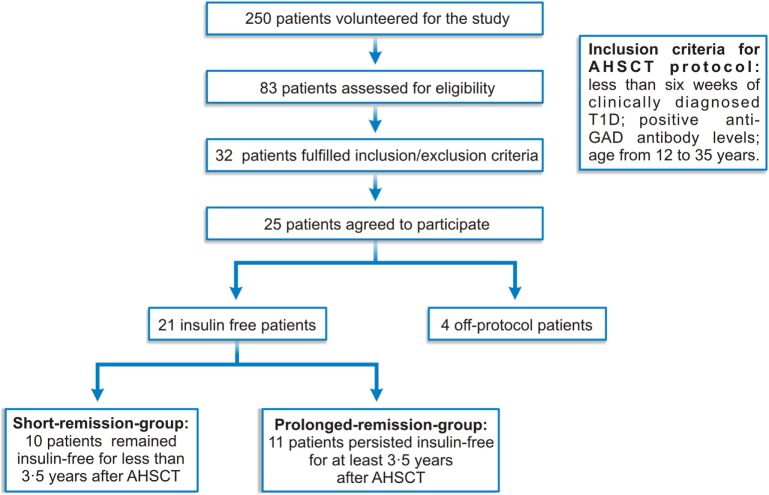
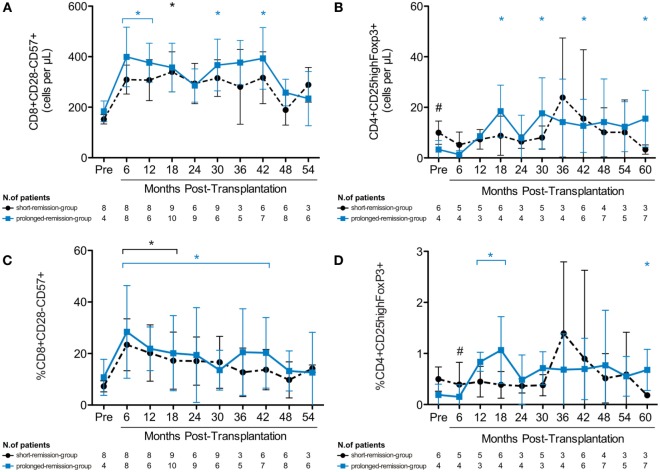
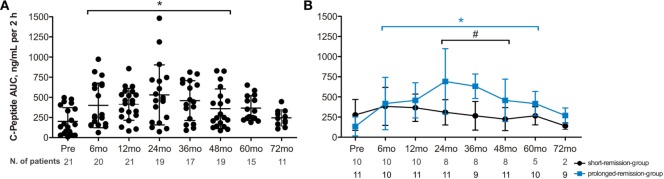
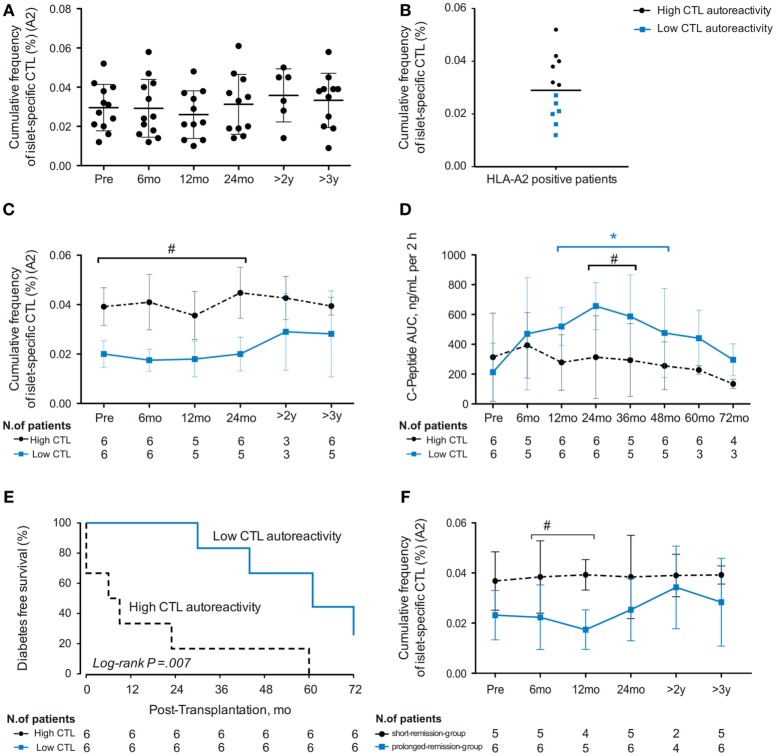
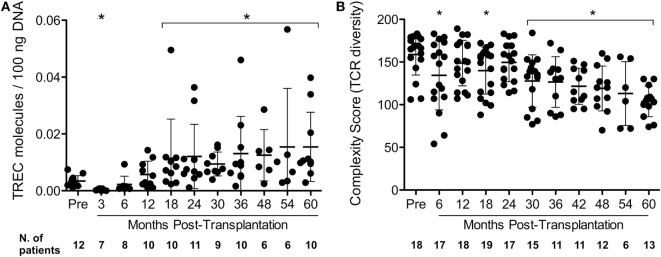
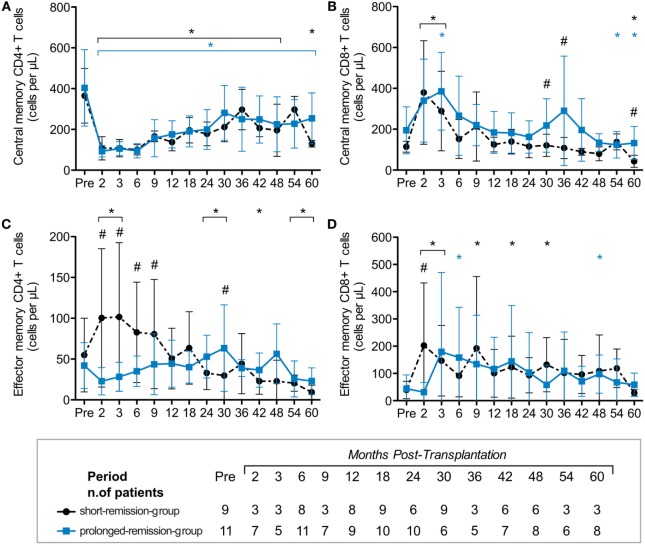
Autologous hematopoietic stem cell transplantation (AHSCT) increases C-peptide levels and induces insulin independence in patients with type 1 diabetes. This study aimed to investigate how clinical outcomes may associate with the immunological status, especially concerning the balance between immunoregulation and autoreactivity. Twenty-one type 1 diabetes patients were monitored after AHSCT and assessed every 6 months for duration of insulin independence, C-peptide levels, frequencies of islet-specific autoreactive CD8 T cells (CTL), regulatory lymphocyte subsets, thymic function, and T-cell repertoire diversity. In median follow-up of 78 (range 15-106) months, all patients became insulin-independent, resuming insulin after median of 43 (range 6-100) months. Patients were retrospectively divided into short- or prolonged-remission groups, according to duration of insulin independence. For the entire follow-up, CD3CD4 T-cell numbers remained lower than baseline in both groups, whereas CD3CD8 T-cell levels did not change, resulting in a CD4/CD8 ratio inversion. Memory CTL comprehended most of T cells detected on long-term follow-up of patients after AHSCT. B cells reconstituted to baseline levels at 2-3 months post-AHSCT in both patient groups. In the prolonged-remission-group, baseline islet-specific T-cell autoreactivity persisted after transplantation, but regulatory T cell counts increased. Patients with lower frequencies of autoreactive islet-specific T cells remained insulin-free longer and presented greater C-peptide levels than those with lower frequencies of these cells. Therefore, immune monitoring identified a subgroup of patients with superior clinical outcome of AHSCT. Our study shows that improved immunoregulation may balance autoreactivity endorsing better metabolic outcomes in patients with lower frequencies of islet-specific T cells. Development of new strategies of AHSCT is necessary to increase frequency and function of T and B regulatory cells and decrease efficiently autoreactive islet-specific T and B memory cells in type 1 diabetes patients undergoing transplantation.
自体造血干细胞移植(AHSCT)可提高1型糖尿病患者的C肽水平并诱导胰岛素自主分泌。本研究旨在探讨临床结局与免疫状态之间的关联,尤其是免疫调节与自身反应性之间的平衡。对21例1型糖尿病患者进行AHSCT后进行监测,每6个月评估一次胰岛素自主分泌持续时间、C肽水平、胰岛特异性自身反应性CD8 T细胞(CTL)频率、调节性淋巴细胞亚群、胸腺功能和T细胞受体库多样性。在中位随访78(范围15 - 106)个月时,所有患者均实现胰岛素自主分泌,在中位43(范围6 - 100)个月后恢复使用胰岛素。根据胰岛素自主分泌持续时间,将患者回顾性分为短期缓解组或长期缓解组。在整个随访期间,两组患者的CD3CD4 T细胞数量均低于基线水平,而CD3CD8 T细胞水平未发生变化,导致CD4/CD8比值倒置。记忆性CTL构成了AHSCT后患者长期随访中检测到的大部分T细胞。两组患者在AHSCT后2 - 3个月时B细胞恢复至基线水平。在长期缓解组中,移植后基线胰岛特异性T细胞自身反应性持续存在,但调节性T细胞计数增加。自身反应性胰岛特异性T细胞频率较低的患者比这些细胞频率较高的患者保持无胰岛素状态的时间更长,且C肽水平更高。因此,免疫监测确定了一组AHSCT临床结局较好的患者亚组。我们的研究表明,改善免疫调节可能平衡自身反应性,使胰岛特异性T细胞频率较低的患者获得更好的代谢结局。有必要开发新的AHSCT策略,以增加1型糖尿病移植患者中T和B调节细胞的频率和功能,并有效减少自身反应性胰岛特异性T和B记忆细胞。