Hilton Gina M, Taylor Alexia J, Hussain Salik, Dandley Erinn C, Griffith Emily H, Garantziotis Stavros, Parsons Gregory N, Bonner James C, Bereman Michael S
a Toxicology Program, Department of Biological Sciences , North Carolina State University , Raleigh , NC , USA.
b Clinical Research Unit , National Institute of Environmental Health Sciences/National Institute of Health , Research Triangle Park , NC , USA.
Nanotoxicology. 2017 Apr;11(3):313-326. doi: 10.1080/17435390.2017.1299888. Epub 2017 Mar 13.
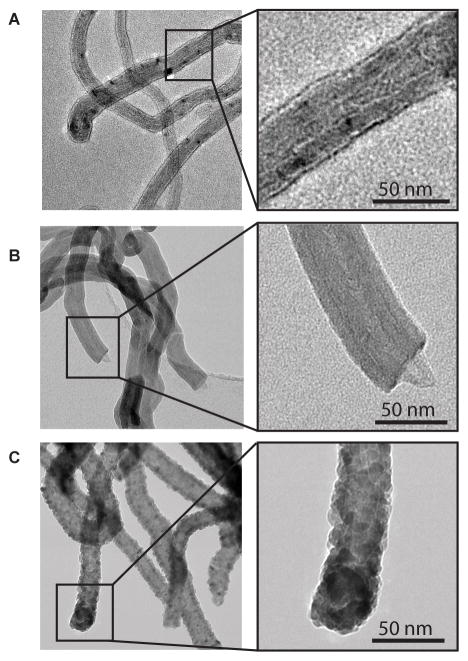
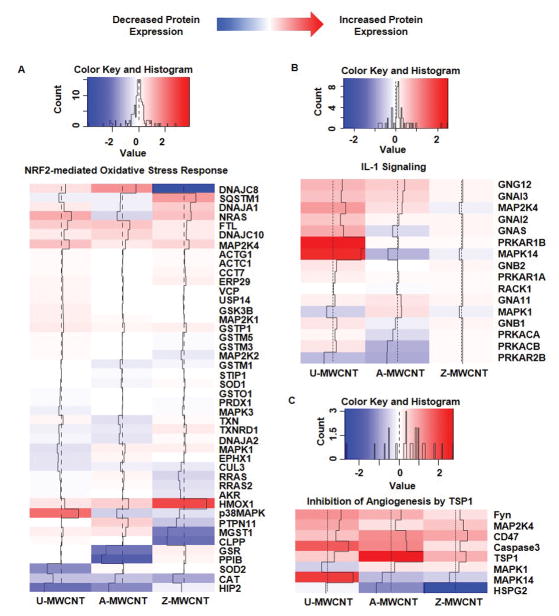
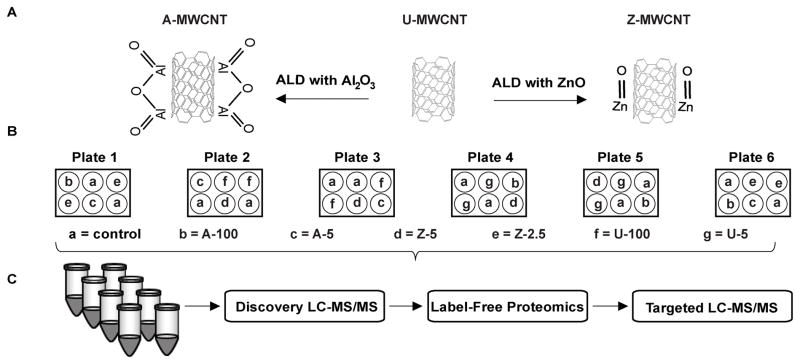
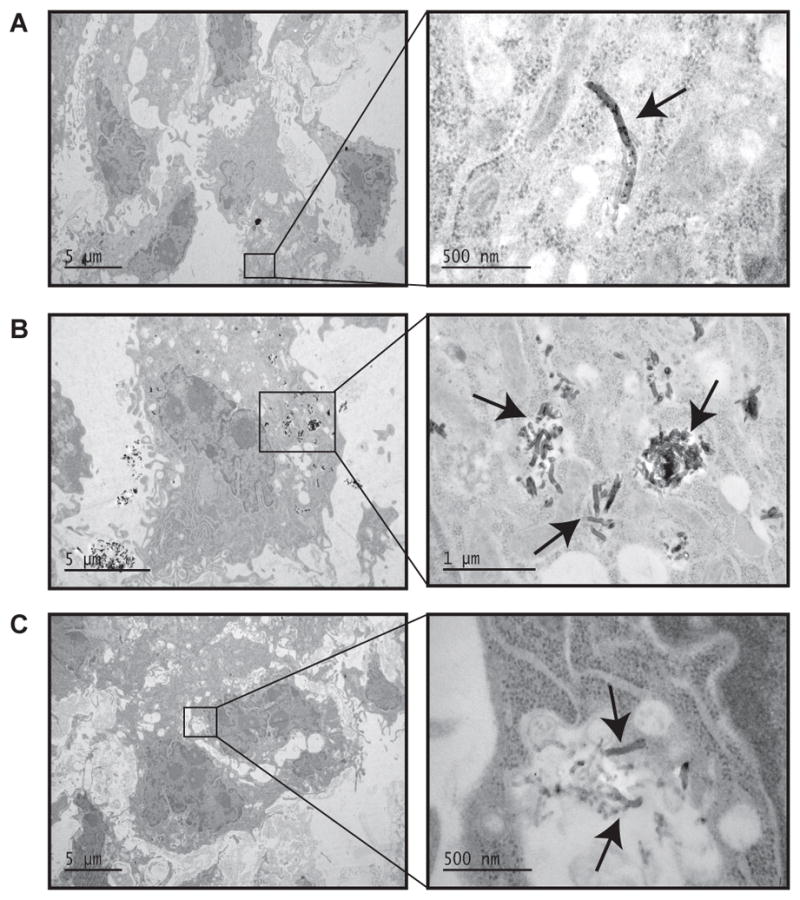
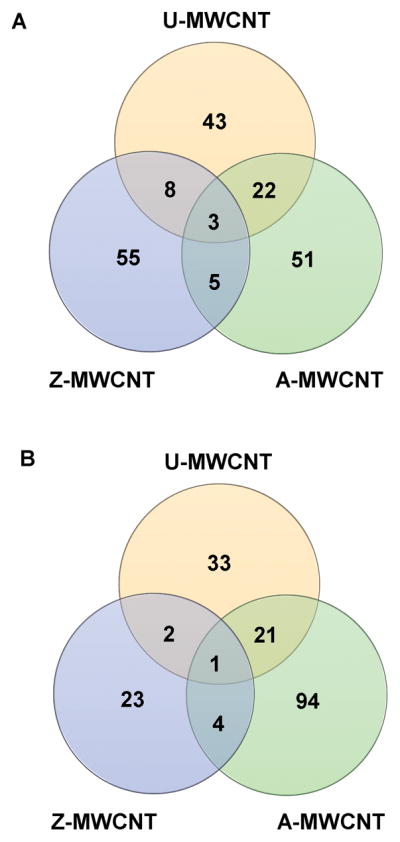
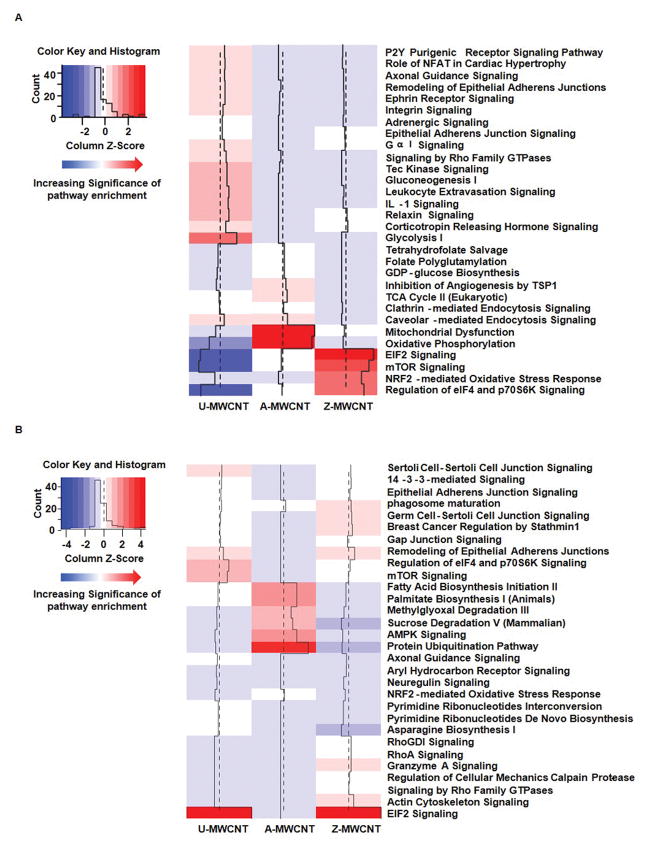
Carbon nanotubes (CNTs), a prototypical engineered nanomaterial, have been increasingly manufactured for a variety of novel applications over the past two decades. However, since CNTs possess fiber-like shape and cause pulmonary fibrosis in rodents, there is concern that mass production of CNTs will lead to occupational exposure and associated pulmonary diseases. The aim of this study was to use contemporary proteomics to investigate the mechanisms of cellular response in E10 mouse alveolar epithelial cells in vitro after exposure to multi-walled CNTs (MWCNTs) that were functionalized by atomic layer deposition (ALD). ALD is a method used to generate highly uniform and conformal nanoscale thin-film coatings of metals to enhance novel conductive properties of CNTs. We hypothesized that specific types of metal oxide coatings applied to the surface of MWCNTs by ALD would determine distinct proteomic profiles in mouse alveolar epithelial cells in vitro that could be used to predict oxidative stress and pulmonary inflammation. Uncoated (U)-MWCNTs were functionalized by ALD with zinc oxide (ZnO) to yield Z-MWCNTs or aluminum oxide (AlO) to yield A-MWCNTs. Significant differential protein expression was found in the following critical pathways: mTOR/eIF4/p70S6K signaling and Nrf-2 mediated oxidative stress response increased following exposure to Z-MWCNTs, interleukin-1 signaling increased following U-MWCNT exposure, and inhibition of angiogenesis by thrombospondin-1, oxidative phosphorylation, and mitochondrial dysfunction increased following A-MWCNT exposure. This study demonstrates that specific types of metal oxide thin film coatings applied by ALD produce distinct cellular and biochemical responses related to lung inflammation and fibrosis compared to uncoated MWCNT exposure in vitro.
碳纳米管(CNTs)是一种典型的工程纳米材料,在过去二十年中,其产量不断增加,被用于各种新型应用。然而,由于碳纳米管具有纤维状形状,并会在啮齿动物中导致肺纤维化,人们担心碳纳米管的大规模生产将导致职业暴露和相关的肺部疾病。本研究的目的是使用当代蛋白质组学技术,研究体外培养的E10小鼠肺泡上皮细胞在暴露于通过原子层沉积(ALD)功能化的多壁碳纳米管(MWCNTs)后的细胞反应机制。ALD是一种用于生成高度均匀且保形的金属纳米级薄膜涂层的方法,以增强碳纳米管的新型导电性能。我们假设,通过ALD应用于MWCNT表面的特定类型的金属氧化物涂层将决定体外培养的小鼠肺泡上皮细胞中不同的蛋白质组学特征,这些特征可用于预测氧化应激和肺部炎症。未涂层(U)-MWCNTs通过ALD用氧化锌(ZnO)功能化,得到Z-MWCNTs,或用氧化铝(AlO)功能化,得到A-MWCNTs。在以下关键途径中发现了显著的差异蛋白表达:暴露于Z-MWCNTs后,mTOR/eIF4/p70S6K信号通路和Nrf-2介导的氧化应激反应增加;暴露于U-MWCNTs后,白细胞介素-1信号通路增加;暴露于A-MWCNTs后,血小板反应蛋白-1对血管生成的抑制、氧化磷酸化和线粒体功能障碍增加。本研究表明,与体外暴露于未涂层的MWCNTs相比,通过ALD应用的特定类型的金属氧化物薄膜涂层会产生与肺部炎症和纤维化相关的不同细胞和生化反应。