Pavia Marco, Meijer Hanneke J M, Rossi Maria Adelaide, Göhlich Ursula B
Dipartimento di Scienze della Terra, Museo di Geologia e Paleontologia , Università degli Studi di Torino , Via Valperga Caluso 35, 10125 Torino , Italy.
Department of Natural History, University Museum, University of Bergen , Postboks 7800, 5007 Bergen , Norway.
R Soc Open Sci. 2017 Jan 11;4(1):160722. doi: 10.1098/rsos.160722. eCollection 2017 Jan.
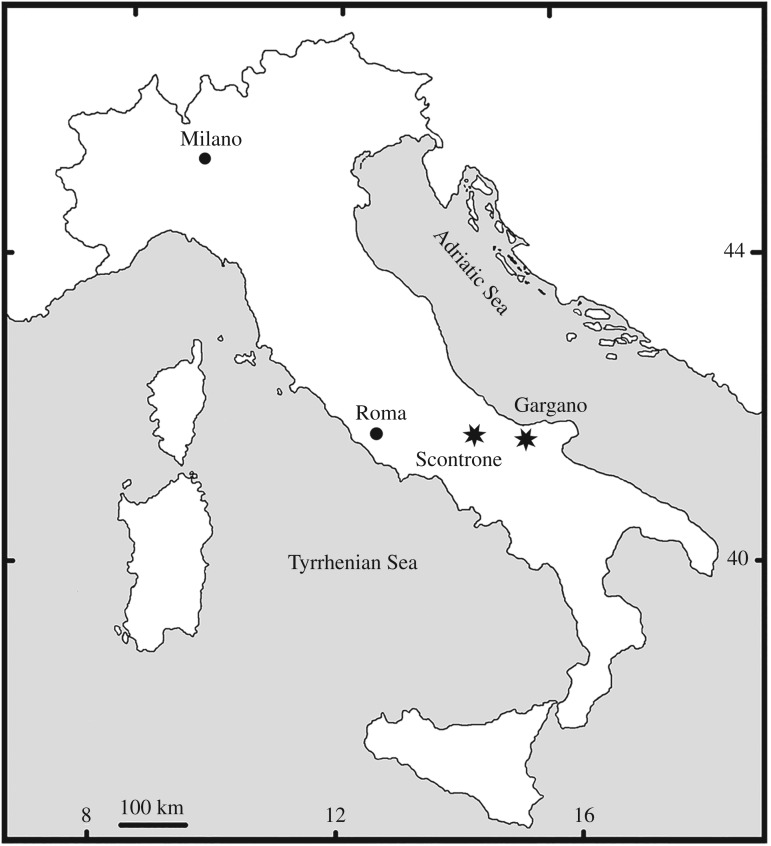
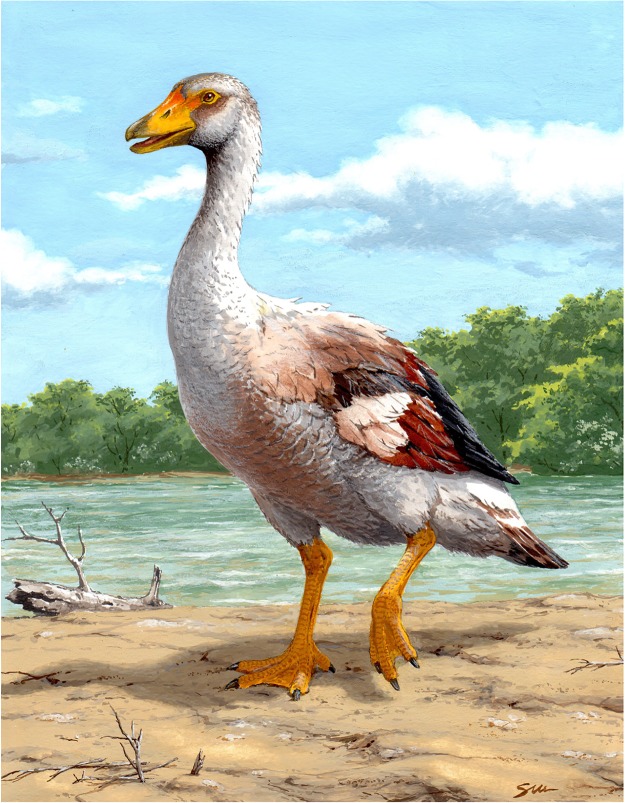
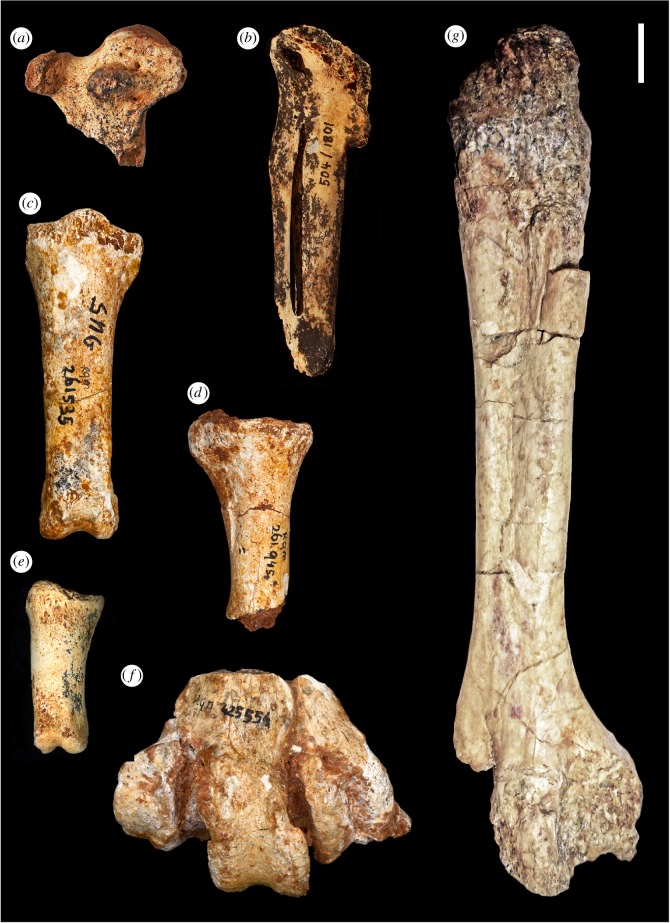
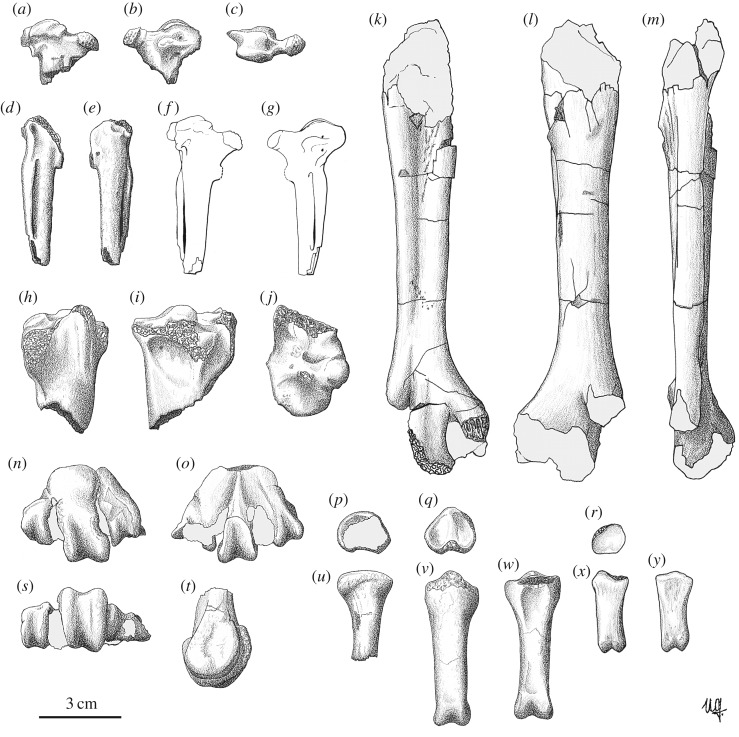
New skeletal elements of the recently described endemic giant anseriform Meijer, 2014 are presented, coming from the type-area of the Gargano and from Scontrone, southern and central Italy, respectively. The new remains represent the first bird remains found at Scontrone so far, and another shared element between these two localities, both part of the Apulia-Abruzzi Palaeobioprovince. The presence of a very reduced carpometacarpus confirms its flightlessness, only previously supposed on the basis of the very large size, while the morphologies of tarsometatarsus and posterior phalanges clearly indicate the adaptation of to a terrestrial, non-aquatic, lifestyle. Its very large body size is similar to that observed in different, heavily modified, insular waterfowl and has been normally interpreted as the response to the absence of terrestrial predators and a protection from the aerial ones. The presence of a carpal knob in the proximal carpometacarpus also indicates a fighting behaviour for this large terrestrial bird species.
本文展示了最近描述的地方性巨型雁形目(Meijer,2014)的新骨骼元素,它们分别来自意大利南部加尔加诺的模式产地和中部的斯孔特罗内。这些新遗骸是迄今为止在斯孔特罗内发现的首批鸟类遗骸,也是这两个地区(均为阿普利亚 - 阿布鲁齐古生物省的一部分)之间的另一个共有元素。极度缩短的腕掌骨的存在证实了它不会飞,此前只是基于其巨大的体型才做出这样的推测,而跗跖骨和后趾骨的形态清楚地表明它适应陆地而非水生的生活方式。它非常大的体型与在不同的、经过大量演化的岛屿水禽中观察到的体型相似,通常被解释为对陆地捕食者缺失的反应以及对空中捕食者的一种保护。近端腕掌骨上腕骨瘤的存在也表明这种大型陆地鸟类具有争斗行为。