Sominsky Luba, Ziko Ilvana, Spencer Sarah J
School of Health and Biomedical Sciences RMIT University, Melbourne, Victoria, Australia.
PLoS One. 2017 Mar 10;12(3):e0173498. doi: 10.1371/journal.pone.0173498. eCollection 2017.
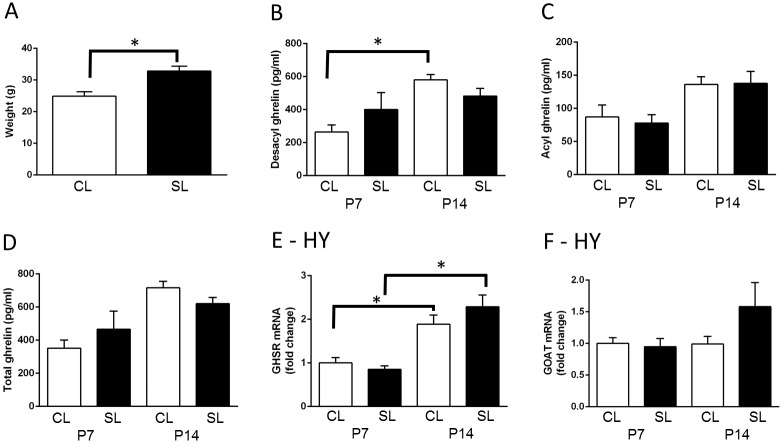
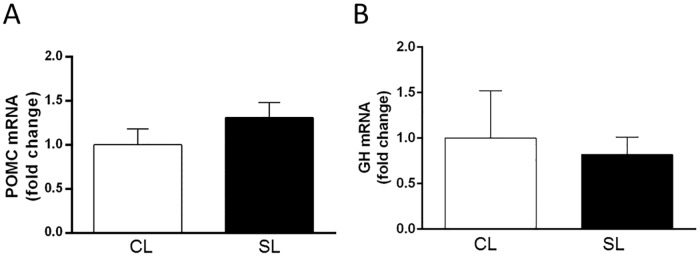
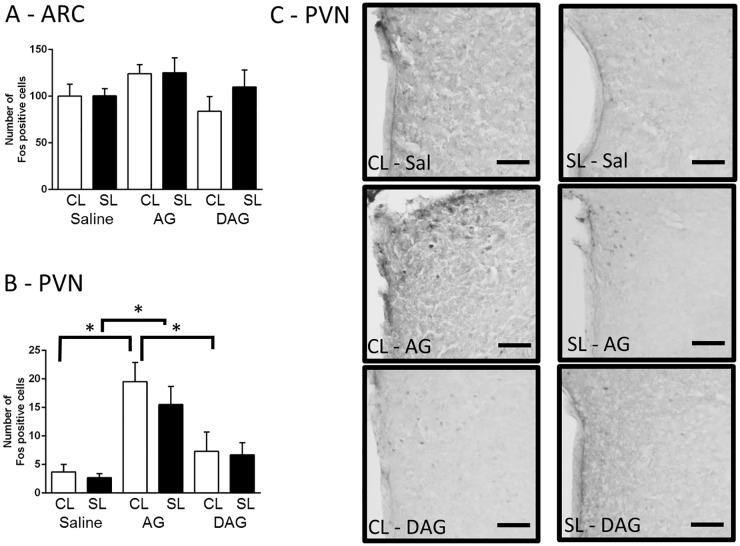
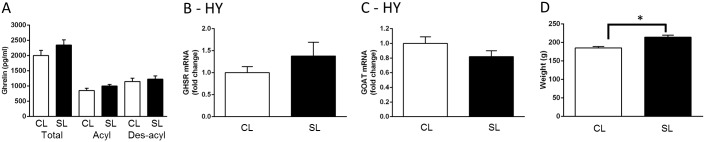
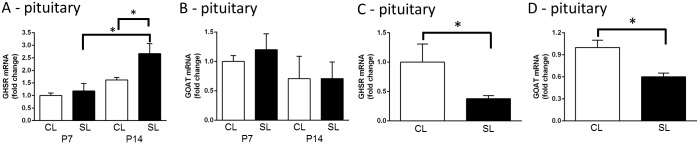
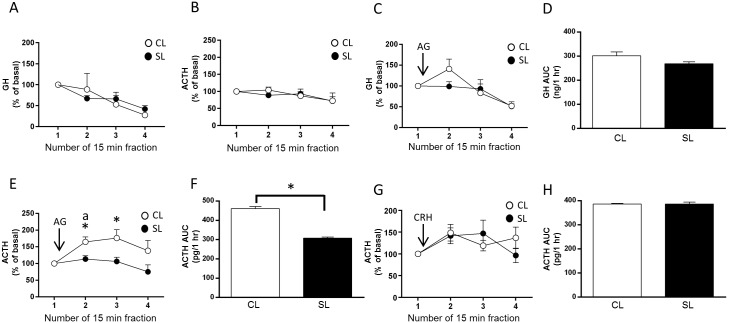
The hypothalamic-pituitary-adrenal (HPA) axis responses to psychological stress are exacerbated in adult female but not male rats made obese due to overfeeding in early life. Ghrelin, traditionally known for its role in energy homeostasis, has been recently recognised for its role in coordinating the HPA responses to stress, particularly by acting directly at the anterior pituitary where the growth hormone secretagogue receptor (GHSR), the receptor for acyl ghrelin, is abundantly expressed. We therefore hypothesised that neonatal overfeeding in female rats would compromise pituitary responsiveness to ghrelin, contributing to a hyperactive central stress responsiveness. Unlike in males where hypothalamic ghrelin signalling is compromised by neonatal overfeeding, there was no effect of early life diet on circulating ghrelin or hypothalamic ghrelin signalling in females, indicating hypothalamic feeding and metabolic ghrelin circuitry remains intact. However, neonatal overfeeding did lead to long-term alterations in the pituitary ghrelin system. The neonatally overfed females had increased neonatal and reduced adult expression of GHSR and ghrelin-O-acyl transferase (GOAT) in the pituitary as well as reduced pituitary responsiveness to exogenous acyl ghrelin-induced adrenocorticotropic hormone (ACTH) release in vitro. These data suggest that neonatal overfeeding dysregulates pituitary ghrelin signalling long-term in females, potentially accounting for the hyper-responsive HPA axis in these animals. These findings have implications for how females may respond to stress throughout life, suggesting the way ghrelin modifies the stress response at the level of the pituitary may be less efficient in the neonatally overfed.
由于幼年期过度喂养而肥胖的成年雌性大鼠,其下丘脑 - 垂体 - 肾上腺(HPA)轴对心理应激的反应会加剧,而雄性大鼠则不会。胃饥饿素传统上因其在能量稳态中的作用而为人所知,最近人们认识到它在协调HPA对应激的反应中也发挥作用,特别是通过直接作用于垂体前叶,在垂体前叶中生长激素促分泌素受体(GHSR),即酰基胃饥饿素的受体,大量表达。因此,我们推测雌性大鼠幼年期过度喂养会损害垂体对胃饥饿素的反应性,导致中枢应激反应过度活跃。与雄性大鼠不同,雄性大鼠下丘脑胃饥饿素信号传导因幼年期过度喂养而受损,而雌性大鼠的早期饮食对循环胃饥饿素或下丘脑胃饥饿素信号传导没有影响,这表明下丘脑的进食和代谢性胃饥饿素回路保持完整。然而,幼年期过度喂养确实导致了垂体胃饥饿素系统的长期改变。幼年期过度喂养的雌性大鼠垂体中GHSR和胃饥饿素 - O - 酰基转移酶(GOAT)的新生期表达增加,成年期表达减少,并且垂体对外源性酰基胃饥饿素诱导的促肾上腺皮质激素(ACTH)释放的体外反应性降低。这些数据表明,幼年期过度喂养会长期失调雌性大鼠垂体中的胃饥饿素信号传导,这可能是这些动物HPA轴反应过度的原因。这些发现对雌性在一生中如何应对压力具有启示意义,表明胃饥饿素在垂体水平调节应激反应的方式在幼年期过度喂养的大鼠中可能效率较低。