Grandchamp Gabrielle M, Caro Lews, Shank Elizabeth A
Department of Biology, University of North Carolina at Chapel Hill, Chapel Hill, North Carolina, USA.
Department of Microbiology and Immunology, University of North Carolina at Chapel Hill, Chapel Hill, North Carolina, USA.
Appl Environ Microbiol. 2017 May 1;83(10). doi: 10.1128/AEM.03293-16. Print 2017 May 15.
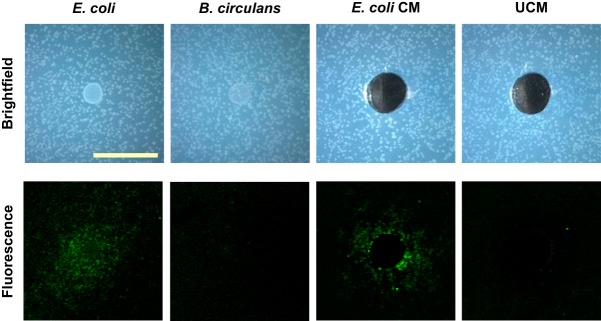
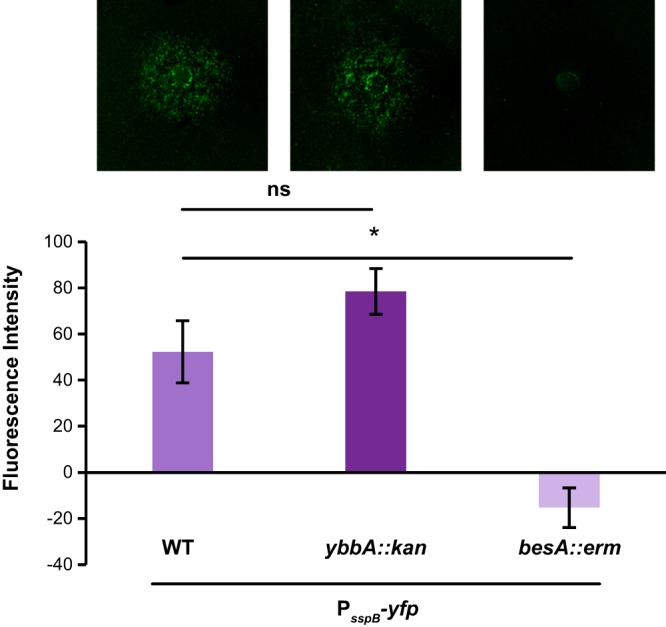
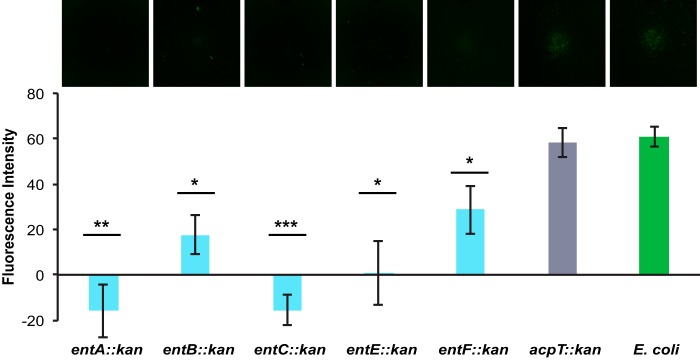
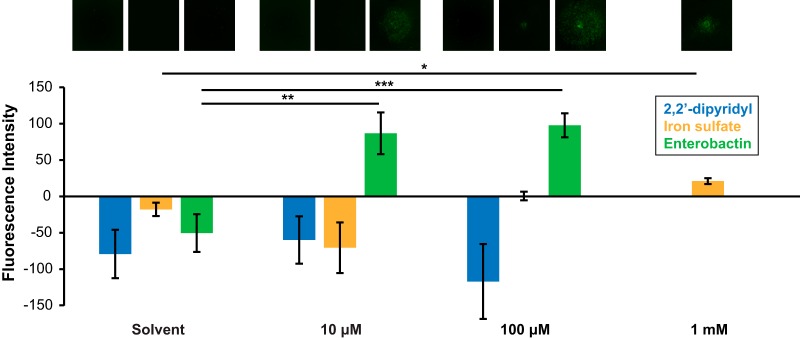
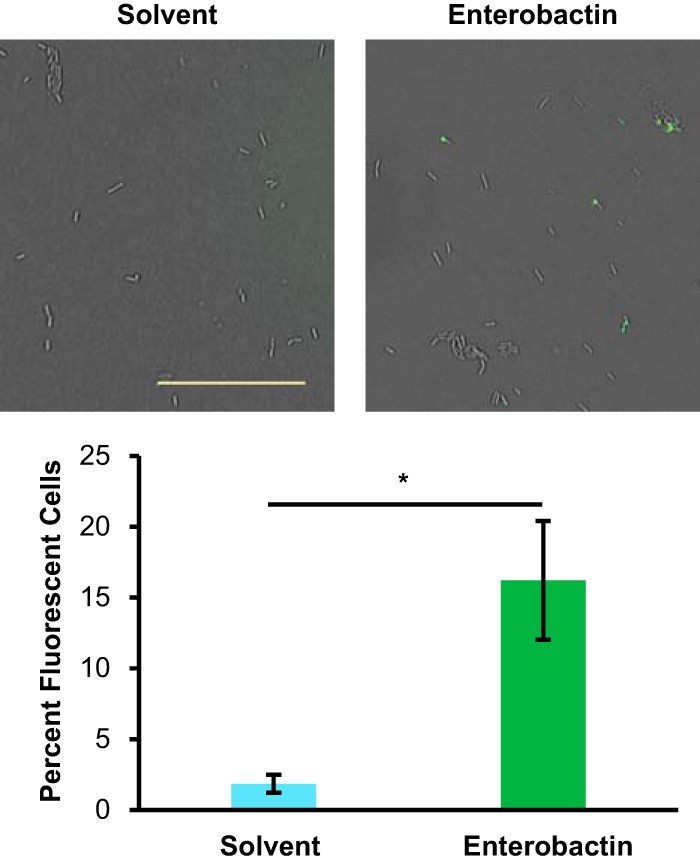
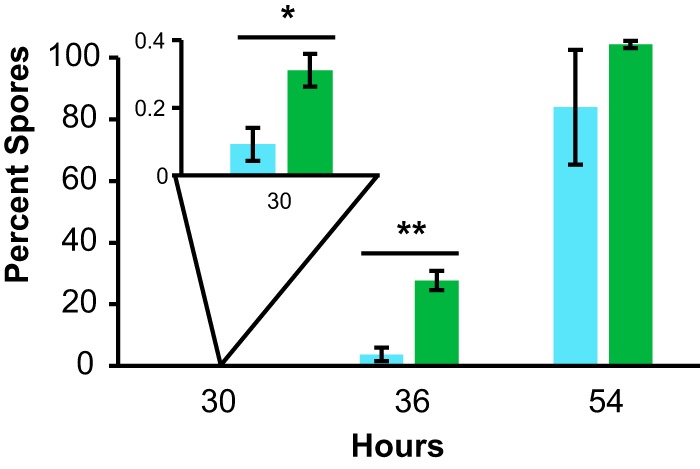
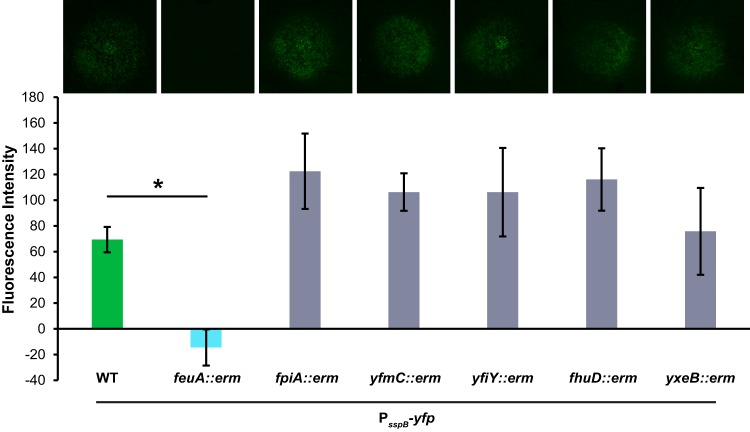
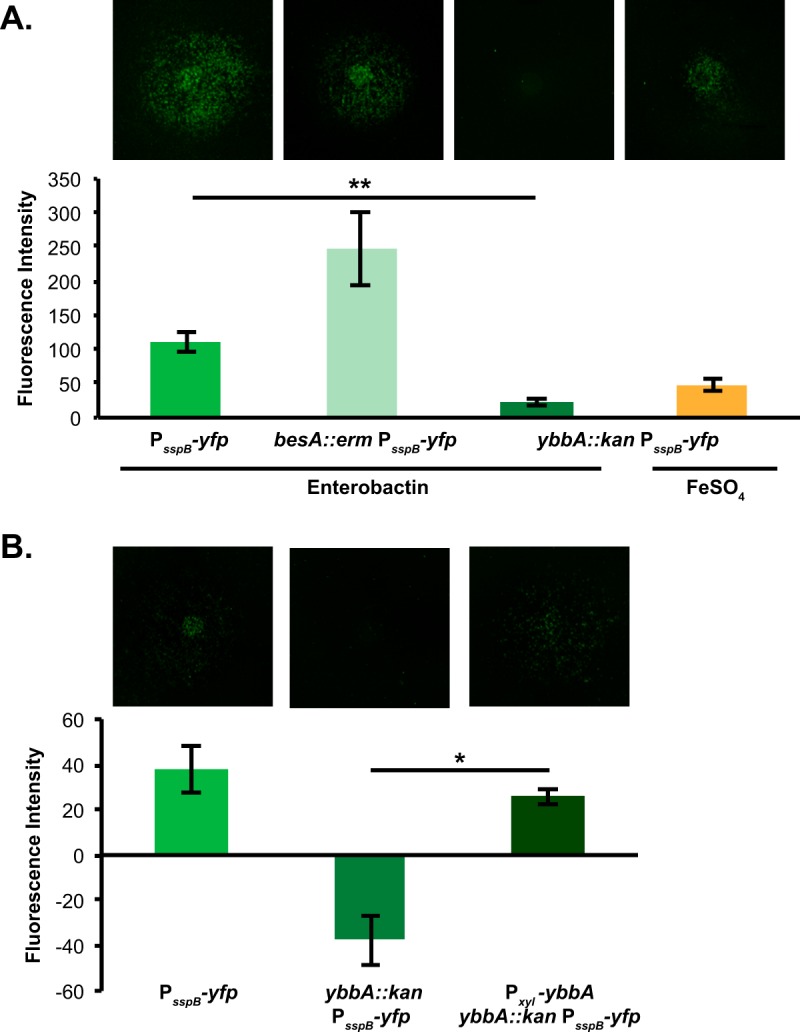
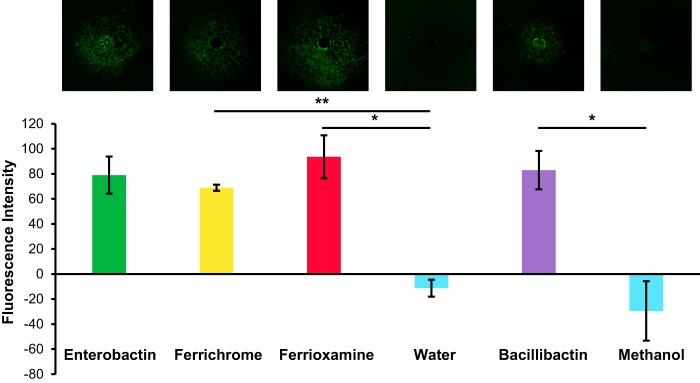
In microbial communities, bacteria chemically and physically interact with one another. Some of these interactions are mediated by secreted specialized metabolites that act as either intraspecies or interspecies signals to alter gene expression and to change cell physiology. is a well-characterized soil microbe that can differentiate into multiple cell types, including metabolically dormant endospores. We were interested in identifying microbial interactions that affected sporulation in Using a fluorescent transcriptional reporter, we observed that coculturing with promoted sporulation gene expression via a secreted metabolite. To identify the active compound, we screened the Keio Collection and identified the sporulation-accelerating cue as the siderophore enterobactin. has multiple iron acquisition systems that are used to take up the produced siderophore bacillibactin, as well as to pirate exogenous siderophores such as enterobactin. While uses a single substrate binding protein (FeuA) to take up both bacillibactin and enterobactin, we discovered that it requires two distinct genes to sporulate in response to these siderophores (the esterase gene for bacillibactin and a putative esterase gene, , for enterobactin). In addition, we found that siderophores from a variety of other microbial species also promote sporulation in Our results thus demonstrate that siderophores can act not only as bacterial iron acquisition systems but also as interspecies cues that alter cellular development and accelerate sporulation in While much is known about the genetic regulation of sporulation, little is understood about how other bacteria influence this process. This work describes an interaction between and that accelerates sporulation in The interaction is mediated by the siderophore enterobactin; we show that other species' siderophores also promote sporulation gene expression in These results suggest that siderophores not only may supply bacteria with the mineral nutrient iron but also may play a role in bacterial interspecies signaling, providing a cue for sporulation. Siderophores are produced by many bacterial species and thus potentially play important roles in altering bacterial cell physiology in diverse environments.
在微生物群落中,细菌彼此之间存在化学和物理相互作用。其中一些相互作用是由分泌的特殊代谢产物介导的,这些代谢产物可作为种内或种间信号,以改变基因表达并改变细胞生理状态。枯草芽孢杆菌是一种特征明确的土壤微生物,它可以分化为多种细胞类型,包括代谢休眠的内生孢子。我们感兴趣的是确定影响枯草芽孢杆菌孢子形成的微生物相互作用。使用荧光转录报告基因,我们观察到枯草芽孢杆菌与大肠杆菌共培养可通过一种分泌的代谢产物促进孢子形成基因的表达。为了鉴定活性化合物,我们筛选了大肠杆菌基因敲除文库,并确定促进孢子形成的信号是铁载体肠杆菌素。枯草芽孢杆菌有多种铁获取系统,用于摄取产生的铁载体杆菌肽,以及掠夺外源铁载体,如肠杆菌素。虽然枯草芽孢杆菌使用单一底物结合蛋白(FeuA)来摄取杆菌肽和肠杆菌素,但我们发现它需要两个不同的基因才能响应这些铁载体而形成孢子(针对杆菌肽的酯酶基因yhcN和针对肠杆菌素的一个假定酯酶基因yhcO)。此外,我们发现来自多种其他微生物物种的铁载体也能促进枯草芽孢杆菌的孢子形成。因此,我们的结果表明,铁载体不仅可以作为细菌的铁获取系统,还可以作为种间信号,改变细胞发育并加速枯草芽孢杆菌的孢子形成。虽然关于枯草芽孢杆菌孢子形成的遗传调控已为人所知,但对于其他细菌如何影响这一过程却知之甚少。这项工作描述了枯草芽孢杆菌与大肠杆菌之间的一种相互作用,这种相互作用加速了枯草芽孢杆菌的孢子形成。这种相互作用是由大肠杆菌的铁载体肠杆菌素介导的;我们表明其他物种的铁载体也能促进枯草芽孢杆菌中孢子形成基因的表达。这些结果表明,铁载体不仅可以为细菌提供矿物质营养铁,还可能在细菌种间信号传导中发挥作用,为孢子形成提供信号。许多细菌物种都会产生铁载体,因此它们可能在不同环境中改变细菌细胞生理方面发挥重要作用。