Ahmed Shubbir, Shrivastava Tripti, Kumar Naresh, Ozorowski Gabriel, Ward Andrew B, Chakrabarti Bimal K
HIV Vaccine Translational Research Laboratory, Translational Health Science & Technology Institute, NCR Biotech Science Cluster, Faridabad, Haryana 121001, India.
HIV Vaccine Translational Research Laboratory, Translational Health Science & Technology Institute, NCR Biotech Science Cluster, Faridabad, Haryana 121001, India.
J Biol Chem. 2017 May 19;292(20):8236-8243. doi: 10.1074/jbc.M117.776419. Epub 2017 Mar 10.
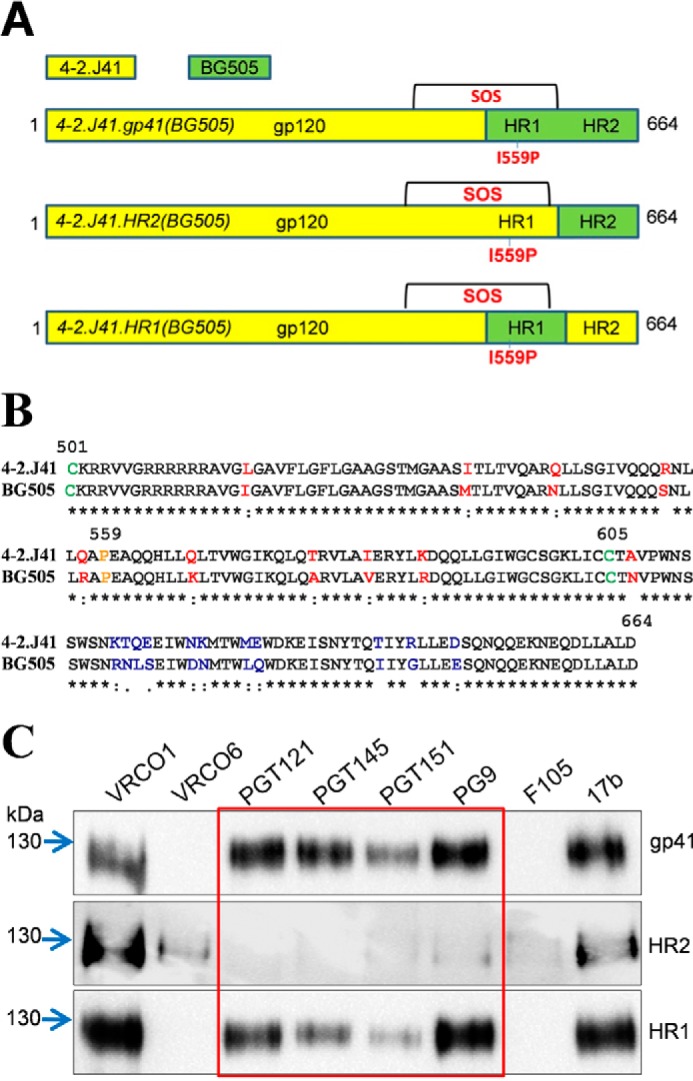
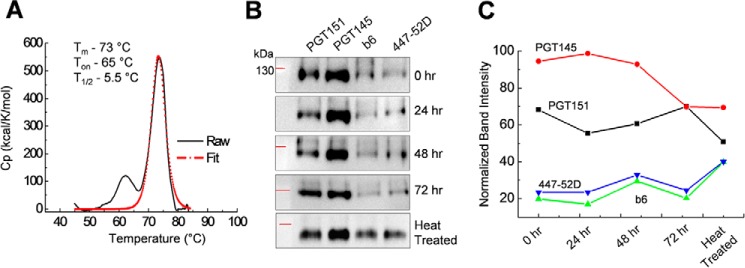
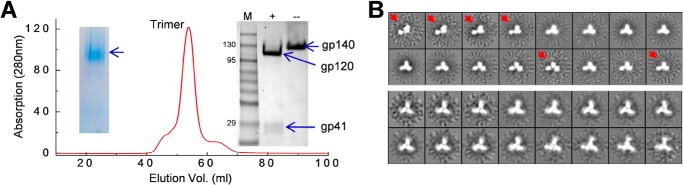
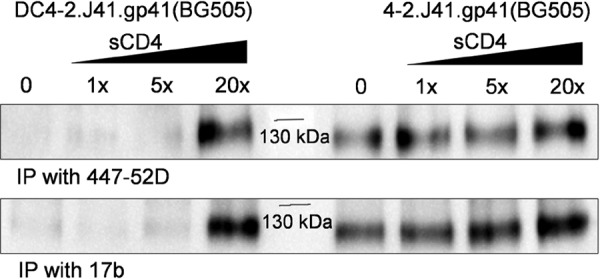
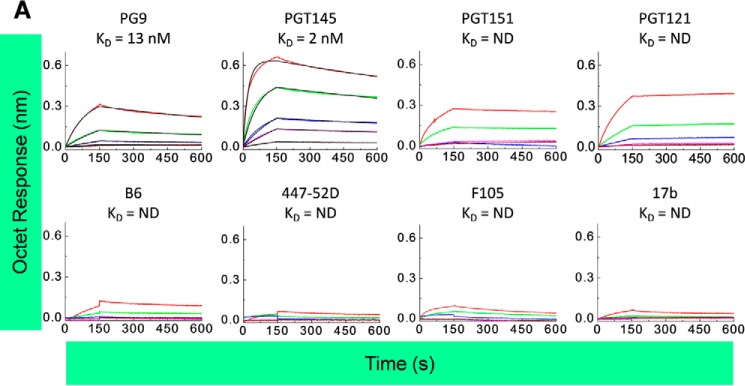
Designing an effective HIV-1 envelope glycoprotein (Env) immunogen for elicitation of broadly neutralizing antibodies (bNAbs) is a challenging task because of the high sequence diversity, heavy glycosylation, and inherent meta-stability of Env. Based on the antigenic profile of recently isolated bNAbs, the rational approach to immunogen design is to make a stable version of the Env trimer, which mimics the native trimeric Env present on the viral surface. The SOSIP.664 form of a clade A Env, BG505, yields a homogeneous and well ordered prefusion trimeric form, which maintains structural integrity and desired antigenicity. Following the same approach, we attempted to stabilize a naturally occurring efficiently cleaved clade C Env, namely 4-2.J41, isolated from an Indian patient. Although the SOSIP form of 4-2.J41 failed to produce reasonably well ordered trimers, the 4-2.J41.SOSIP.664 Env could be stabilized in a native-like trimeric form by swapping a domain from BG505 Env to 4-2.J41 Env. Using various biochemical and biophysical means we confirmed that this engineered Env is cleaved, trimeric, and it retains its native-like quaternary conformation exposing mostly broadly neutralizing epitopes. Moreover, introduction of a disulfide bond in the bridging sheet region further stabilized the closed conformation of the Env. Thus, our 4-2.J41.SOSIP.664 Env adds to the increasing pool of potential immunogens for a HIV-1 vaccine, particularly for clade C, which is the most prevalent in India and many other countries. Besides, the approach used to stabilize the 4-2.J41 Env may be used successfully with Envs from other HIV-1 strains as well. Additionally, a soluble native trimeric form of an efficiently cleaved membrane-bound Env, 4-2.J41, may be beneficial for immunization studies using various prime-boost strategies.
设计一种有效的HIV-1包膜糖蛋白(Env)免疫原以诱导广泛中和抗体(bNAbs)是一项具有挑战性的任务,因为Env具有高度的序列多样性、大量糖基化以及固有的亚稳定性。基于最近分离出的bNAbs的抗原特性,免疫原设计的合理方法是制造一种稳定的Env三聚体版本,它模仿病毒表面存在的天然三聚体Env。A亚型Env BG505的SOSIP.664形式产生了一种均匀且有序的预融合三聚体形式,它保持了结构完整性和所需的抗原性。遵循相同的方法,我们试图稳定一种天然存在的、可有效切割的C亚型Env,即从一名印度患者分离出的4-2.J41。尽管4-2.J41的SOSIP形式未能产生相当有序的三聚体,但通过将BG505 Env的一个结构域与4-2.J41 Env交换,4-2.J41.SOSIP.664 Env可以稳定为类似天然的三聚体形式。我们使用各种生化和生物物理方法证实,这种工程化的Env被切割、形成三聚体,并且保留了其类似天然的四级构象,大部分暴露了广泛中和表位。此外,在桥接片层区域引入二硫键进一步稳定了Env的封闭构象。因此,我们的4-2.J41.SOSIP.664 Env增加了用于HIV-1疫苗的潜在免疫原库,特别是对于C亚型,它在印度和许多其他国家最为普遍。此外,用于稳定4-2.J41 Env的方法也可能成功应用于其他HIV-1菌株的Env。此外,一种可有效切割的膜结合Env 4-2.J41的可溶性天然三聚体形式可能有利于使用各种初免-加强策略的免疫研究。