Gan Zhen-Shun, Wang Qian-Qian, Li Jia-Hui, Wang Xu-Liang, Wang Yi-Zhen, Du Hua-Hua
Key Laboratory of Animal Nutrition and Feed Science (Eastern of China), Ministry of Agriculture, College of Animal Science, Zhejiang University, Hangzhou 310058, China.
Mediators Inflamm. 2017;2017:8570818. doi: 10.1155/2017/8570818. Epub 2017 Feb 13.
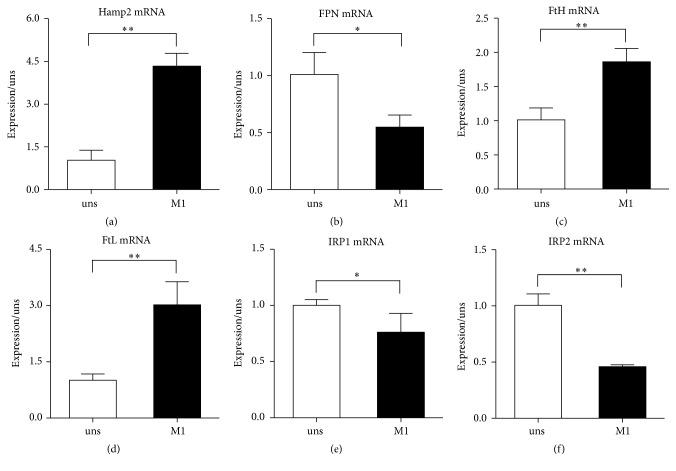
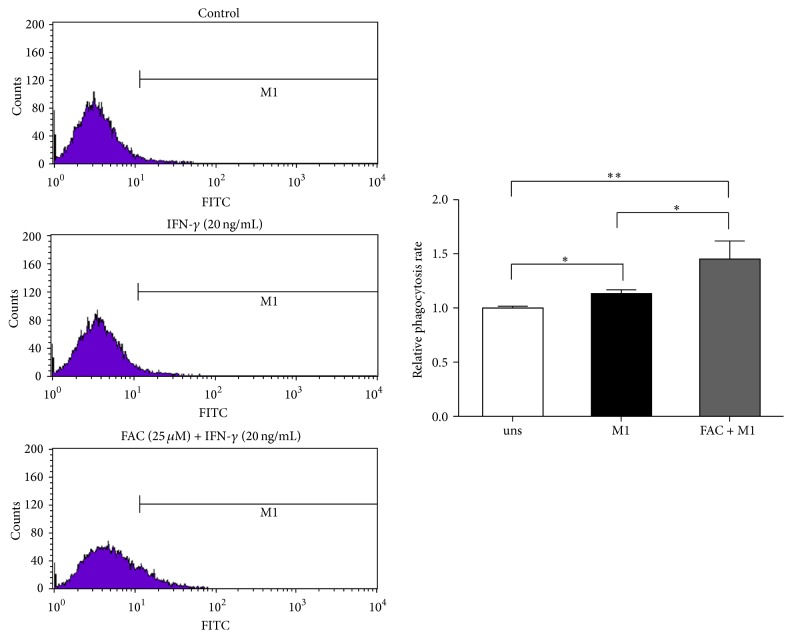
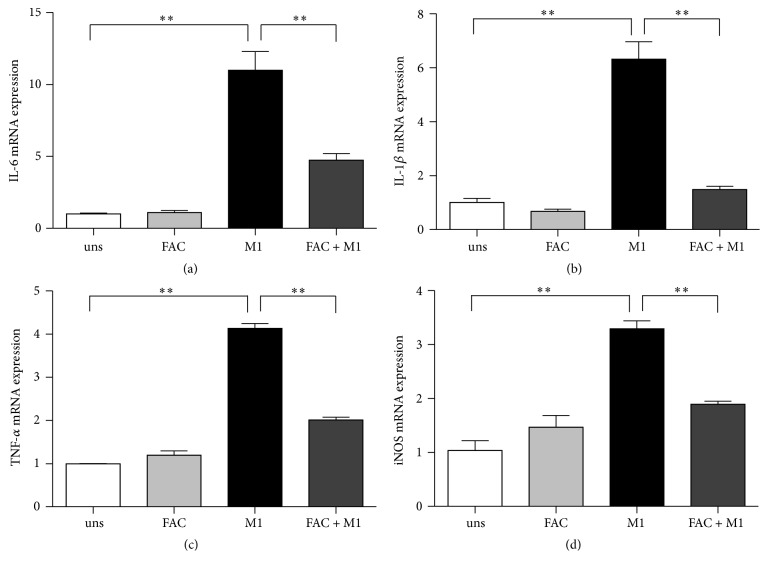
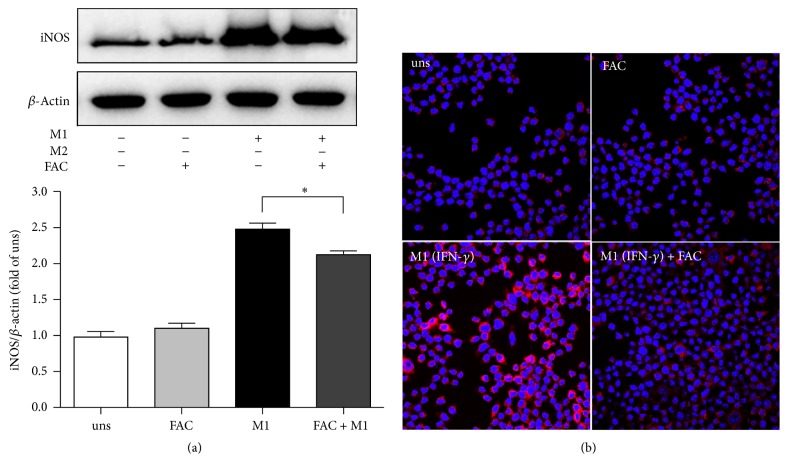
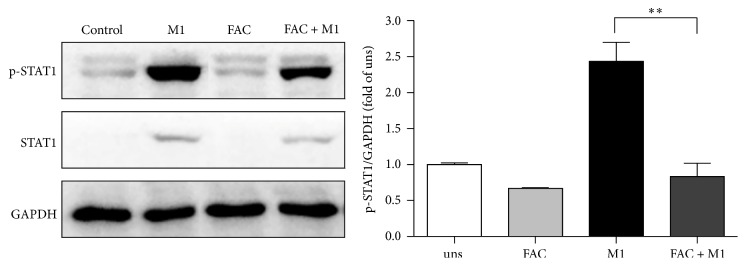
Iron metabolism in inflammation has been mostly characterized in macrophages exposed to pathogens or inflammatory conditions. The aim of this study is to investigate the cross-regulatory interactions between M1 macrophage polarization and iron metabolism. Firstly, we characterized the transcription of genes related to iron homeostasis in M1 RAW264.7 macrophages stimulated by IFN-. The molecular signature of M1 macrophages showed high levels of iron storage (ferritin), a low level of iron export (ferroportin), and changes of iron regulators (hepcidin and transferrin receptors), which favour iron sequestration in the reticuloendothelial system and are benefit for inflammatory disorders. Then, we evaluated the effect of iron on M1 macrophage polarization. Iron significantly reduced mRNA levels of IL-6, IL-1, TNF-, and iNOS produced by IFN--polarized M1 macrophages. Immunofluorescence analysis showed that iron also reduced iNOS production. However, iron did not compromise but enhanced the ability of M1-polarized macrophages to phagocytose FITC-dextran. Moreover, we demonstrated that STAT1 inhibition was required for reduction of iNOS and M1-related cytokines production by the present of iron. Together, these findings indicated that iron decreased polarization of M1 macrophages and inhibited the production of the proinflammatory cytokines. The results expanded our knowledge about the role of iron in macrophage polarization.
炎症中的铁代谢主要是在暴露于病原体或炎症条件下的巨噬细胞中得以表征。本研究的目的是探究M1巨噬细胞极化与铁代谢之间的交叉调节相互作用。首先,我们对受干扰素γ刺激的M1 RAW264.7巨噬细胞中与铁稳态相关的基因转录进行了表征。M1巨噬细胞的分子特征显示铁储存(铁蛋白)水平高、铁输出(铁转运蛋白)水平低以及铁调节因子(铁调素和转铁蛋白受体)的变化,这有利于铁在网状内皮系统中的螯合,并且对炎症性疾病有益。然后,我们评估了铁对M1巨噬细胞极化的影响。铁显著降低了干扰素γ极化的M1巨噬细胞产生的白细胞介素-6、白细胞介素-1、肿瘤坏死因子-α和诱导型一氧化氮合酶的mRNA水平。免疫荧光分析表明铁也降低了诱导型一氧化氮合酶的产生。然而,铁并未损害而是增强了M1极化巨噬细胞吞噬异硫氰酸荧光素标记葡聚糖的能力。此外,我们证明了铁的存在导致诱导型一氧化氮合酶和M1相关细胞因子产生减少需要抑制信号转导和转录激活因子1。总之,这些发现表明铁降低了M1巨噬细胞的极化并抑制了促炎细胞因子的产生。这些结果扩展了我们对铁在巨噬细胞极化中作用的认识。