Rasmussen Eva Rye, von Buchwald Christian, Wadelius Mia, Prasad Sumangali Chandra, Kamaleswaran Shailajah, Ajgeiy Kawa Khaled, Authried Georg, Pallesen Kristine Appel U, Bygum Anette
Department of Otorhinolaryngology, Head & Neck Surgery and Audiology, Rigshospitalet, University of Copenhagen, København, Denmark.
Department of Medical Sciences, Clinical Pharmacology and Science for Life Laboratory, Uppsala University, Uppsala, Sweden.
Int J Otolaryngol. 2017;2017:1476402. doi: 10.1155/2017/1476402. Epub 2017 Feb 14.
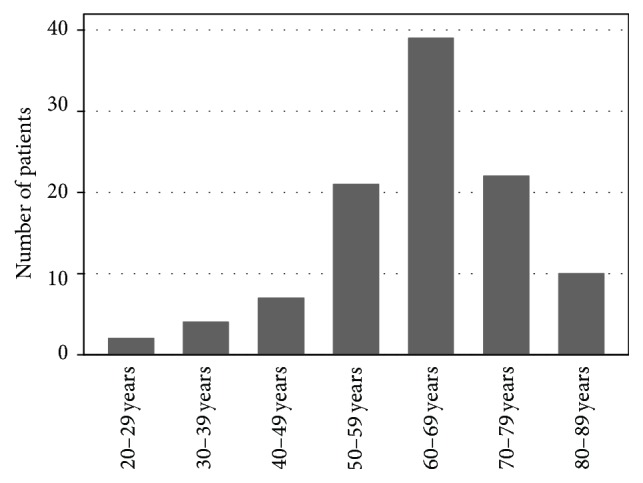
To asses a cohort of 105 consecutive patients with angiotensin converting enzyme-inhibitor induced angioedema with regard to demographics, risk factors, family history of angioedema, hospitalization, airway management, outcome, and use of diagnostic codes used for the condition. Cohort study. . This was a retrospective cohort study of 105 patients with angiotensin converting enzyme-inhibitor induced angioedema in the period 1995-2014. . The cohort consisted of 67 females and 38 males (F : M ratio 1.8), with a mean age of 63 [range 26-86] years. Female gender was associated with a significantly higher risk of angiotensin converting enzyme-inhibitor induced angioedema. 6.7% had a positive family history of angioedema. Diabetes seemed to be a protective factor with regard to angioedema. 95% experienced angioedema of the head and neck. 4.7% needed intubation or tracheostomy. 74 admissions took place during the study period with a total of 143 days spent in the hospital. The diagnosis codes most often used for this condition were "DT783 Quincke's oedema" and "DT78.4 Allergy unspecified". Complement C1 inhibitor was normal in all tested patients. . Female gender predisposes to angiotensin converting enzyme-inhibitor induced angioedema, whereas diabetes seems to be a protective factor.
评估105例连续的血管紧张素转换酶抑制剂诱导的血管性水肿患者的人口统计学特征、危险因素、血管性水肿家族史、住院情况、气道管理、结局以及用于该疾病的诊断编码的使用情况。队列研究。这是一项对1995年至2014年期间105例血管紧张素转换酶抑制剂诱导的血管性水肿患者的回顾性队列研究。该队列由67名女性和38名男性组成(女性与男性比例为1.8),平均年龄为63岁[范围26 - 86岁]。女性性别与血管紧张素转换酶抑制剂诱导的血管性水肿风险显著较高相关。6.7%有血管性水肿家族史阳性。糖尿病似乎是血管性水肿的一个保护因素。95%经历头颈部血管性水肿。4.7%需要插管或气管切开术。研究期间有74次入院,共住院143天。用于该疾病最常用的诊断编码是“DT783昆克水肿”和“DT78.4未特指的过敏”。所有检测患者的补体C1抑制剂均正常。女性性别易患血管紧张素转换酶抑制剂诱导的血管性水肿,而糖尿病似乎是一个保护因素。