Junk D J, Bryson B L, Smigiel J M, Parameswaran N, Bartel C A, Jackson M W
Department of Pathology, School of Medicine, Case Western Reserve University, Cleveland, OH, USA.
Case Comprehensive Cancer Center, Case Western Reserve University, Cleveland, OH, USA.
Oncogene. 2017 Jul 13;36(28):4001-4013. doi: 10.1038/onc.2017.33. Epub 2017 Mar 13.
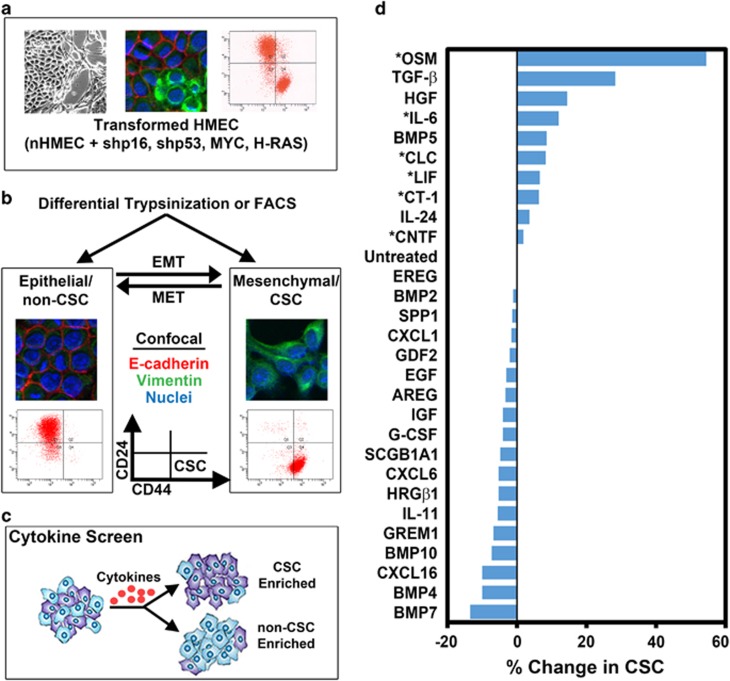
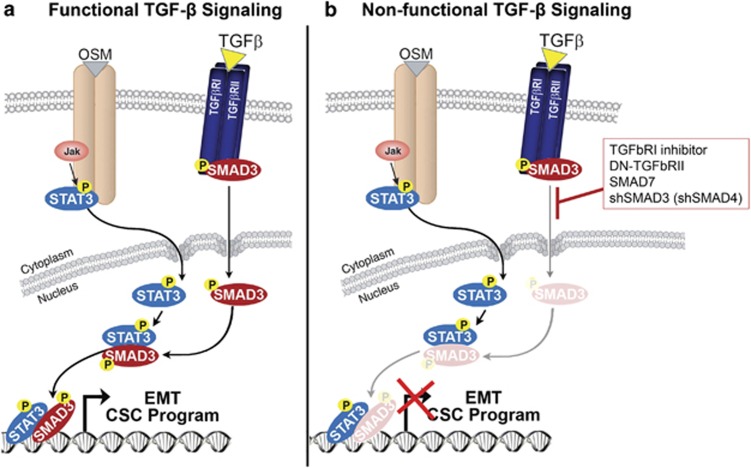
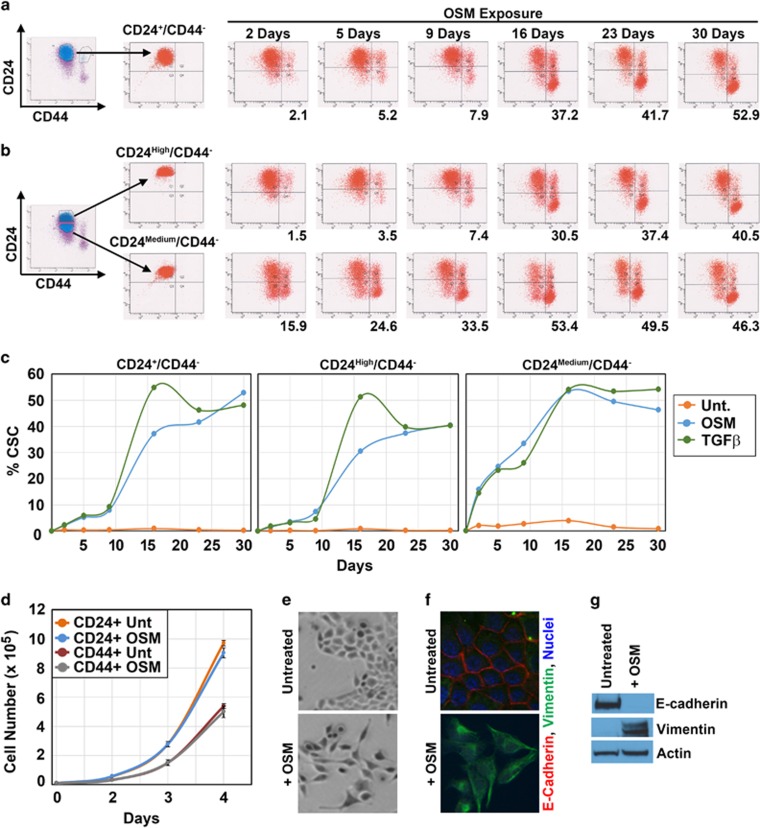
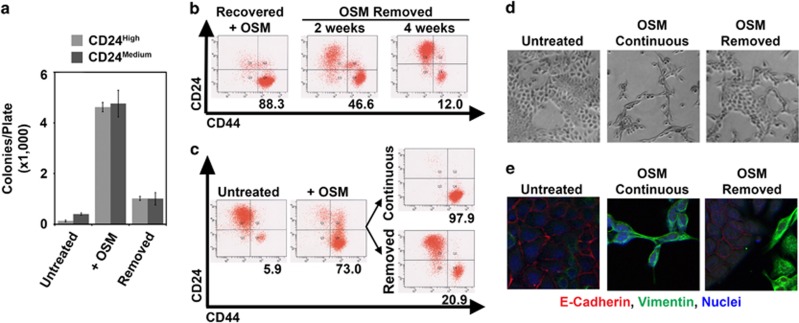
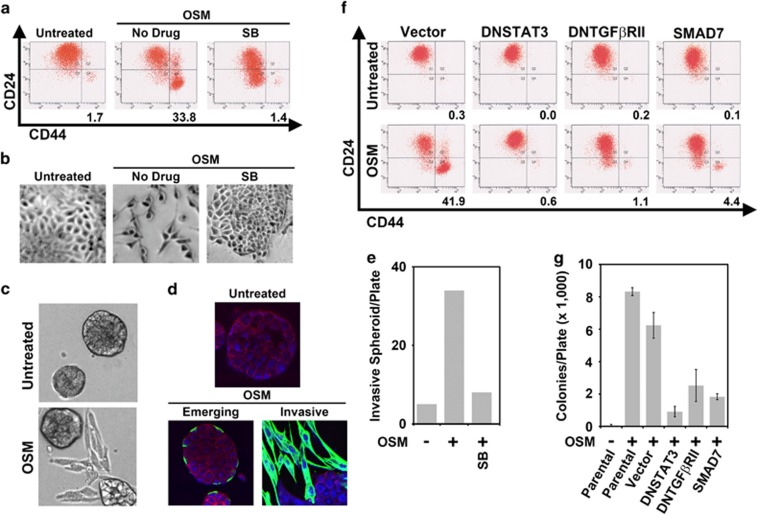
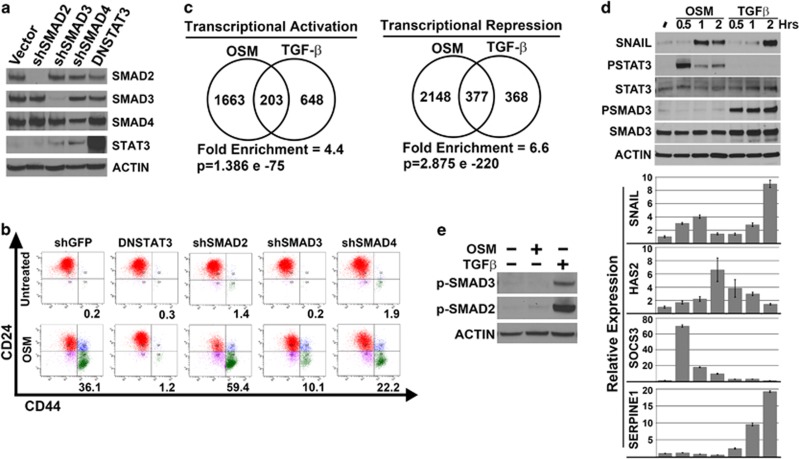
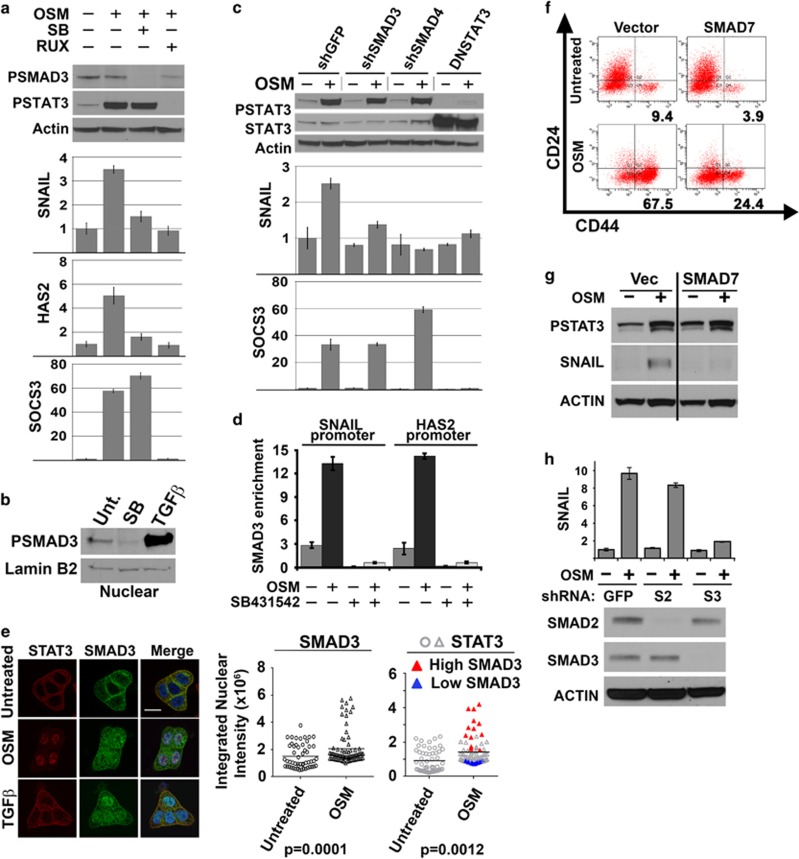
Increasing evidence supports the idea that cancer cell plasticity promotes metastasis and tumor recurrence, resulting in patient mortality. While it is clear that the tumor microenvironment (TME) contributes to cancer cell plasticity, the specific TME factors most actively controlling plasticity remain largely unknown. Here, we performed a screen to identify TME cytokines and growth factors that promote epithelial-mesenchymal plasticity, and acquisition of cancer stem cell (CSC) properties. Of 28 TME cytokines and growth factors tested, we identified Oncostatin M (OSM) as the most potent inducer of mesenchymal/CSC properties. OSM-induced plasticity was Signal Transducer and Activator of Transcription 3 (STAT3)-dependent, and also required a novel intersection with transforming growth factor-β (TGF-β)/SMAD signaling. OSM/STAT3 activation promoted SMAD3 nuclear accumulation, DNA binding and induced SMAD3-dependent transcriptional activity. Suppression of TGF-β receptor activity or ablation of SMAD3 or SMAD4, but not SMAD2, strongly suppressed OSM/STAT3-mediated plasticity. Moreover, removal of OSM or inhibition of STAT3 or SMAD3 resulted in a marked reversion to a non-invasive, epithelial phenotype. We propose that targeted blockade of the STAT3/SMAD3 axis in tumor cells may represent a novel therapeutic approach to prevent the plasticity required for metastatic progression and tumor recurrence.
越来越多的证据支持这样一种观点,即癌细胞可塑性促进转移和肿瘤复发,从而导致患者死亡。虽然肿瘤微环境(TME)对癌细胞可塑性有影响这一点很明确,但最积极控制可塑性的特定TME因子在很大程度上仍不清楚。在这里,我们进行了一项筛选,以确定促进上皮-间质可塑性以及获得癌症干细胞(CSC)特性的TME细胞因子和生长因子。在测试的28种TME细胞因子和生长因子中,我们确定抑瘤素M(OSM)是间充质/CSC特性的最有效诱导剂。OSM诱导的可塑性依赖于信号转导和转录激活因子3(STAT3),并且还需要与转化生长因子-β(TGF-β)/SMAD信号传导有一个新的交叉点。OSM/STAT3激活促进SMAD3核积累、DNA结合并诱导SMAD3依赖性转录活性。抑制TGF-β受体活性或敲除SMAD3或SMAD4,但不包括SMAD2,会强烈抑制OSM/STAT3介导的可塑性。此外,去除OSM或抑制STAT3或SMAD3会导致明显恢复为非侵袭性上皮表型。我们提出,靶向阻断肿瘤细胞中的STAT3/SMAD3轴可能代表一种新的治疗方法,以防止转移进展和肿瘤复发所需的可塑性。