Azzam Sausan, Schlatzer Daniela, Maxwell Sean, Li Xiaolin, Bazdar Douglas, Chen Yanwen, Asaad Robert, Barnholtz-Sloan Jill, Chance Mark R, Sieg Scott F
Center for Proteomics and Bioinformatics; Pulmonary Critical Care and Sleep Medicine.
Center for Proteomics and Bioinformatics.
Open Forum Infect Dis. 2016 Mar 15;3(2):ofw037. doi: 10.1093/ofid/ofw037. eCollection 2016 Mar.
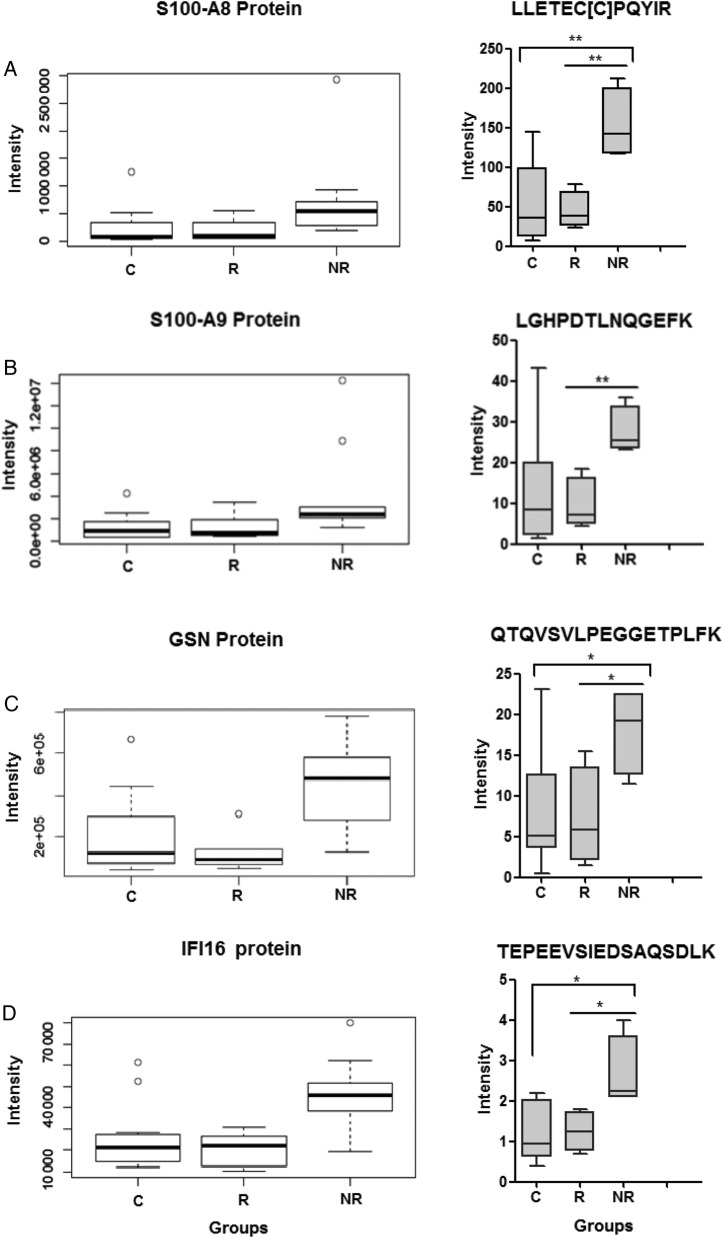
Human immunodeficiency virus (HIV) patients who experience poor CD4 T-cell recovery despite viral suppression during antiretroviral therapy (ART) are known as immunological nonresponders. The molecular mechanism(s) underlying incomplete immune restoration during ART is not fully understood. Label-free quantitative proteomics on single-cell type central memory T cells were used to reveal relative protein abundance changes between nonresponder, responder (good CD4 recovery during ART), and healthy individuals. Proteome changes were analyzed by protein pathway and network analyses and verified by selected reaction monitoring mass spectrometry. Proteomic analysis across groups detected 155 significant proteins from 1500 nonredundant proteins. Pathway and network analyses revealed dysregulation in mammalian target of rapamycin and protein translation-related proteins and decreases in stress response-related proteins for nonresponder subjects compared with responders and controls. Actin cytoskeleton signaling was increased for HIV responders and nonresponders alike. Memory T cells from immunologic nonresponders have increases in proteins related to motility and protein translation and decreases in proteins capable of responding to cellular stresses compared with responders and controls. The potential for T cells to manage stress and modulate metabolism may contribute to their capacity to reconstitute a lymphopenic host.
在抗逆转录病毒疗法(ART)期间,尽管病毒得到抑制,但CD4 T细胞恢复不佳的人类免疫缺陷病毒(HIV)患者被称为免疫无反应者。ART期间免疫恢复不完全的潜在分子机制尚未完全了解。
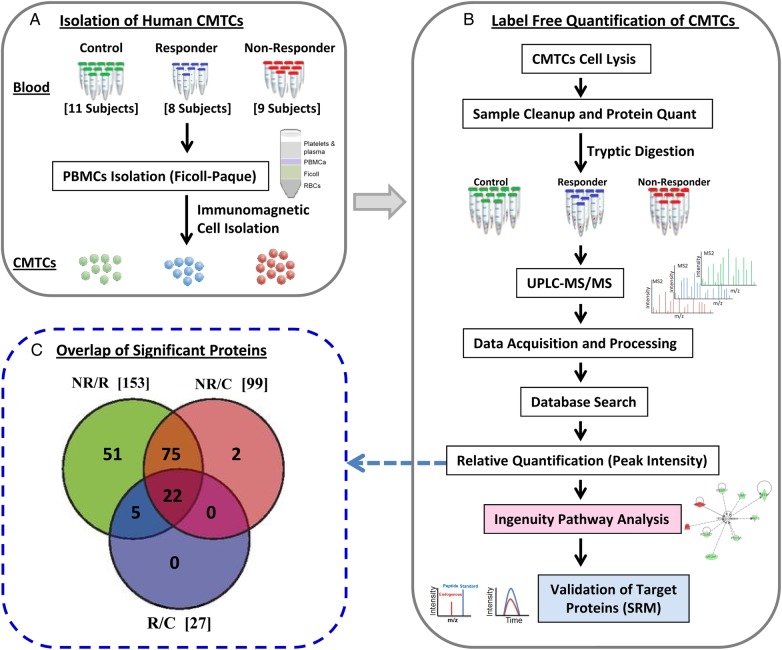
使用基于单细胞类型中枢记忆T细胞的无标记定量蛋白质组学来揭示无反应者、反应者(ART期间CD4恢复良好)和健康个体之间相对蛋白质丰度的变化。通过蛋白质途径和网络分析对蛋白质组变化进行分析,并通过选择反应监测质谱法进行验证。
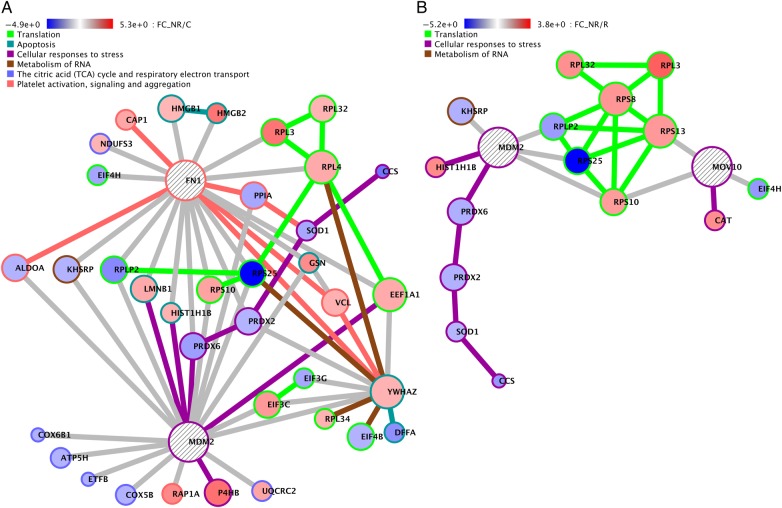
跨组蛋白质组分析从1500种非冗余蛋白质中检测到155种显著蛋白质。途径和网络分析显示,与反应者和对照组相比,无反应者的雷帕霉素哺乳动物靶标和蛋白质翻译相关蛋白质存在失调,应激反应相关蛋白质减少。HIV反应者和无反应者的肌动蛋白细胞骨架信号均增强。
与反应者和对照组相比,免疫无反应者的记忆T细胞中与运动和蛋白质翻译相关的蛋白质增加,而能够应对细胞应激的蛋白质减少。T细胞应对压力和调节代谢的能力可能有助于其重建淋巴细胞减少宿主的能力。