Park Heung Woo, Tantisira Kelan G
Department of Internal Medicine, Seoul National University College of Medicine, Seoul, Korea.
The Channing Division of Network Medicine, Department of Medicine, Brigham & Women's Hospital and Harvard Medical School, Boston, MA, USA.
Allergy Asthma Immunol Res. 2017 May;9(3):191-199. doi: 10.4168/aair.2017.9.3.191.
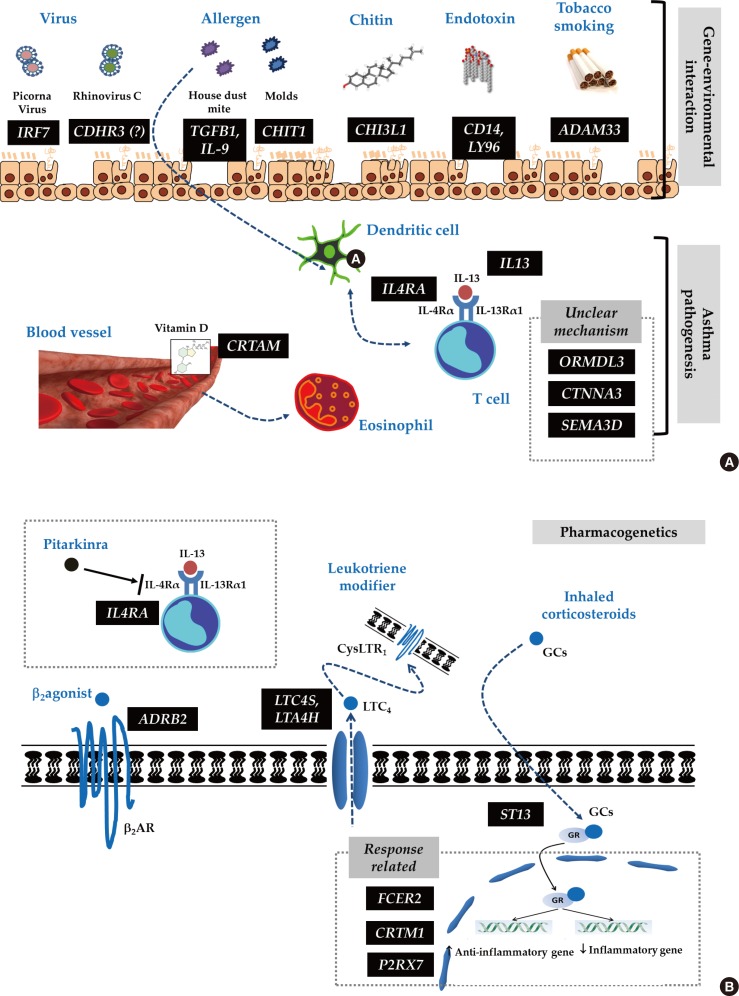
Asthma exacerbation (AE) usually denotes worsening of asthma symptoms that requires intense management to prevent further deterioration. AE has been reported to correlate with clinical and demographic factors, such as race, gender, and treatment compliance as well as environmental factors, such as viral infection, smoking, and air pollution. In addition, recent observations suggest that there are likely to be genetic factors specific to AE. Understanding genetic factors specific to AE is essential to develop therapy tailored for exacerbation-prone asthma. Here, we summarize the results of studies involving genetic risk factors for AE. To simplify and enhance understanding, we reviewed the studies according to the following categories: hypothesis-driven approaches, hypothesis-free approaches, gene-environment interactions, and pharmacogenetics.
哮喘急性加重(AE)通常指哮喘症状恶化,需要强化治疗以防止病情进一步恶化。据报道,AE与临床和人口统计学因素相关,如种族、性别和治疗依从性,以及环境因素,如病毒感染、吸烟和空气污染。此外,最近的观察结果表明,可能存在特定于AE的遗传因素。了解特定于AE的遗传因素对于开发针对易加重哮喘的治疗方法至关重要。在此,我们总结了涉及AE遗传危险因素的研究结果。为了简化并增进理解,我们根据以下类别对研究进行了综述:假设驱动方法、无假设方法、基因-环境相互作用和药物遗传学。