Defenouillère Quentin, Namane Abdelkader, Mouaikel John, Jacquier Alain, Fromont-Racine Micheline
Institut Pasteur, Génétique des Interactions Macromoléculaires, Centre National de la Recherche Scientifique, UMR 3525, F-75724 Paris Cedex 15, France.
Sorbonne Universités, UPMC Paris 6, Complexité Du Vivant, 75252 Paris Cedex 05, France.
Mol Biol Cell. 2017 May 1;28(9):1165-1176. doi: 10.1091/mbc.E16-10-0746. Epub 2017 Mar 15.
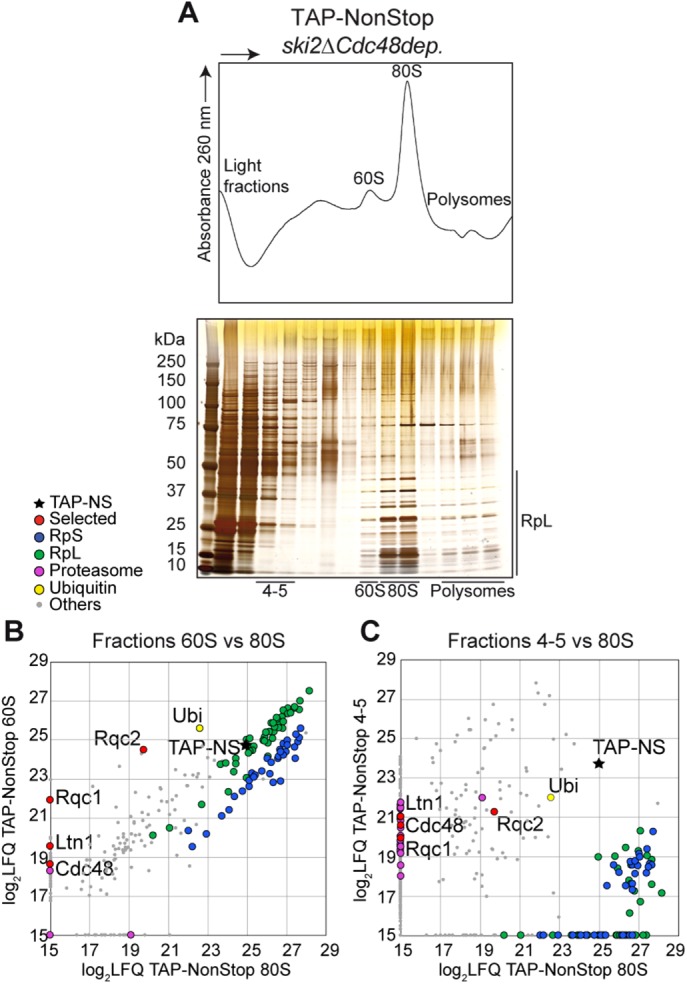
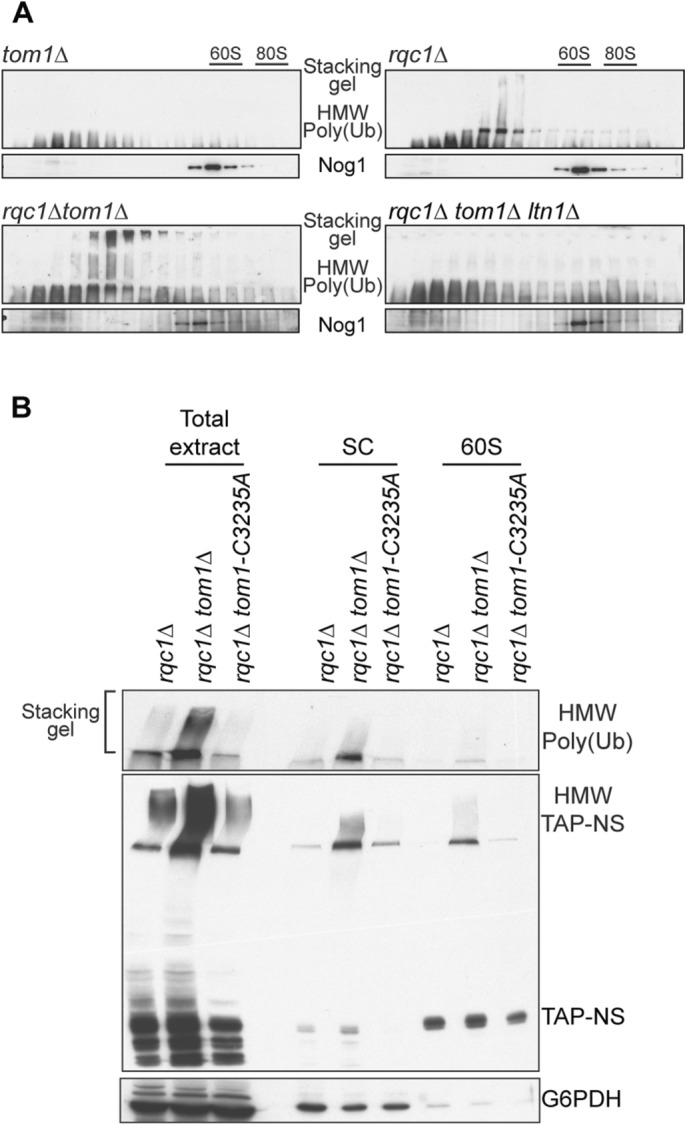
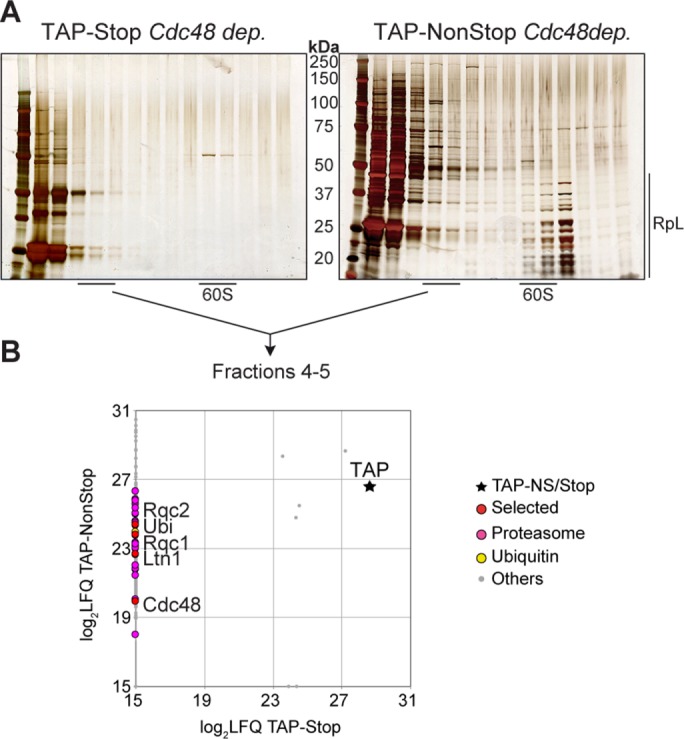
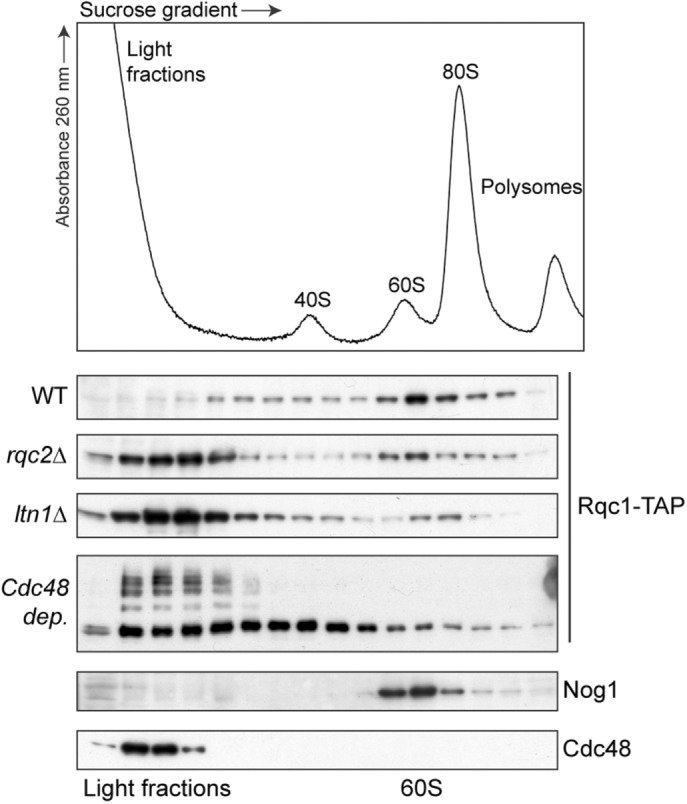
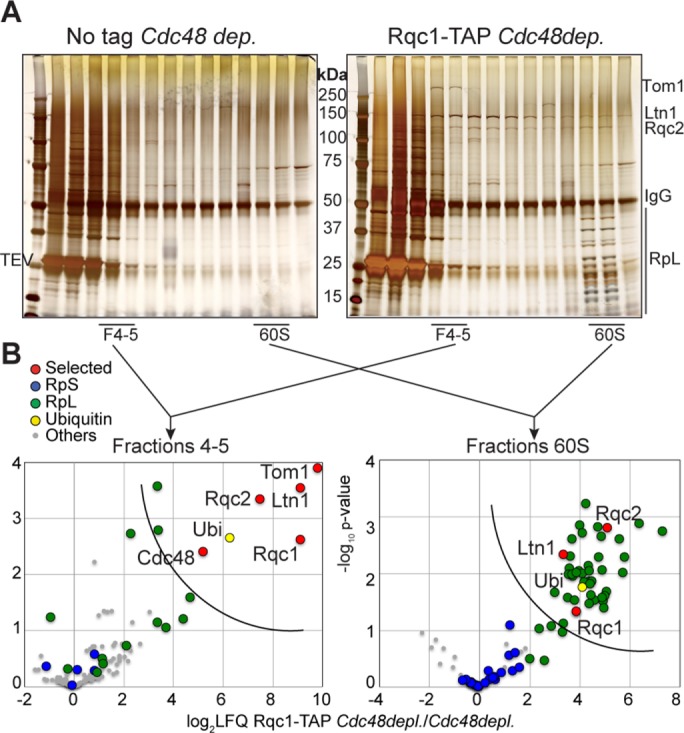
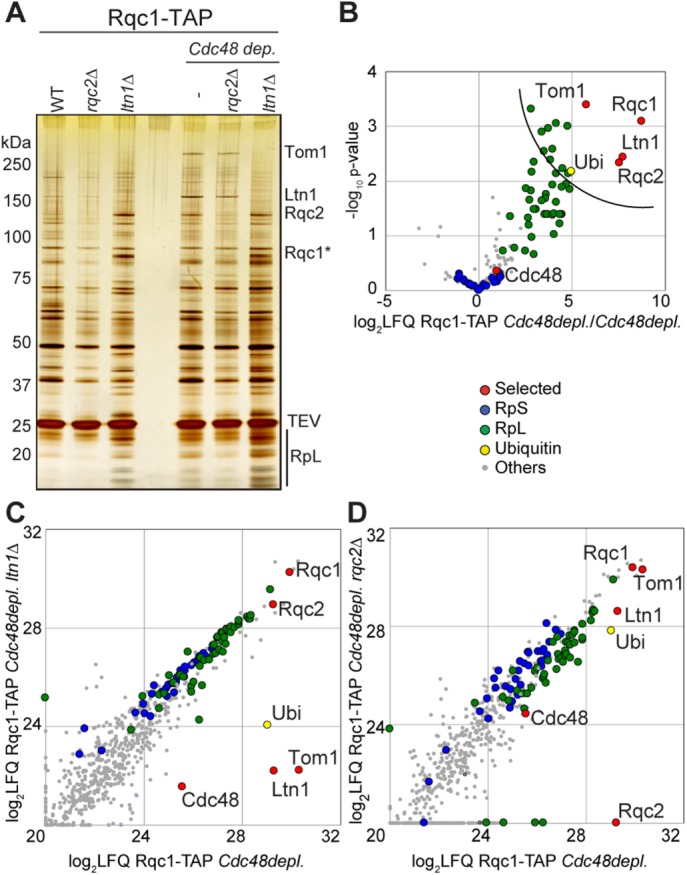
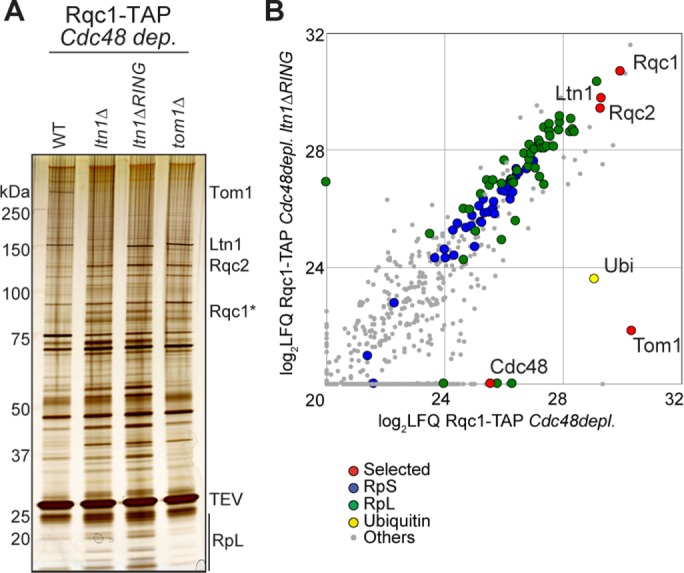
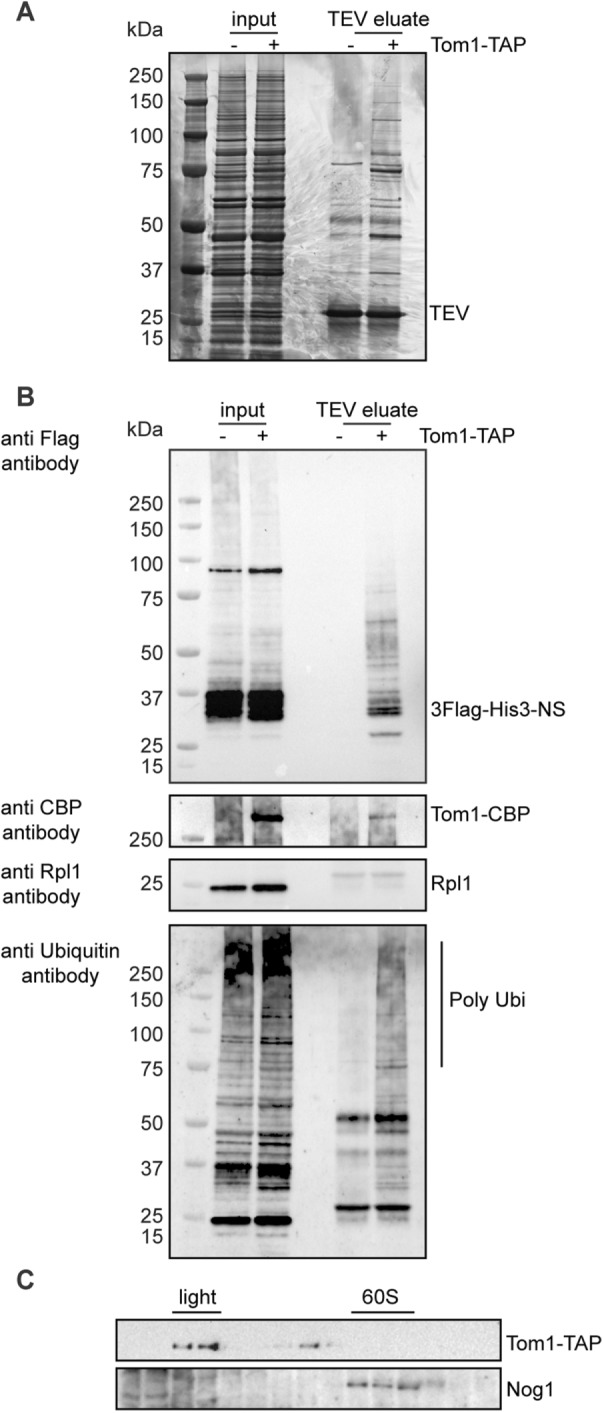
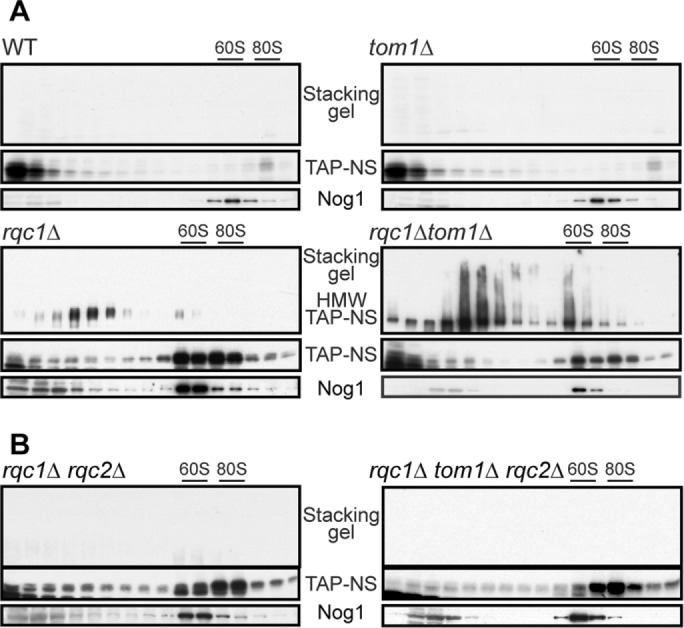
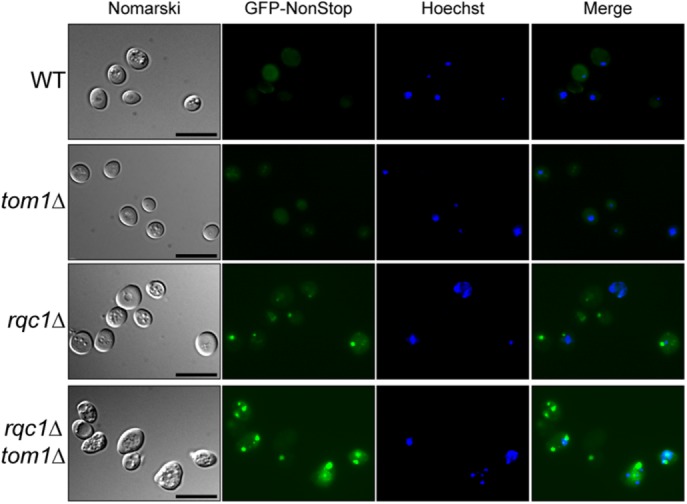
Protein quality control mechanisms eliminate defective polypeptides to ensure proteostasis and to avoid the toxicity of protein aggregates. In eukaryotes, the ribosome-bound quality control (RQC) complex detects aberrant nascent peptides that remain stalled in 60S ribosomal particles due to a dysfunction in translation termination. The RQC complex polyubiquitylates aberrant polypeptides and recruits a Cdc48 hexamer to extract them from 60S particles in order to escort them to the proteasome for degradation. Whereas the steps from stalled 60S recognition to aberrant peptide polyubiquitylation by the RQC complex have been described, the mechanism leading to proteasomal degradation of these defective translation products remains unknown. We show here that the RQC complex also exists as a ribosome-unbound complex during the escort of aberrant peptides to the proteasome. In addition, we identify a new partner of this light version of the RQC complex, the E3 ubiquitin ligase Tom1. Tom1 interacts with aberrant nascent peptides and is essential to limit their accumulation and aggregation in the absence of Rqc1; however, its E3 ubiquitin ligase activity is not required. Taken together, these results reveal new roles for Tom1 in protein quality control, aggregate prevention, and, therefore, proteostasis maintenance.
蛋白质质量控制机制可消除有缺陷的多肽,以确保蛋白质稳态并避免蛋白质聚集体的毒性。在真核生物中,核糖体结合质量控制(RQC)复合物可检测因翻译终止功能障碍而滞留在60S核糖体颗粒中的异常新生肽。RQC复合物对异常多肽进行多聚泛素化修饰,并招募Cdc48六聚体将其从60S颗粒中提取出来,以便将它们护送至蛋白酶体进行降解。虽然已经描述了从识别停滞的60S到RQC复合物对异常肽进行多聚泛素化修饰的步骤,但导致这些有缺陷的翻译产物被蛋白酶体降解的机制仍然未知。我们在此表明,在将异常肽护送至蛋白酶体的过程中,RQC复合物也以核糖体未结合的复合物形式存在。此外,我们鉴定出了这种轻量版RQC复合物的一个新伙伴,即E3泛素连接酶Tom1。Tom1与异常新生肽相互作用,并且在缺乏Rqc1时对于限制它们的积累和聚集至关重要;然而,其E3泛素连接酶活性并非必需。综上所述,这些结果揭示了Tom1在蛋白质质量控制、聚集体预防以及因此在蛋白质稳态维持中的新作用。