Setswe Geoffrey, Witthuhn Jackie
Monash South Africa School of Health Sciences , Roodepoort, South Africa.
J Public Health Afr. 2013 Aug 13;4(1):e6. doi: 10.4081/jphia.2013.e6. eCollection 2013 Jun 25.
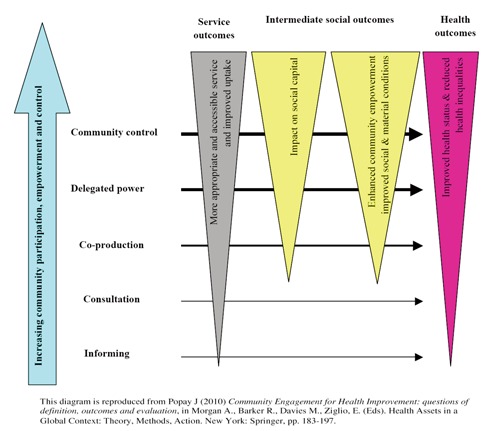
The South African government released a policy document for the introduction of a National Health Insurance (NHI) system planned to start in 2012. The consultation process for involving the public in the implementation of the NHI was also announced in August. When the consultation process on the NHI was announced, everyone assumed that the Government's aim was to devolve power to communities and create a more patient-focused and community-oriented NHI. In this paper we look not only at how community engagement process on the NHI works, but we also review the democratic process to determine if it is a good means of holding decision makers to account to communities before and during the implementation of the NHI in South Africa. We review reasons for involving or engaging communities in health and related matters, the policy context of community engagement and review potential roles of non-governmental organizations in assisting people to participate in debates for implementation of this new health policy initiative.
南非政府发布了一份政策文件,介绍计划于2012年启动的国家医疗保险(NHI)系统。8月还宣布了让公众参与NHI实施的协商过程。当宣布NHI的协商过程时,每个人都认为政府的目标是将权力下放给社区,并创建一个更以患者为中心、以社区为导向的NHI。在本文中,我们不仅研究NHI社区参与过程的运作方式,还审视民主过程,以确定它是否是在南非NHI实施之前及实施期间让决策者对社区负责的好方法。我们审视让社区参与健康及相关事务的原因、社区参与的政策背景,并探讨非政府组织在协助人们参与这场新的健康政策倡议实施辩论中的潜在作用。