Zapata-Benavides Pablo, Arellano-Rodríguez Mariela, Bollain-Y-Goytia Juan José, Franco-Molina Moisés Armides, Rangel-Ochoa Gloria Azucena, Avalos-Díaz Esperanza, Herrera-Esparza Rafael, Rodríguez-Padilla Cristina
Departamento de Microbiología e Inmunología, Facultad de Ciencias Biológicas, Universidad Autónoma de Nuevo León (UANL), 66450 San Nicolás de los Garza, NL, Mexico.
Departamento de Microbiología e Inmunología, Facultad de Ciencias Biológicas, Universidad Autónoma de Nuevo León (UANL), 66450 San Nicolás de los Garza, NL, Mexico; Laboratorios de Inmunología y Biología Molecular, Unidad Académica de Ciencias Biológicas, Universidad Autónoma de Zacatecas (UAZ), 98040 Zacatecas, ZAC, Mexico.
Biomed Res Int. 2017;2017:9531074. doi: 10.1155/2017/9531074. Epub 2017 Feb 19.
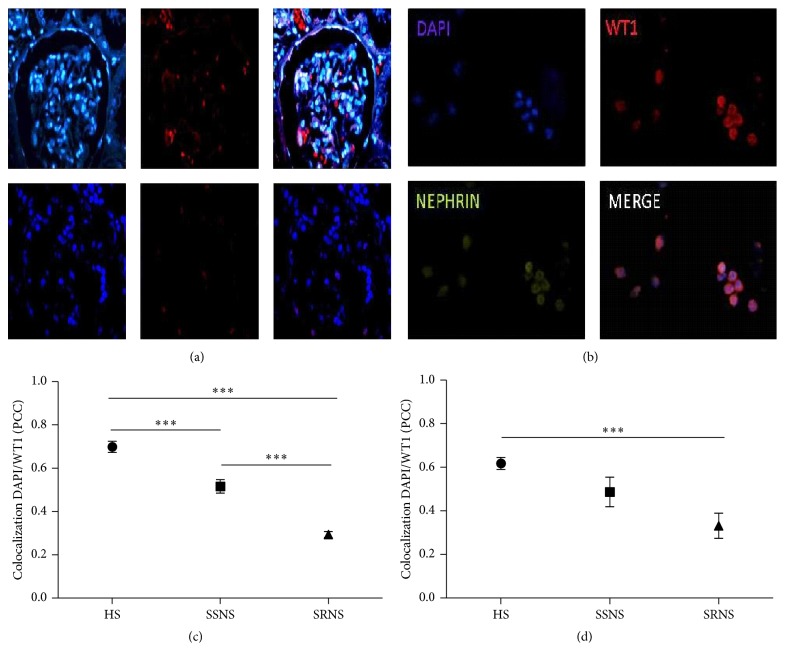
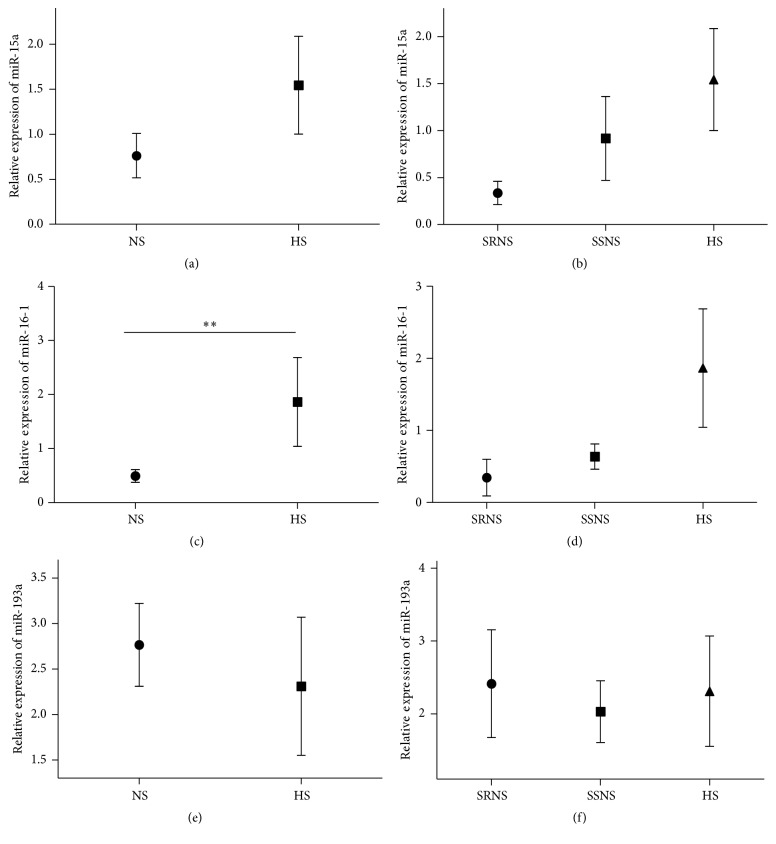
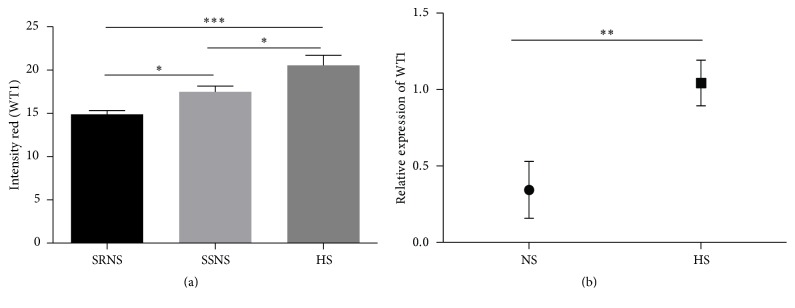
Nephrotic syndrome (NS) is a glomerular disease that is defined by the leakage of protein into the urine and is associated with hypoalbuminemia, hyperlipidemia, and edema. Steroid-resistant NS (SRNS) patients do not respond to treatment with corticosteroids and show decreased Wilms tumor 1 (WT1) expression in podocytes. Downregulation of WT1 has been shown to be affected by certain microRNAs (miRNAs). Twenty-one patients with idiopathic NS (68.75% were SSNS and 31.25% SRNS) and 10 healthy controls were enrolled in the study. Podocyte number and WT1 location were determined by immunofluorescence, and the serum levels of miR-15a, miR-16-1, and miR-193a were quantified by RT-qPCR. Low expression and delocalization of WT1 protein from the nucleus to the cytoplasm were found in kidney biopsies of patients with SRNS and both nuclear and cytoplasmic localization were found in steroid-sensitive NS (SSNS) patients. In sera from NS patients, low expression levels of miR-15a and miR-16-1 were found compared with healthy controls, but only the miR-16-1 expression levels showed statistically significant decrease ( = 0.019). The miR-193a expression levels only slightly increased in NS patients. We concluded that low expression and delocalization from the WT1 protein in NS patients contribute to loss of podocytes while modulation from WT1 protein is not associated with the miRNAs analyzed in sera from the patients.
肾病综合征(NS)是一种肾小球疾病,其定义为蛋白质漏入尿液,并伴有低白蛋白血症、高脂血症和水肿。激素抵抗型NS(SRNS)患者对皮质类固醇治疗无反应,且足细胞中威尔姆斯瘤1(WT1)表达降低。已表明WT1的下调受某些微小RNA(miRNA)影响。本研究纳入了21例特发性NS患者(68.75%为微小病变型肾病(SSNS),31.25%为SRNS)和10名健康对照。通过免疫荧光确定足细胞数量和WT1定位,并通过逆转录定量聚合酶链反应(RT-qPCR)对血清中miR-15a、miR-16-1和miR-193a水平进行定量。在SRNS患者的肾活检中发现WT1蛋白低表达且从细胞核转移至细胞质,而在激素敏感型NS(SSNS)患者中发现WT1蛋白在细胞核和细胞质均有定位。与健康对照相比,在NS患者血清中发现miR-15a和miR-16-1表达水平较低,但只有miR-16-1表达水平显示出统计学显著下降(P = 0.019)。NS患者中miR-193a表达水平仅略有升高。我们得出结论,NS患者中WT1蛋白的低表达和定位改变导致足细胞丢失,而WT1蛋白的调节与患者血清中分析的miRNA无关。