Tian Maoyi, Zhang Jing, Luo Rong, Chen Shi, Petrovic Djordje, Redfern Julie, Xu Dong Roman, Patel Anushka
The George Institute for Global Health at Peking University Health Science Center, Beijing, China.
Sydney Medical School, The George Institute for Global Health, Australia, University of Sydney, Sydney, Australia.
JMIR Mhealth Uhealth. 2017 Mar 16;5(3):e32. doi: 10.2196/mhealth.6889.
With rapidly expanding infrastructure in China, mobile technology has been deemed to have the potential to revolutionize health care delivery. There is particular promise for mobile health (mHealth) to positively influence health system reform and confront the new challenges of chronic diseases.
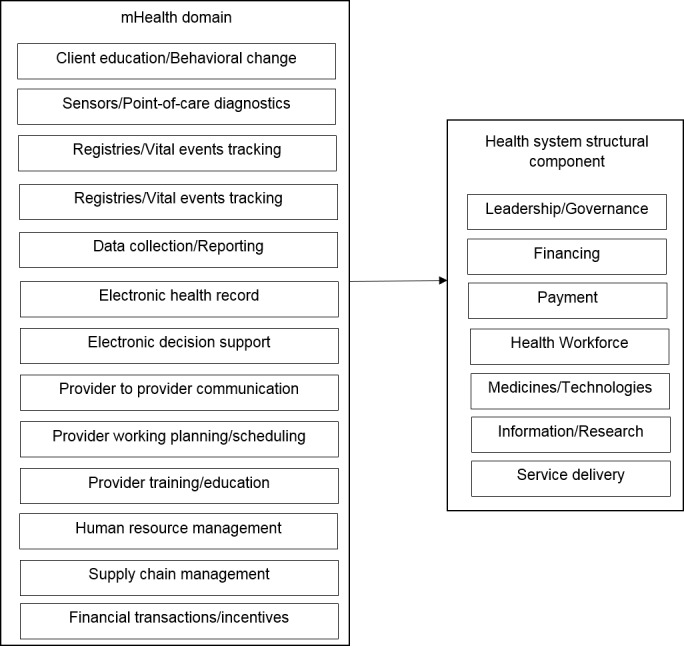
The aim of this study was to systematically review existing mHealth initiatives in China, characterize them, and examine the extent to which mHealth contributes toward the health system strengthening in China. Furthermore, we also aimed to identify gaps in mHealth development and evaluation.
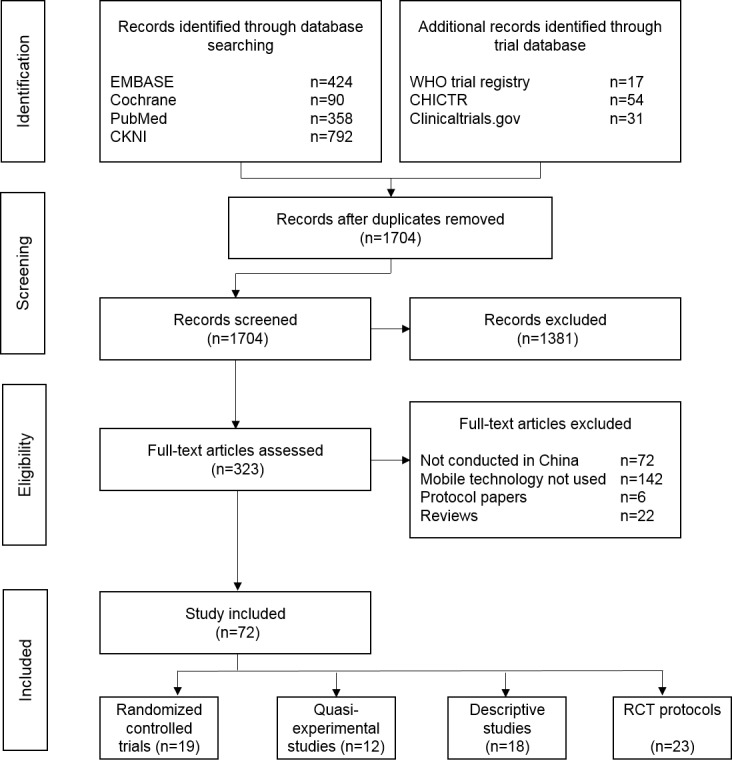
We systematically reviewed the literature from English and Chinese electronic database and trial registries, including PubMed, EMBASE, Cochrane, China National Knowledge of Infrastructure (CNKI), and World Health Organization (WHO) International Clinical Trials Registry Platform. We used the English keywords of mHealth, eHealth, telemedicine, telehealth, mobile phone, cell phone, text messaging, and China, as well as their corresponding Chinese keywords. All articles using mobile technology for health care management were included in the study.
A total of 1704 articles were found using the search terms, and eventually 72 were included. Overall, few high quality interventions were identified. Most interventions were found to be insufficient in scope, and their evaluation was of inadequate rigor to generate scalable solutions and provide reliable evidence of effectiveness. Most interventions focused on text messaging for consumer education and behavior change. There were a limited number of interventions that addressed health information management, health workforce issues, use of medicines and technologies, or leadership and governance from a health system perspective.
We provide four recommendations for future mHealth interventions in China that include the need for the development, evaluation and trials examining integrated mHealth interventions to guide the development of future mHealth interventions, target disadvantaged populations with mHealth interventions, and generate appropriate evidence for scalable and sustainable models of care.
随着中国基础设施的迅速扩张,移动技术被认为有潜力彻底改变医疗服务的提供方式。移动健康(mHealth)尤其有望对卫生系统改革产生积极影响,并应对慢性病带来的新挑战。
本研究旨在系统回顾中国现有的移动健康举措,对其进行特征描述,并考察移动健康对中国卫生系统强化的贡献程度。此外,我们还旨在找出移动健康发展与评估方面的差距。
我们系统回顾了英文和中文电子数据库及试验注册库中的文献,包括PubMed、EMBASE、Cochrane、中国知网(CNKI)和世界卫生组织(WHO)国际临床试验注册平台。我们使用了移动健康、电子健康、远程医疗、远程健康、移动电话、手机、短信和中国等英文关键词及其对应的中文关键词。所有使用移动技术进行医疗管理的文章均纳入本研究。
使用检索词共找到1704篇文章,最终纳入72篇。总体而言,几乎没有发现高质量的干预措施。大多数干预措施的范围不足,其评估的严谨性不足以产生可扩展的解决方案并提供有效性的可靠证据。大多数干预措施侧重于通过短信进行消费者教育和行为改变。从卫生系统角度解决健康信息管理、卫生人力问题、药品和技术使用或领导力与治理问题的干预措施数量有限。
我们为中国未来的移动健康干预措施提出了四条建议,包括开展、评估和试验综合移动健康干预措施以指导未来移动健康干预措施的发展,针对弱势群体开展移动健康干预措施,并为可扩展和可持续的护理模式生成适当的证据。