Program of Environmental Toxicology, School of Public Health, China Medical University, Shenyang, Liaoning, China.
Environment and Non-communicable Disease Research Center, School of Public Health, China Medical University, Shenyang, Liaoning, P. R. China.
Sci Rep. 2017 Mar 17;7:44424. doi: 10.1038/srep44424.
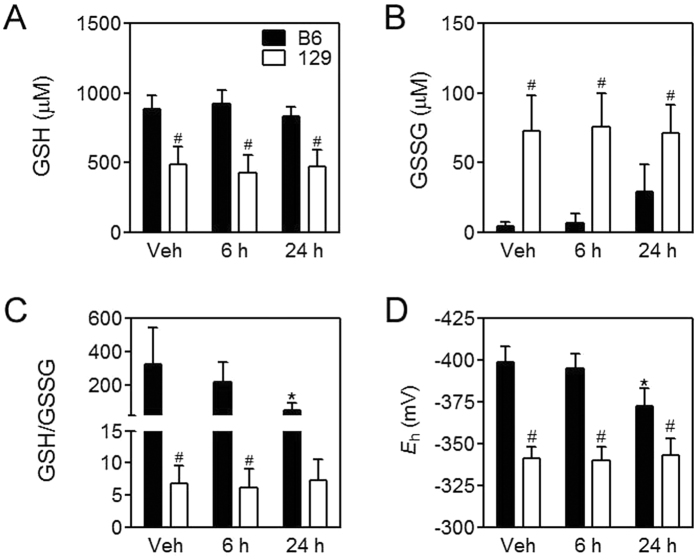
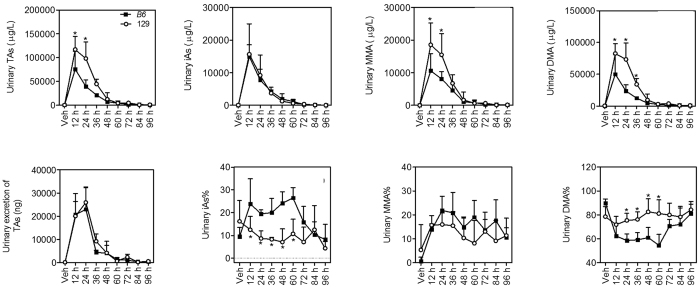
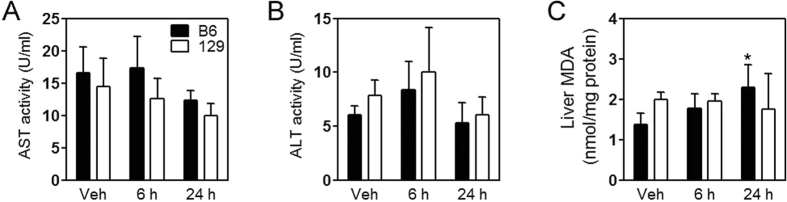
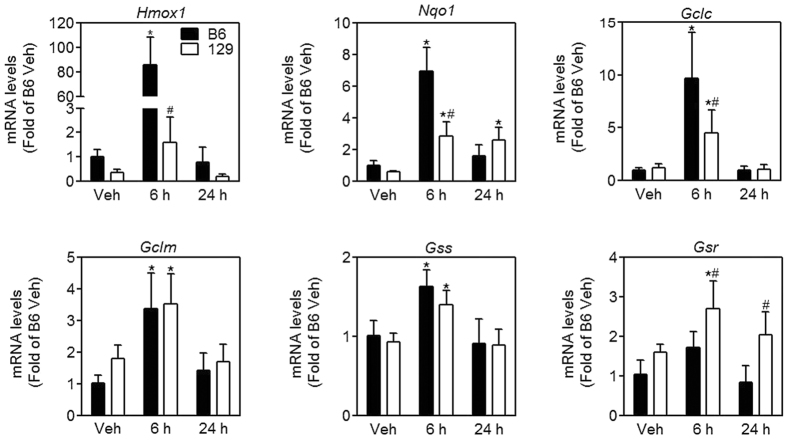
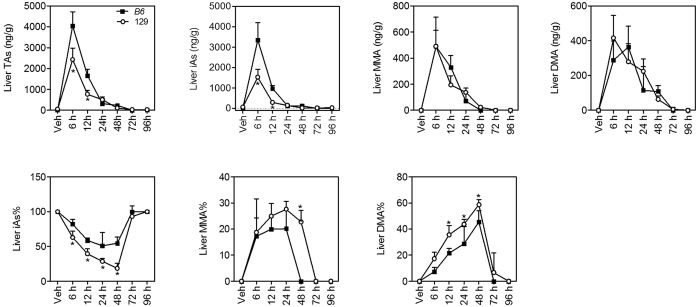
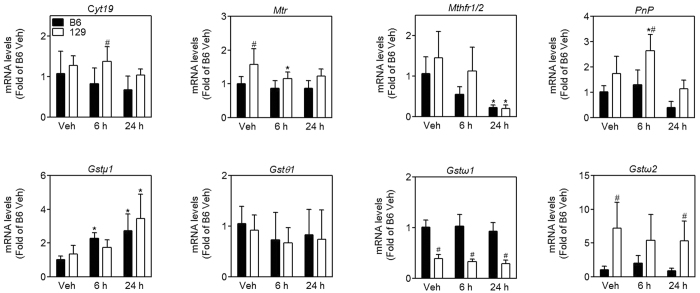
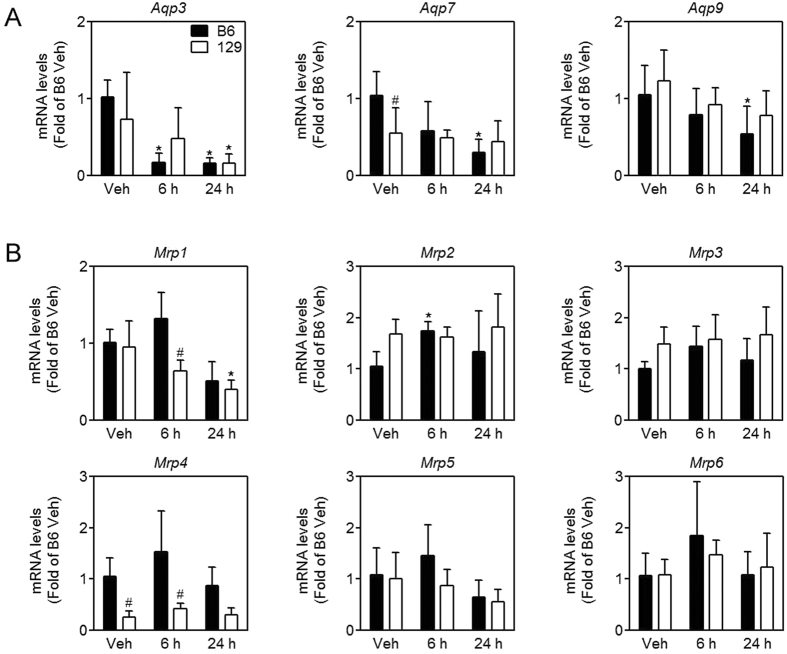
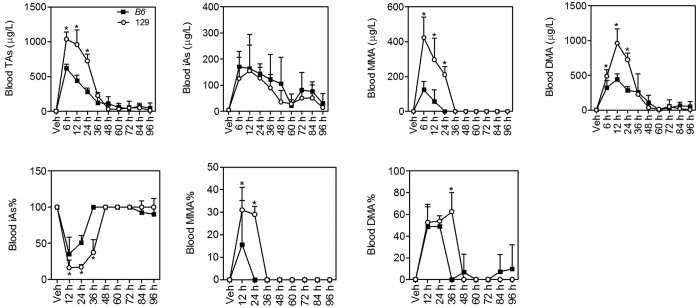
Arsenic is a common environmental and occupational toxicant with dramatic species differences in its susceptibility and metabolism. Mouse strain variability may provide a better understanding of the arsenic pathological profile but is largely unknown. Here we investigated oxidative lesion induced by acute arsenic exposure in the two frequently used mouse strains C57BL/6J and 129X1/SvJ in classical gene targeting technique. A dose of 5 mg/kg body weight arsenic led to a significant alteration of blood glutathione towards oxidized redox potential and increased hepatic malondialdehyde content in C57BL/6J mice, but not in 129X1/SvJ mice. Hepatic antioxidant enzymes were induced by arsenic in transcription in both strains and many were higher in C57BL/6J than 129X1/SvJ mice. Arsenic profiles in the liver, blood and urine and transcription of genes encoding enzymes involved in arsenic biomethylation all indicate a higher arsenic methylation capacity, which contributes to a faster hepatic arsenic excretion, in 129X1/SvJ mice than C57BL/6J mice. Taken together, C57BL/6J mice are more susceptible to oxidative hepatic injury compared with 129X1/SvJ mice after acute arsenic exposure, which is closely associated with arsenic methylation pattern of the two strains.
砷是一种常见的环境和职业性毒物,其敏感性和代谢在物种间存在显著差异。小鼠品系的变异性可能有助于更好地了解砷的病理特征,但目前对此知之甚少。在这里,我们使用经典的基因靶向技术,研究了两种常用的小鼠品系 C57BL/6J 和 129X1/SvJ 中急性砷暴露引起的氧化损伤。5mg/kg 体重的砷剂量导致 C57BL/6J 小鼠的血液谷胱甘肽向氧化还原电势显著改变,并增加肝脏丙二醛含量,但在 129X1/SvJ 小鼠中则没有。砷在两种品系的转录中诱导肝脏抗氧化酶的产生,且 C57BL/6J 中的许多酶的水平高于 129X1/SvJ。肝脏、血液和尿液中的砷谱以及参与砷生物甲基化的基因转录表明,129X1/SvJ 小鼠比 C57BL/6J 小鼠具有更高的砷甲基化能力,这有助于更快地将肝脏中的砷排出体外。总之,与 129X1/SvJ 小鼠相比,C57BL/6J 小鼠在急性砷暴露后更容易发生氧化肝损伤,这与两种品系的砷甲基化模式密切相关。