Naderian Mohammadreza, Akbari Heshmatollah, Saeedi Morteza, Sohrabpour Amir Ali
Liver and Pancreaticobilliary Disease Research Center, Digestive Disease Research Institute, Shariati Hospital, Tehran University of Medical Sciences, Tehran, Iran. Non-Communicable Diseases Research Center, Endocrinology and Metabolism Population Sciences Institute, Tehran University of Medical Sciences, Tehran, Iran.
Liver and Pancreaticobilliary Disease Research Center, Digestive Disease Research Institute, Shariati Hospital, Tehran University of Medical Sciences, Tehran, Iran.
Middle East J Dig Dis. 2017 Jan;9(1):12-19. doi: 10.15171/mejdd.2016.46.
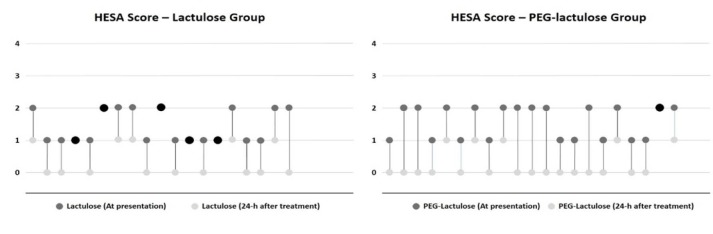
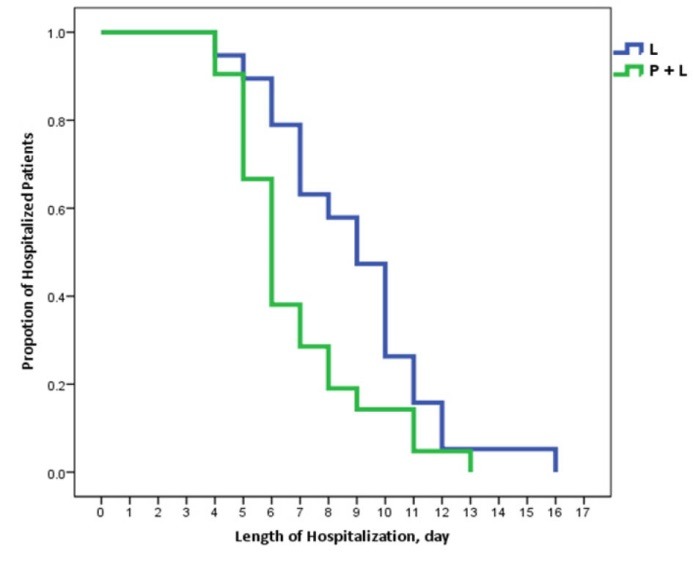
BACKGROUND In this clinical trial, polyethylene glycol (PEG) solution was compared with lactulose in the treatment of hepatic encephalopathy in patients with cirrhosis. METHODS This randomized controlled trial was performed on 40 patients in two groups. The patients in the lactulose group received either 20-30 grams of lactulose orally or by a nasogastric tube, or 200 grams of lactulose enema by a rectal tube. The patients in the PEG-lactulose group received the same amount of oral or rectal lactulose, plus 280 grams of PEG in 4 liters of water orally as a single dose in 30-120 minutes. Serial physical examinations, hepatic encephalopathy scoring algorithm (HESA), blood level of ammonia, and serum biochemical studies were used to evaluate the severity of hepatic encephalopathy. RESULTS In comparison with lactulose alone, PEG-lactulose could improve HESA score in 24 hours more effectively ( =0.04). Overall, PEG-lactulose regimen was associated with a decrease in length of hospital stay compared with lactulose treatment ( =0.03) but in subgroup analysis we found that PEG-lactulose regimen could only decrease the length of hospital stay in women significantly ( =0.01). CONCLUSION The use of PEG along with lactulose in comparison with lactulose alone is more effective in the treatment of hepatic encephalopathy in patients with cirrhosis and results in more rapid discharge from hospital.
背景 在这项临床试验中,比较了聚乙二醇(PEG)溶液与乳果糖治疗肝硬化患者肝性脑病的效果。方法 对40例患者进行随机对照试验,分为两组。乳果糖组患者口服或经鼻胃管给予20 - 30克乳果糖,或经直肠管给予200克乳果糖灌肠。PEG - 乳果糖组患者接受相同剂量的口服或直肠乳果糖,外加280克PEG溶于4升水中,在30 - 120分钟内单次口服。通过系列体格检查、肝性脑病评分算法(HESA)、血氨水平及血清生化研究来评估肝性脑病的严重程度。结果 与单用乳果糖相比,PEG - 乳果糖能更有效地在24小时内改善HESA评分(P = 0.04)。总体而言,与乳果糖治疗相比,PEG - 乳果糖方案可缩短住院时间(P = 0.03),但亚组分析发现,PEG - 乳果糖方案仅能显著缩短女性患者的住院时间(P = 0.01)。结论 与单用乳果糖相比,PEG联合乳果糖治疗肝硬化患者的肝性脑病更有效,且能使患者更快出院。