Liu Yi-Di, Wang Yan-Hong, Ye Yi-Cong, Zhao Wen-Ling, Li Li
Department of Dermatology, Peking Union Medical College Hospital, Peking Union Medical College and Chinese Academy of Medical Science, Beijing, 100730, China.
Department of Epidemiology and Bio-statistics, Institute of Basic Medical Sciences, China Academy of Medical Sciences and Peking Union Medical College, Beijing, 100730, China.
Arch Dermatol Res. 2017 Jul;309(5):335-347. doi: 10.1007/s00403-017-1736-1. Epub 2017 Mar 19.
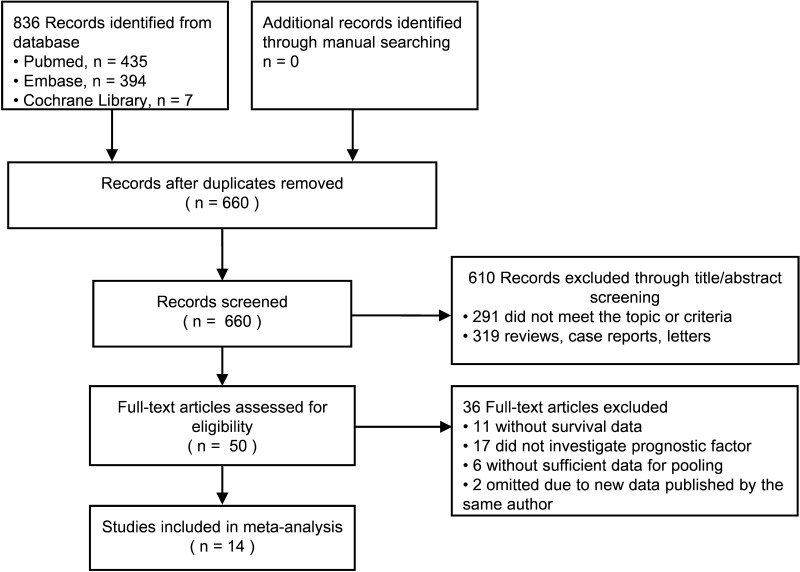
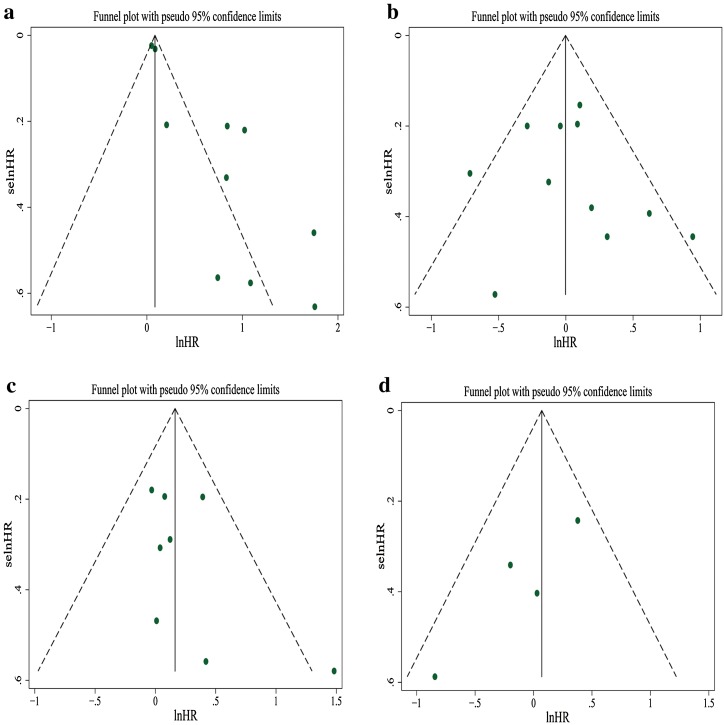
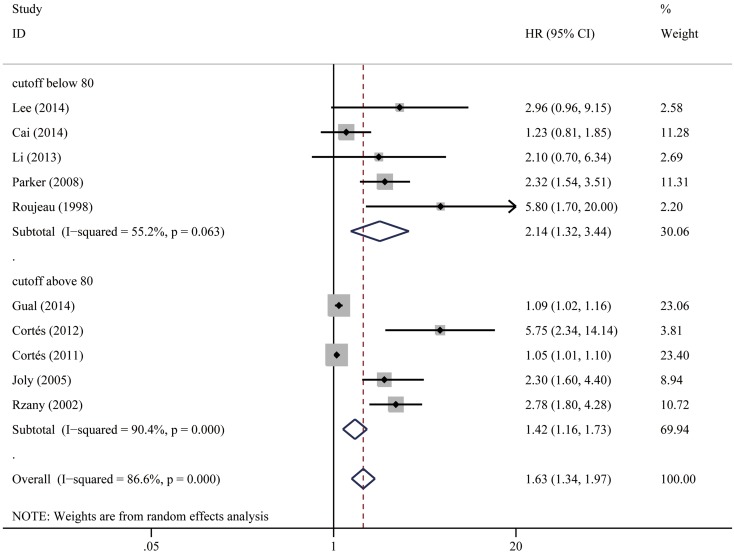
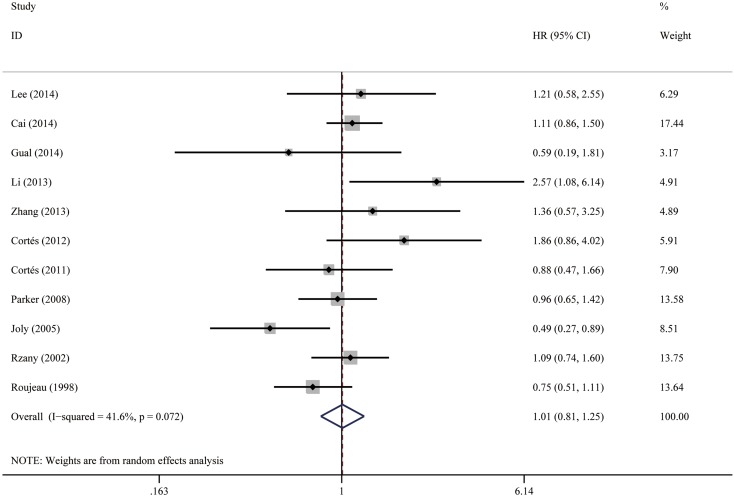
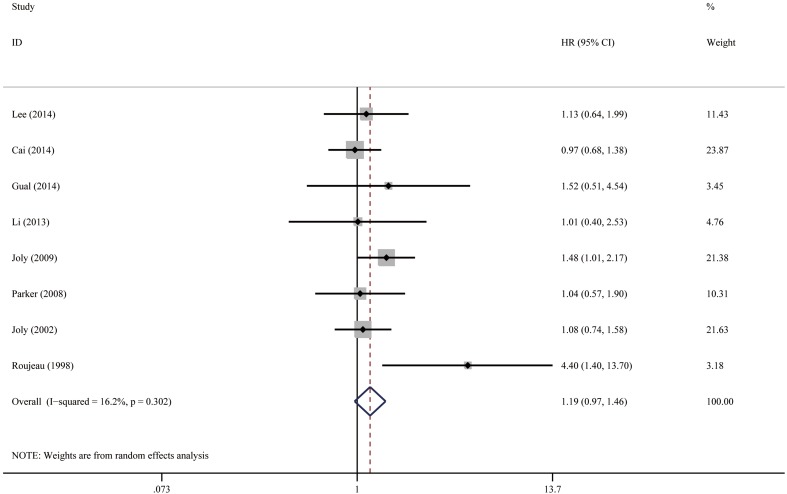
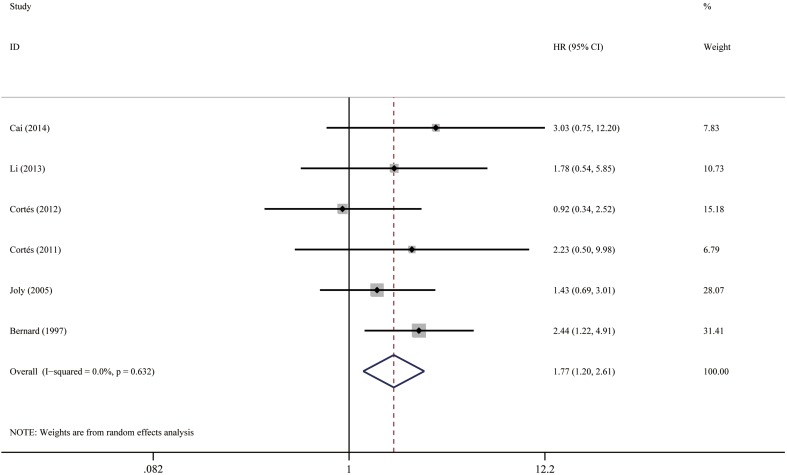
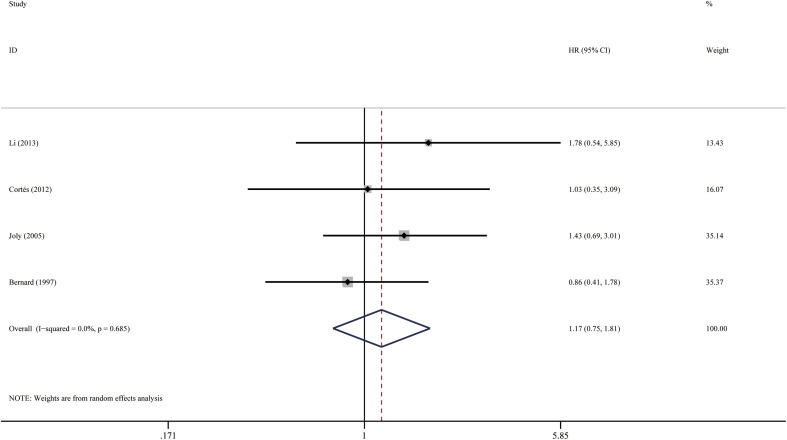
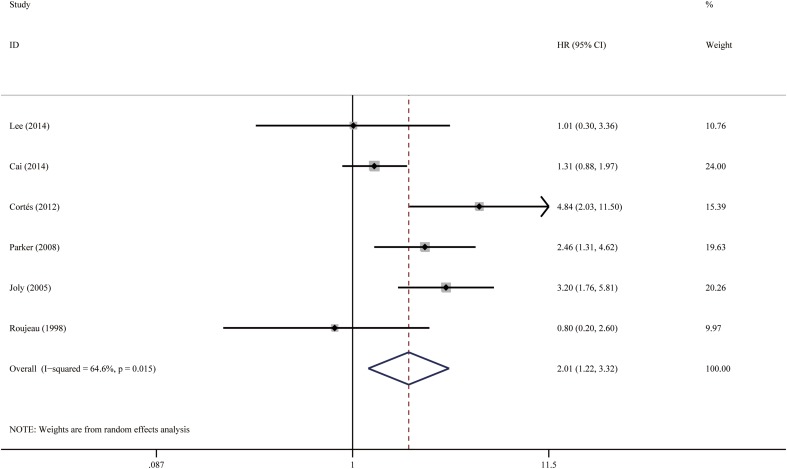
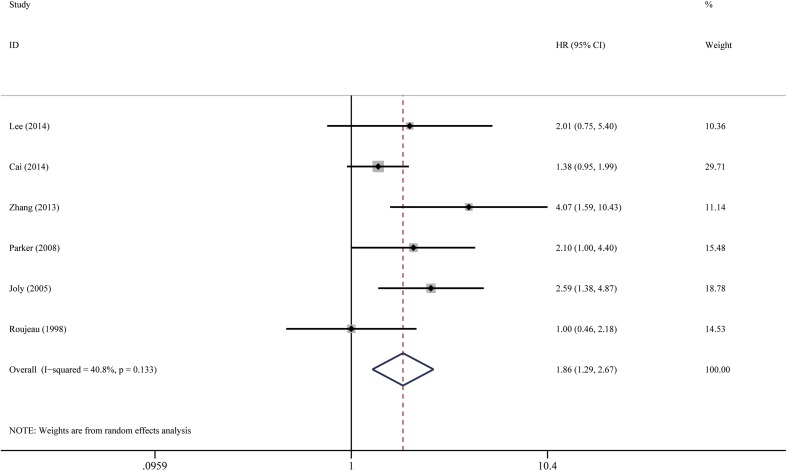
Bullous pemphigoid (BP) is a chronic debilitating autoimmune blistering disease that frequently occurs in the elderly population. Previous studies have suggested a high morbidity and mortality associated with BP. However, relatively few studies have investigated prognostic factors of BP mortality, and they showed considerably various results. This meta-analysis aimed to quantitatively assess the association between several potential prognostic factors and risk of mortality in bullous pemphigoid. A comprehensive search was performed using Pubmed, Embase, and Cochrane Library. Cohort studies that assessed prognostic factors of BP mortality were included. Random-effects model was utilized to calculate the pooled hazard ratio (HR). Publication bias was evaluated qualitatively by constructing a funnel plot and quantitatively by conducting Egger's test. 14 studies were included comprising 2499 patients. Combined HRs suggested that advanced age (HR 1.63, 95% CI 1.34-1.97), presence of circulating antibodies (HR 1.77, 95% CI 1.20-2.62), concomitant dementia (HR 2.01, 95% CI 1.22-3.33), and concomitant stroke (HR 1.86, 95% CI 1.29-2.67) have an unfavorable impact on patient survival. Gender, disease extent, mucosal involvement, and indirect immunofluorescence result were not shown to be linked to mortality by our analysis. This study indicated that BP patients with older age, circulating antibodies, dementia, and stroke are at greater risk of mortality. Clinicians should be aware of this association and utilize this information in patient education and treatment process.
大疱性类天疱疮(BP)是一种慢性致残性自身免疫性水疱病,常见于老年人群。既往研究提示BP具有较高的发病率和死亡率。然而,相对较少的研究调查了BP死亡率的预后因素,且结果差异较大。本荟萃分析旨在定量评估大疱性类天疱疮中几种潜在预后因素与死亡风险之间的关联。使用PubMed、Embase和Cochrane图书馆进行了全面检索。纳入评估BP死亡率预后因素的队列研究。采用随机效应模型计算合并风险比(HR)。通过构建漏斗图进行定性评估发表偏倚,并通过Egger检验进行定量评估。纳入14项研究,共2499例患者。合并HR提示,高龄(HR 1.63,95%CI 1.34 - 1.97)、循环抗体阳性(HR 1.77,95%CI 1.20 - 2.62)、合并痴呆(HR 2.01,95%CI 1.22 - 3.33)和合并中风(HR 1.86,95%CI 1.29 - 2.67)对患者生存有不利影响。我们的分析未显示性别、疾病范围、黏膜受累情况和间接免疫荧光结果与死亡率有关。本研究表明,年龄较大、有循环抗体、患痴呆和中风的BP患者死亡风险更高。临床医生应了解这种关联,并在患者教育和治疗过程中利用这些信息。