Yu Shandong, Chu Yanpeng, Li Gang, Ren Lu, Zhang Qing, Wu Lin
Department of Cardiology, Peking University First Hospital, Beijing, China.
Department of Cardiology, Peking University First Hospital, Beijing, China
J Am Heart Assoc. 2017 Mar 20;6(3):e004180. doi: 10.1161/JAHA.116.004180.
Cataracts are the main cause of poor vision and blindness worldwide. The effects of statin administration on cataracts remain debated. Therefore, we conducted a systematic review and meta-analysis to determine whether statin use affects the risk of cataracts.
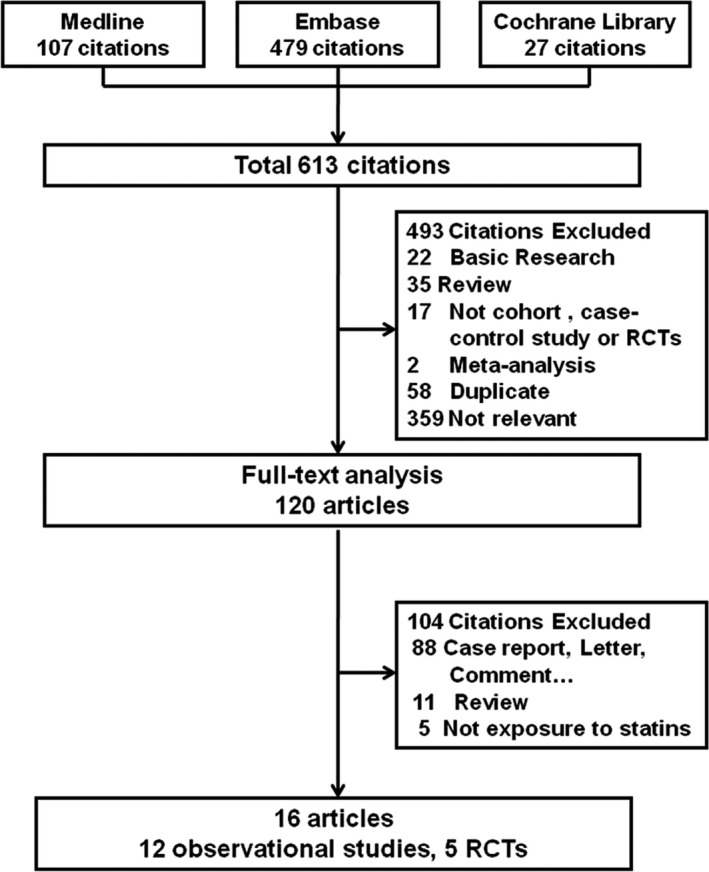
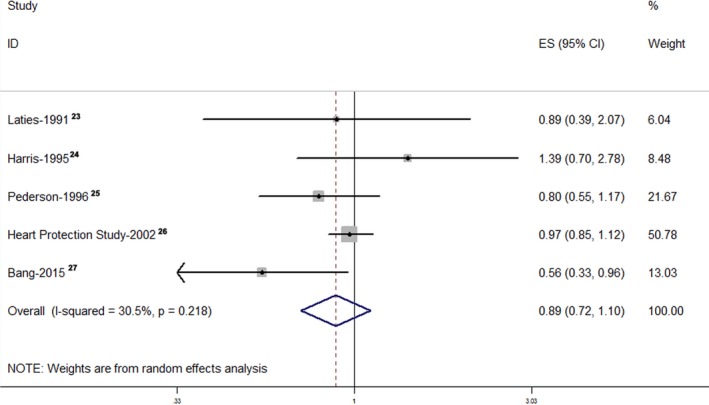
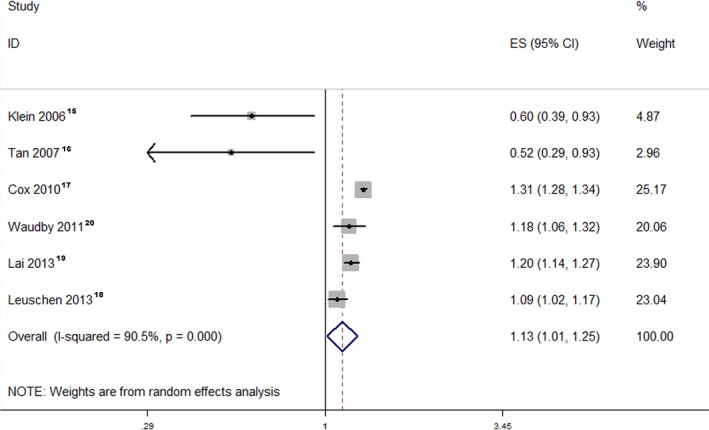
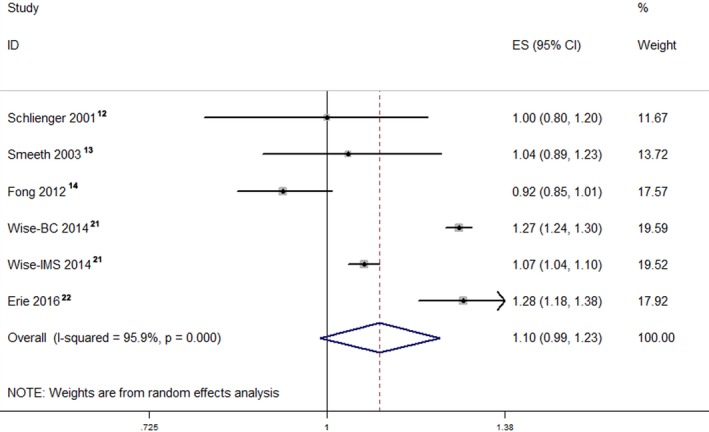
We performed a systematic search of the electronic databases PubMed, EMBASE, and the Cochrane Library through January 2016. Weighted averages were reported as relative risk values with 95% CIs. Statistical heterogeneity scores were assessed with the standard Cochran's Q test and the I statistic. A total of 6 cohort studies, 6 case-control studies, and 5 randomized controlled trials, together involving more than 313 200 patients, were included in our study. The pooled estimates of cohort studies indicated that the use of statins moderately increases the risk of cataracts (relative risk, 1.13; 95% CI, 1.01-1.25). The pooled estimates of case-control studies (relative risk=1.10, 95% CI, 0.99-1.23) and randomized controlled trials (relative risk, 0.89; 95% CI, 0.72-1.10) indicated that the use of statins does not increase the risk of cataracts. The sensitivity analysis confirmed the stability of the results. Heterogeneity was found among the cohort and case-control studies.
Based on the present meta-analysis of these studies, we could only conclude that there is no clear evidence showing that statin use increases the risk of cataracts. The most likely case is that there is no association between statin use and cataracts. Because of the considerable benefits of statins in cardiovascular patients, this issue should not deter their use.
白内障是全球视力低下和失明的主要原因。他汀类药物给药对白内障的影响仍存在争议。因此,我们进行了一项系统评价和荟萃分析,以确定使用他汀类药物是否会影响患白内障的风险。
我们对电子数据库PubMed、EMBASE和Cochrane图书馆进行了系统检索,检索截至2016年1月。加权平均值以相对风险值及95%置信区间的形式报告。采用标准的Cochrane Q检验和I统计量评估统计异质性得分。我们的研究共纳入了6项队列研究、6项病例对照研究和5项随机对照试验,总共涉及超过313200名患者。队列研究的汇总估计表明,使用他汀类药物会适度增加患白内障的风险(相对风险为1.13;95%置信区间为1.01 - 1.25)。病例对照研究(相对风险 = 1.10,95%置信区间为0.99 - 1.23)和随机对照试验(相对风险为0.89;95%置信区间为0.72 - 1.10)的汇总估计表明,使用他汀类药物不会增加患白内障的风险。敏感性分析证实了结果的稳定性。在队列研究和病例对照研究中发现了异质性。
基于目前对这些研究的荟萃分析,我们只能得出结论,没有明确证据表明使用他汀类药物会增加患白内障的风险。最有可能的情况是,使用他汀类药物与白内障之间没有关联。由于他汀类药物对心血管疾病患者有相当大的益处,这个问题不应妨碍其使用。