Walters Stephen J, Bonacho Dos Anjos Henriques-Cadby Inês, Bortolami Oscar, Flight Laura, Hind Daniel, Jacques Richard M, Knox Christopher, Nadin Ben, Rothwell Joanne, Surtees Michael, Julious Steven A
School of Health and Related Research, University of Sheffield, Sheffield, UK.
BMJ Open. 2017 Mar 20;7(3):e015276. doi: 10.1136/bmjopen-2016-015276.
Substantial amounts of public funds are invested in health research worldwide. Publicly funded randomised controlled trials (RCTs) often recruit participants at a slower than anticipated rate. Many trials fail to reach their planned sample size within the envisaged trial timescale and trial funding envelope.
To review the consent, recruitment and retention rates for single and multicentre randomised control trials funded and published by the UK's National Institute for Health Research (NIHR) Health Technology Assessment (HTA) Programme.
HTA reports of individually randomised single or multicentre RCTs published from the start of 2004 to the end of April 2016 were reviewed.
Information was extracted, relating to the trial characteristics, sample size, recruitment and retention by two independent reviewers.
Target sample size and whether it was achieved; recruitment rates (number of participants recruited per centre per month) and retention rates (randomised participants retained and assessed with valid primary outcome data).
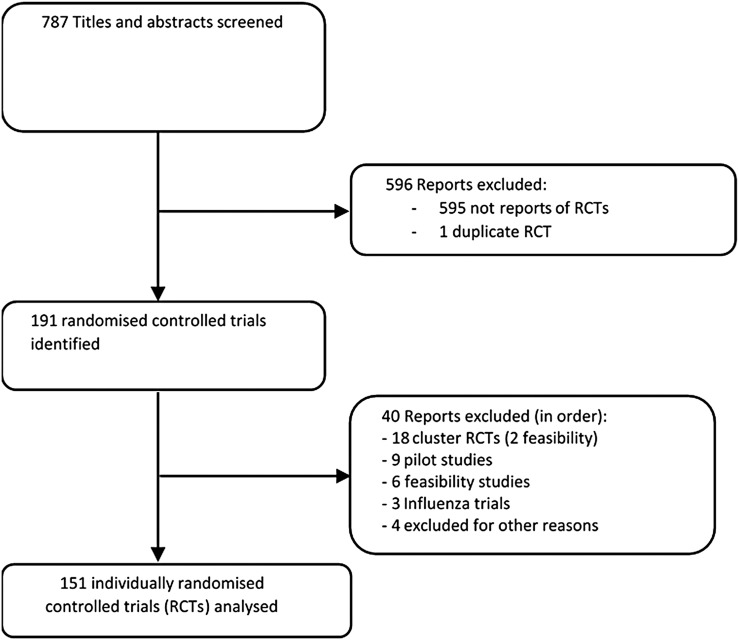
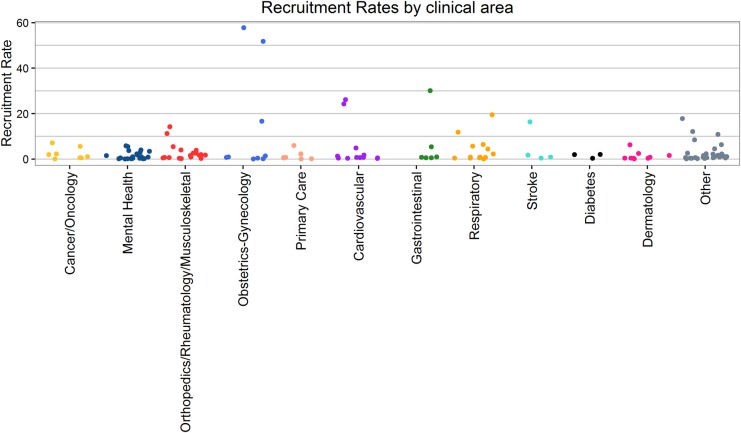
This review identified 151 individually RCTs from 787 NIHR HTA reports. The final recruitment target sample size was achieved in 56% (85/151) of the RCTs and more than 80% of the final target sample size was achieved for 79% of the RCTs (119/151). The median recruitment rate (participants per centre per month) was found to be 0.92 (IQR 0.43-2.79) and the median retention rate (proportion of participants with valid primary outcome data at follow-up) was estimated at 89% (IQR 79-97%).
There is considerable variation in the consent, recruitment and retention rates in publicly funded RCTs. Investigators should bear this in mind at the planning stage of their study and not be overly optimistic about their recruitment projections.
全球大量公共资金投入到健康研究中。由公共资金资助的随机对照试验(RCT)招募参与者的速度往往比预期要慢。许多试验未能在设想的试验时间范围和试验资金范围内达到计划的样本量。
回顾由英国国家卫生研究院(NIHR)卫生技术评估(HTA)计划资助并发表的单中心和多中心随机对照试验的同意率、招募率和保留率。
对2004年初至2016年4月底发表的单中心或多中心随机对照试验的HTA报告进行了回顾。
由两名独立审阅者提取与试验特征、样本量、招募和保留相关的信息。
目标样本量及其是否达成;招募率(每个中心每月招募的参与者数量)和保留率(保留并通过有效的主要结局数据进行评估的随机分组参与者)。
本综述从787份NIHR HTA报告中识别出151项单中心随机对照试验。56%(85/151)的随机对照试验达到了最终招募目标样本量,79%(119/151)的随机对照试验达到了最终目标样本量的80%以上。发现招募率中位数(每个中心每月的参与者)为0.92(四分位间距0.43 - 2.79),保留率中位数(随访时具有有效主要结局数据的参与者比例)估计为89%(四分位间距79 - 97%)。
公共资金资助的随机对照试验在同意率、招募率和保留率方面存在相当大的差异。研究者在研究规划阶段应牢记这一点,不要对其招募预测过于乐观。