Hernández-Alvarez Noemi, Pascasio Acevedo Juan Manuel, Quintero Enrique, Fernández Vázquez Inmaculada, García-Eliz María, de la Revilla Negro Juan, Crespo García Javier, Hernández-Guerra Manuel
Hospital Universitario de Canarias , La Laguna , Spain.
Hospital Virgen del Rocio de Sevilla, IBIS, CIBERehd , Sevilla , Spain.
BMJ Open Gastroenterol. 2017 Mar 4;4(1):e000115. doi: 10.1136/bmjgast-2016-000115. eCollection 2017.
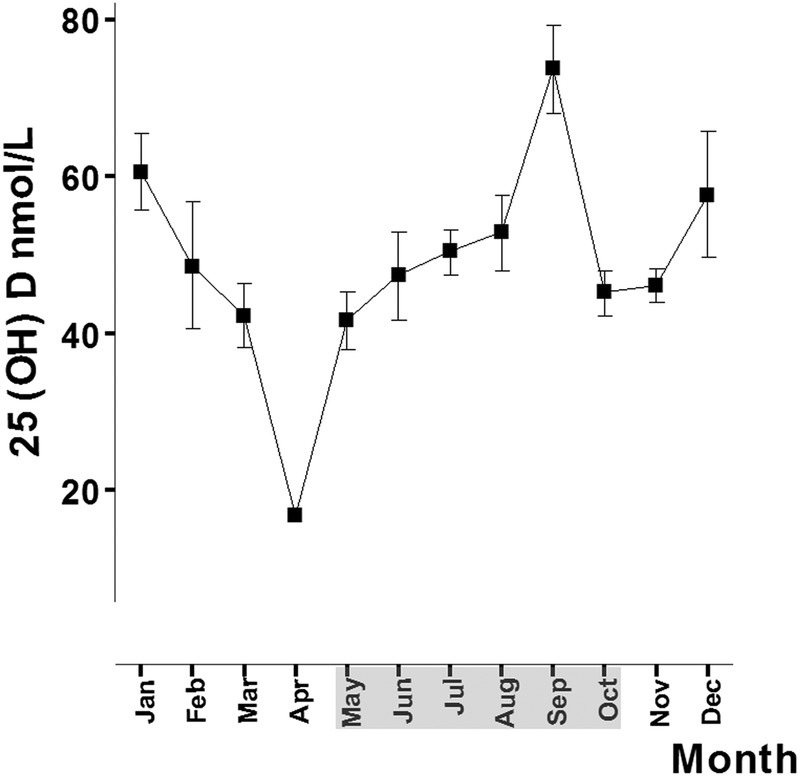
Rapid viral response (RVR) during antiviral treatment for hepatitis C virus (HCV) predicts sustained viral response (SVR). Recently, vitamin D levels have been associated with SVR. As sunlight is the most important source of vitamin D and shows seasonal variation, we evaluated the effect of season on viral kinetics during peginterferon/ribavirin-based therapy for HCV.
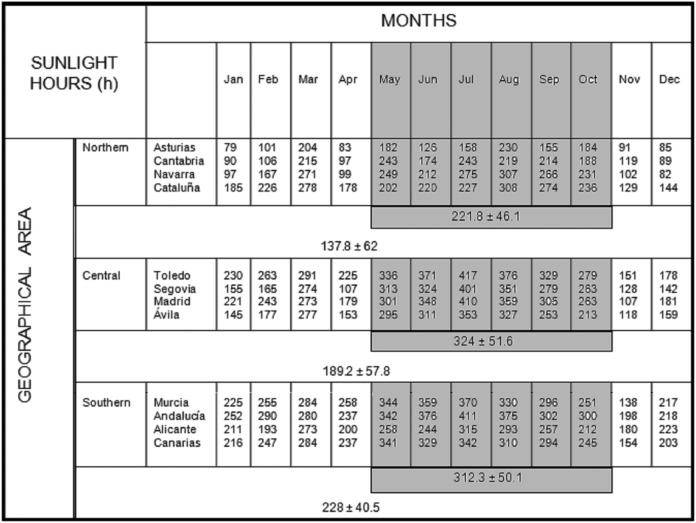
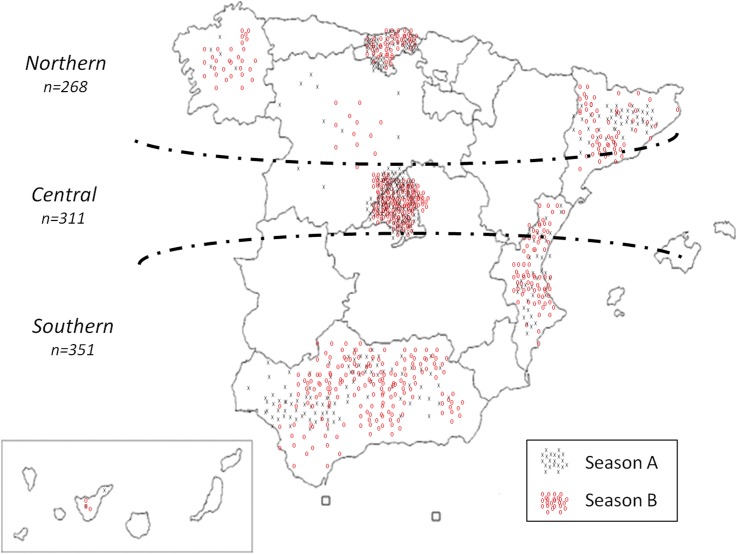
Consecutive HCV patients treated with peginterferon/ribavirin and boceprevir/ telaprevir (June 2011-July 2014) were included. Patients were grouped according to season when therapy was initiated (Season A: May-October and Season B: November-April) depending on hours of daily sunlight. Multiple logistic regression analysis included factors known to influence SVR to treatment. The dependent variables were undetectable viral load (VL) or VL ≤15 UI/mL (VL ≤15) at weeks 4, 8 and 12, end of treatment and SVR.
The study included 930 patients (66.8% men; median 54 years) treated with telaprevir (n=537) or boceprevir, without (n=481) or with lead-in therapy of peginterferon/ribavirin. Baseline characteristics of patients in Season A (45.3%, n=421) and Season B groups were similar. Overall, a higher rate of RVR (23.5% vs 16.1%, p=0.005) and VL ≤15 (51.0% vs 38.6%, p≤0.001) was observed in patients starting treatment during Season A versus Season B. By logistic regression analysis, initiating treatment in Season A proved to be an independent predictor of RVR and VL ≤15.
In our setting, seasonality affects viral kinetics in HCV genotype 1 patients treated with peginterferon/ribavirin-based therapy. Our findings support the hypothesis that vitamin D influences viral response to peginterferon/ribavirin-based therapy.
丙型肝炎病毒(HCV)抗病毒治疗期间的快速病毒学应答(RVR)可预测持续病毒学应答(SVR)。最近,维生素D水平与SVR相关。由于阳光是维生素D的最重要来源且呈现季节性变化,我们评估了季节对基于聚乙二醇干扰素/利巴韦林治疗HCV期间病毒动力学的影响。
纳入2011年6月至2014年7月期间接受聚乙二醇干扰素/利巴韦林以及博赛匹韦/特拉匹韦治疗的连续性HCV患者。根据开始治疗时的季节(季节A:5月至10月;季节B:11月至次年4月)对患者进行分组,分组依据为每日日照时长。多因素逻辑回归分析纳入已知会影响治疗SVR的因素。因变量为治疗第4周、8周和12周、治疗结束时以及SVR时病毒载量(VL)不可检测或VL≤15 UI/mL(VL≤15)。
该研究纳入了930例患者(男性占66.8%;中位年龄54岁),接受特拉匹韦治疗(n = 537)或博赛匹韦治疗,未接受(n = 481)或接受过聚乙二醇干扰素/利巴韦林导入治疗。季节A组(45.3%,n = 421)和季节B组患者的基线特征相似。总体而言,与季节B相比,季节A开始治疗的患者中RVR发生率更高(23.5%对16.1%,p = 0.005),VL≤15的比例更高(51.0%对38.6%,p≤0.001)。通过逻辑回归分析,在季节A开始治疗被证明是RVR和VL≤15的独立预测因素。
在我们的研究环境中,季节变化会影响接受基于聚乙二醇干扰素/利巴韦林治疗的HCV 1型患者的病毒动力学。我们的研究结果支持维生素D影响对基于聚乙二醇干扰素/利巴韦林治疗的病毒应答这一假说。