
来自海绵Geodia cydonium的孔复合体-核层中蛋白质被同源聚集因子和佛波酯特异性磷酸化。蛋白激酶C在DNA拓扑异构酶II磷酸化中的作用。
Specific phosphorylation of proteins in pore complex-laminae from the sponge Geodia cydonium by the homologous aggregation factor and phorbol ester. Role of protein kinase C in the phosphorylation of DNA topoisomerase II.
作者信息
Rottmann M, Schröder H C, Gramzow M, Renneisen K, Kurelec B, Dorn A, Friese U, Müller W E
机构信息
Institut für Physiologische Chemie, Universität, Mainz, FRG.
出版信息
EMBO J. 1987 Dec 20;6(13):3939-44. doi: 10.1002/j.1460-2075.1987.tb02735.x.
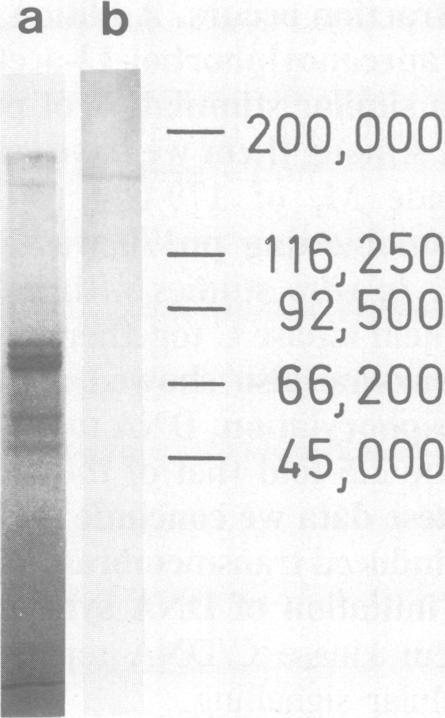
We have recently shown that the aggregation factor (AF) from the sponge Geodia cydonium stimulates DNA synthesis in quiescent, dissociated cells from the same organism; this event was correlated with the release of the two second messengers: inositol trisphosphate and diacylglycerol. Here we describe that after binding of the AF to the plasma membrane-bound aggregation receptor, a rapid and drastic increase in the incorporation of 32Pi into a series of proteins in the pore complex-lamina fraction occurs. Addition of the tumor promoter, 12-O-tetradecanoylphorbol-13-acetate, to quiescent cells resulted in a similar stimulation of phosphorylation of nuclear proteins. Among them we have selected one protein with a polypeptide Mr of 170,000 (pp170) for detailed studies. By immunoblotting pp170 was identified as DNA topoisomerase II. In vitro studies with nuclei and purified, homogeneous protein kinase C together with the required activators of this enzyme also showed a phosphorylation of pp170. After phosphorylation, DNA topoisomerase II activity was found to be 2.5-fold that of the non-phosphorylated enzyme. From these data we conclude that protein kinase C is involved in AF induced transmembrane signalling, ultimately leading to an initiation of DNA synthesis.
我们最近发现,来自海绵Geodia cydonium的聚集因子(AF)能刺激来自同一生物体的静止、解离细胞中的DNA合成;这一事件与两种第二信使:肌醇三磷酸和二酰基甘油的释放相关。在此我们描述,AF与质膜结合的聚集受体结合后,孔复合物-核纤层部分中一系列蛋白质的32Pi掺入量迅速且显著增加。向静止细胞中添加肿瘤启动子12-O-十四酰佛波醇-13-乙酸酯会导致核蛋白磷酸化受到类似刺激。在这些核蛋白中,我们选择了一种分子量为170,000的多肽(pp170)进行详细研究。通过免疫印迹法,pp170被鉴定为DNA拓扑异构酶II。用细胞核和纯化的、均一的蛋白激酶C以及该酶所需的激活剂进行的体外研究也显示pp170发生了磷酸化。磷酸化后,发现DNA拓扑异构酶II的活性是非磷酸化酶的2.5倍。从这些数据我们得出结论,蛋白激酶C参与了AF诱导的跨膜信号传导,最终导致DNA合成的启动。



 Zotero 插件