Petry Clive J, Ong Ken K, Hughes Ieuan A, Acerini Carlo L, Frystyk Jan, Dunger David B
Department of Paediatrics, University of Cambridge, Cambridge CB2 0QQ, United Kingdom.
Medical Research Council Epidemiology Unit, University of Cambridge, Cambridge CB2 0QQ, United Kingdom.
J Clin Endocrinol Metab. 2017 Jun 1;102(6):2000-2008. doi: 10.1210/jc.2017-00272.
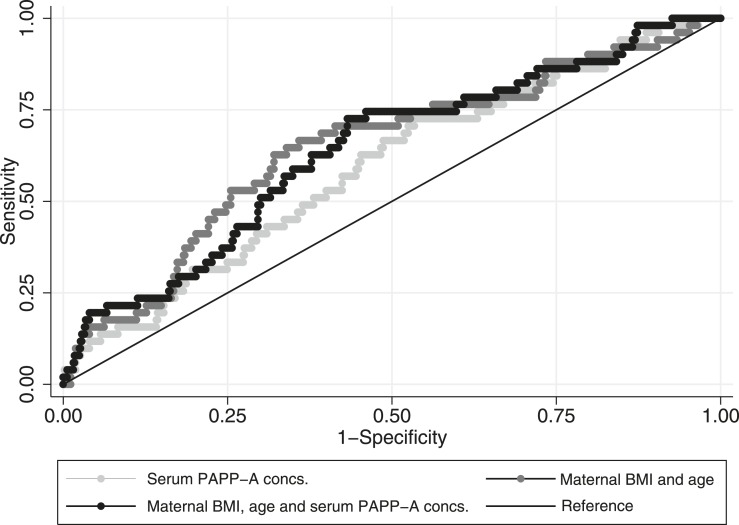
First or early second trimester pregnancy-associated plasma protein A (PAPP-A) concentrations have previously been shown to be lower in women who subsequently develop gestational diabetes mellitus (GDM) and gestational hypertension.
We therefore sought to investigate why circulating PAPP-A concentrations are related to the subsequent risk of GDM and gestational hypertension.
PATIENTS, DESIGN, AND SETTING: We measured serum PAPP-A concentrations around week 15 of pregnancy and related these to indices derived from week 28 oral glucose tolerance tests and blood pressures across pregnancy in the Cambridge Baby Growth Study cohort.
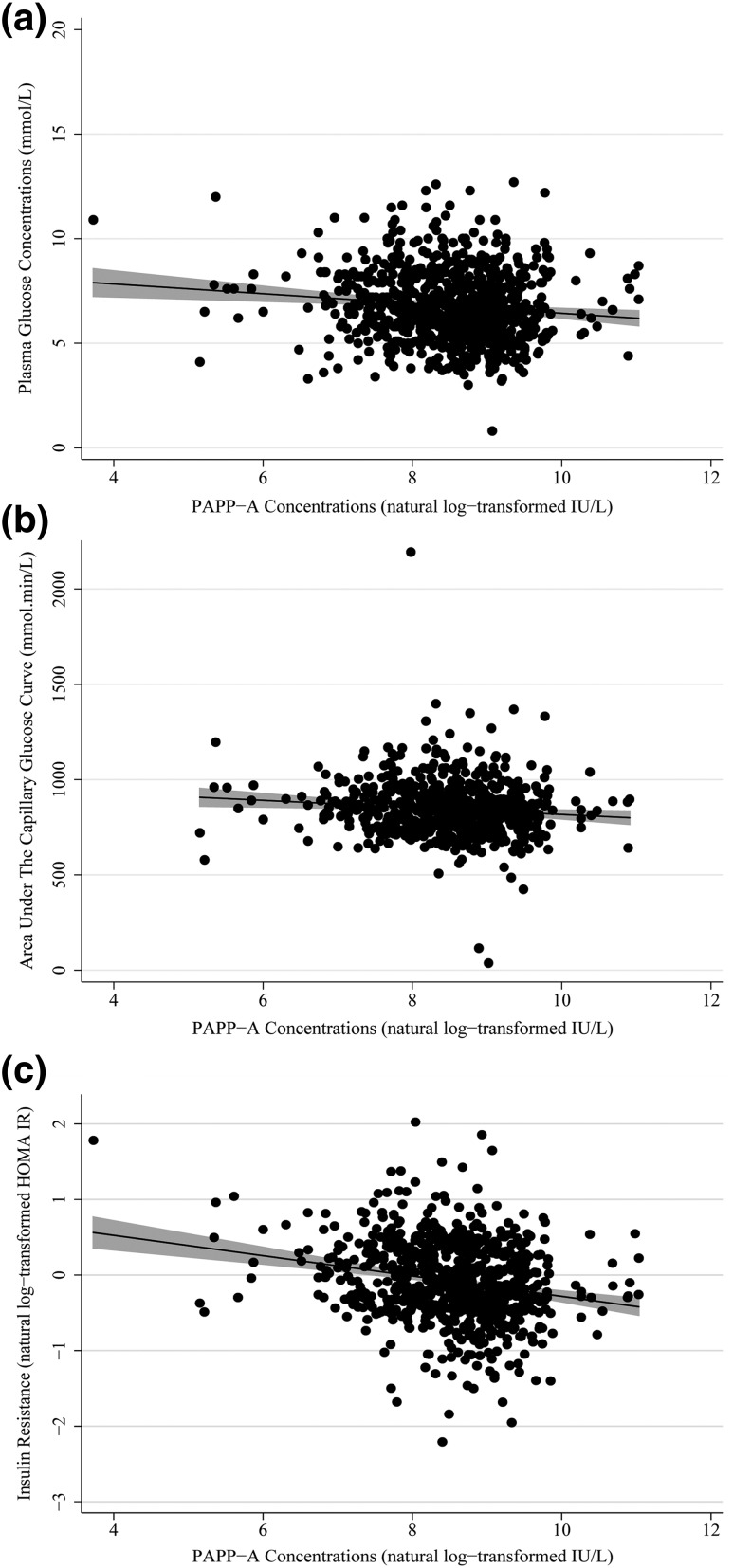
Increased PAPP-A concentrations were associated with reduced GDM risk [odds ratio 0.623 (0.453, 0.856), P = 3.5 × 10⁻³, n = 777] and reduced mean arterial blood pressures (β = -0.202 to -0.177, P = 1.7 to 6.9 × 10⁻³, n = 347 to 355). They were also negatively associated with week 28 fasting (β = -0.149, P = 6.6 × 10⁻⁴, n = 777) and 60-minute (β = -0.188, P = 1.5 × 10⁻⁵, n = 777) oral glucose tolerance test glucose concentrations. These associations were underpinned by the strong associations between increased week 15 PAPP-A concentrations and decreased week 28 insulin resistance (homeostasis model assessment of insulin resistance: β = -0.319, P = 1.7 × 10⁻¹³, n = 768), as well as increased insulin secretion relative to insulin sensitivity (insulin disposition index: β = 0.202, P = 6.5 × 10⁻⁶, n = 731).
These results suggest that links between PAPP-A concentrations in early pregnancy and subsequent glucose concentrations and blood pressures may be mediated by changes in insulin sensitivity (and secretion).
先前的研究表明,首次或孕早期的妊娠相关血浆蛋白A(PAPP-A)浓度在随后发生妊娠期糖尿病(GDM)和妊娠期高血压的女性中较低。
因此,我们试图研究为什么循环中的PAPP-A浓度与随后发生GDM和妊娠期高血压的风险相关。
患者、设计与研究地点:在剑桥婴儿生长研究队列中,我们测量了妊娠第15周左右的血清PAPP-A浓度,并将其与妊娠第28周口服葡萄糖耐量试验得出的指标以及整个孕期的血压相关联。
PAPP-A浓度升高与GDM风险降低相关[比值比0.623(0.453,0.856),P = 3.5×10⁻³,n = 777],且与平均动脉血压降低相关(β = -0.202至-0.177,P = 1.7至6.9×10⁻³,n = 347至355)。它们还与妊娠第28周的空腹血糖(β = -0.149,P = 6.6×10⁻⁴,n = 777)和60分钟口服葡萄糖耐量试验血糖浓度(β = -0.188,P = 1.5×10⁻⁵,n = 777)呈负相关。这些关联的基础是妊娠第15周PAPP-A浓度升高与妊娠第28周胰岛素抵抗降低之间的强关联(胰岛素抵抗稳态模型评估:β = -0.319,P = 1.7×10⁻¹³,n = 768),以及相对于胰岛素敏感性的胰岛素分泌增加(胰岛素处置指数:β = 0.202,P = 6.5×10⁻⁶,n = 731)。
这些结果表明,妊娠早期PAPP-A浓度与随后的血糖浓度和血压之间的联系可能是由胰岛素敏感性(和分泌)的变化介导的。