Wonglersak Rungtip, Cronk Quentin, Percy Diana
University College London, London, United Kingdom.
University of British Columbia, Vancouver, Canada.
Biodivers Data J. 2017 Jan 13(5):e10824. doi: 10.3897/BDJ.5.e10824. eCollection 2017.
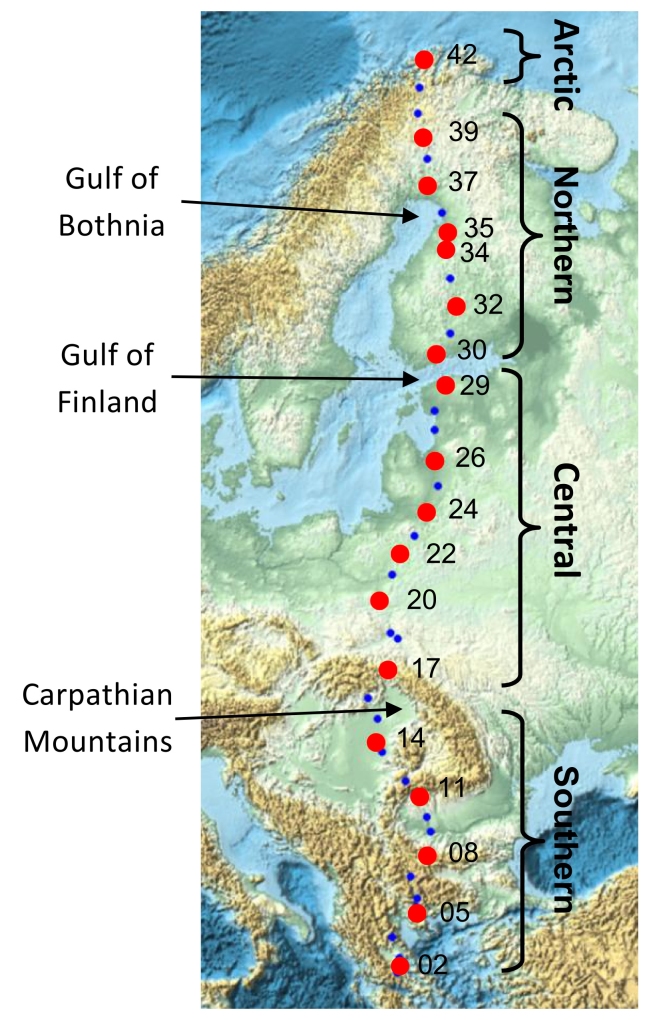
The common nettle ( L.) is co-associated with willows ( spp.) in riparian habitats across Europe. We sampled the widespread nettle psyllid, (Linné, 1758), from in willow habitats on a megatransect of Europe from the Aegean to the Arctic Ocean. The aim of this study was to use an unusually widespread insect to assess the influence of geographic distances and natural geographic barriers on patterns of genetic variation and haplotype distribution.
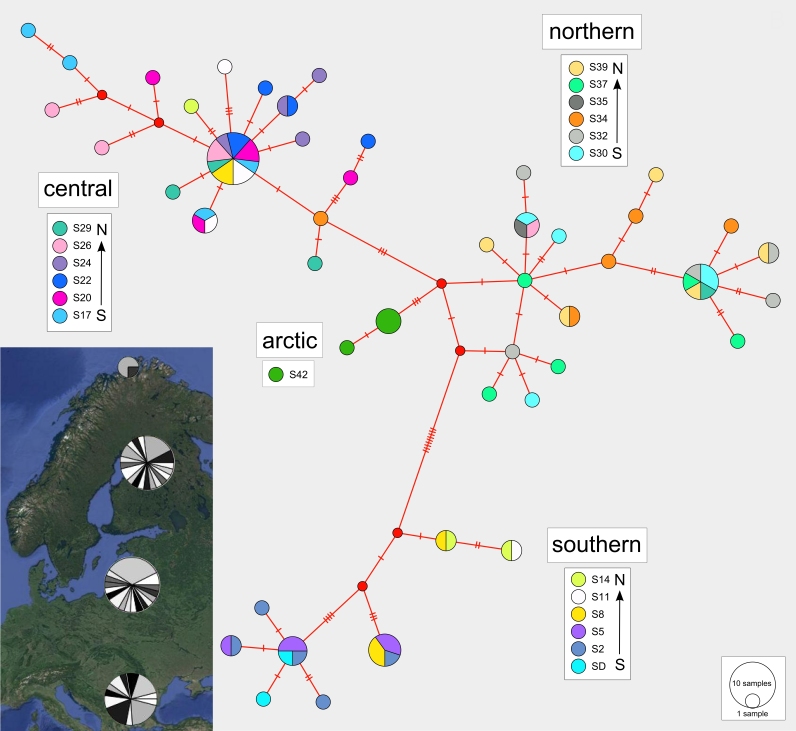
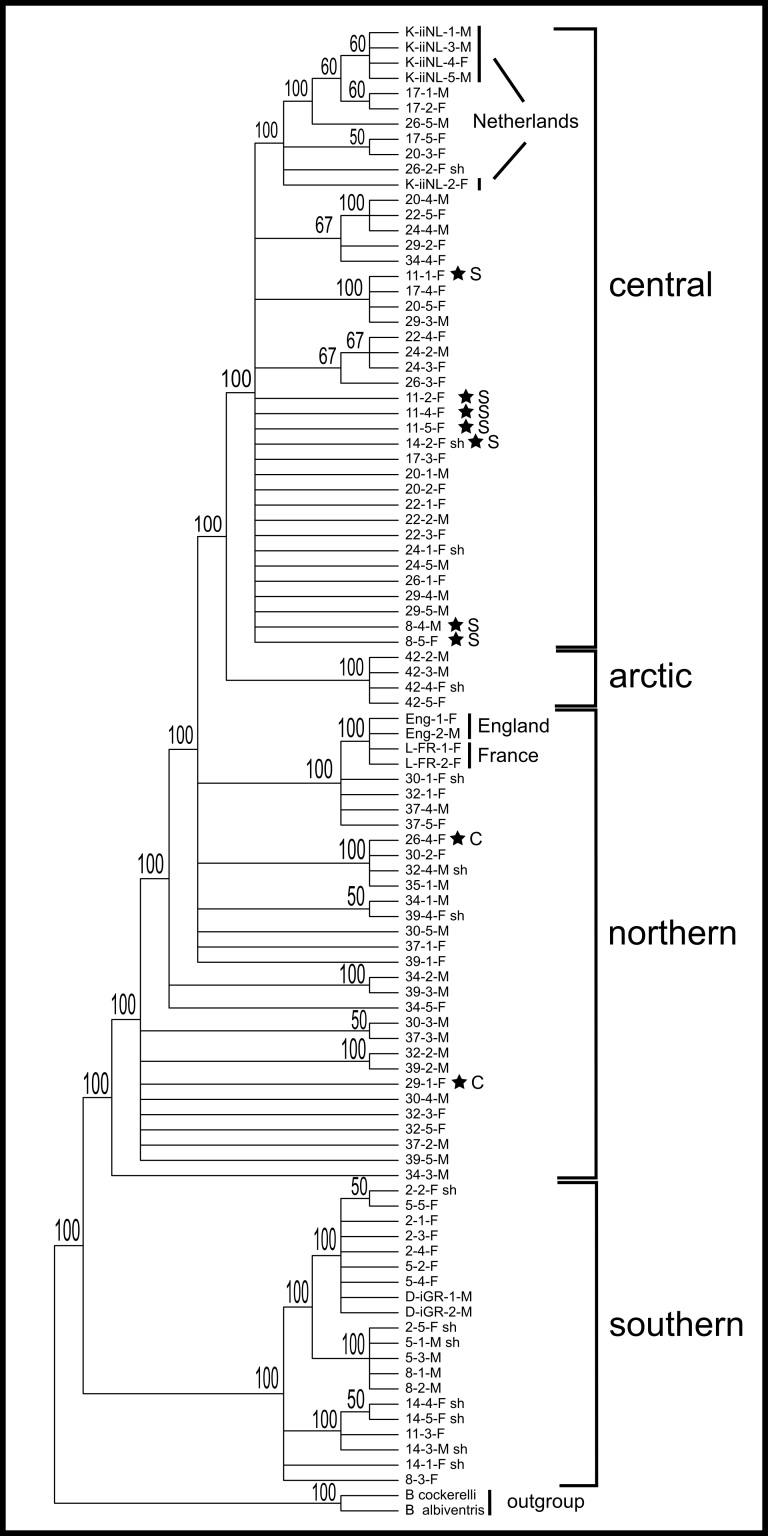
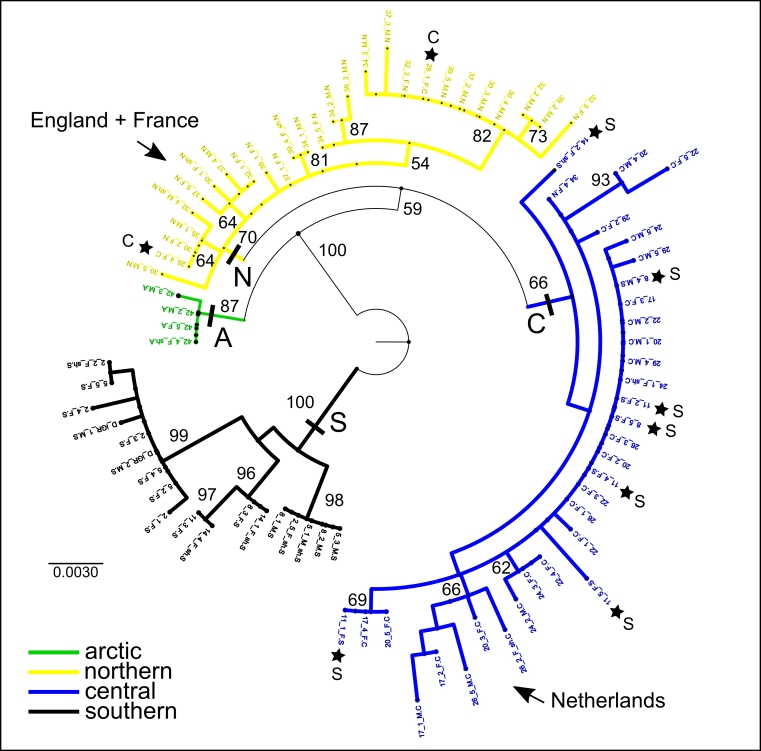
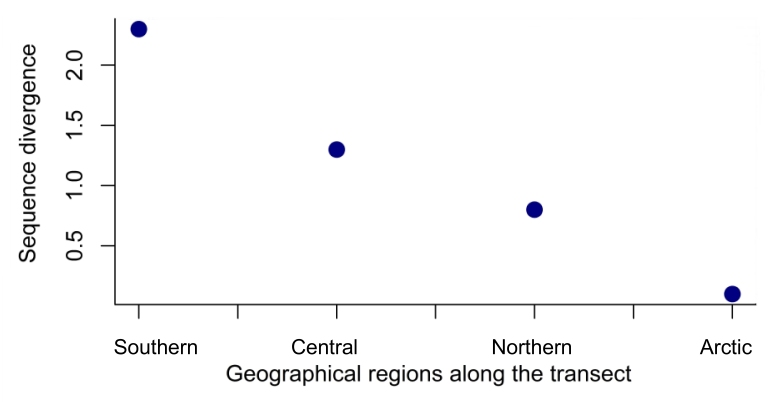
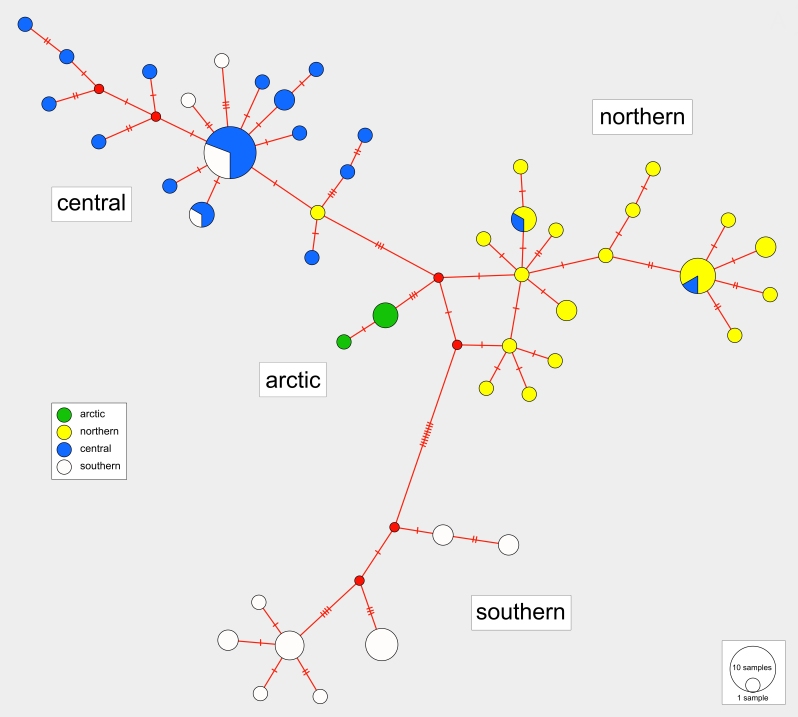
Phylogeographic analysis using DNA sequences of two mtDNA regions, COI and cytB, shows that specimens are organized into four regional groups (southern, central, northern and arctic). These groups are supported by both phylogenetic analysis (four geographically-based clades) and network analysis (four major haplotype groups). The boundary between southern and central groups corresponds to the Carpathian Mountains and the boundary between the central and northern groups corresponds to the Gulf of Finland. Overall these groups form a latitudinal cline in genetic diversity, which decreases with increasing latitude.
在欧洲各地的河岸栖息地,普通荨麻(L.)常与柳树(spp.)共生。我们从欧洲从爱琴海到北冰洋的一条巨型样带上的柳树栖息地中采集了分布广泛的荨麻木虱(Linné,1758年)。本研究的目的是利用一种分布异常广泛的昆虫来评估地理距离和自然地理屏障对遗传变异模式和单倍型分布的影响。
使用两个线粒体DNA区域COI和细胞色素B的DNA序列进行的系统发育地理学分析表明,荨麻木虱标本被分为四个区域组(南部、中部、北部和北极)。系统发育分析(四个基于地理的分支)和网络分析(四个主要单倍型组)均支持这些组。南部和中部组之间的边界对应于喀尔巴阡山脉,中部和北部组之间的边界对应于芬兰湾。总体而言,这些组在遗传多样性上形成了一个纬度梯度,随着纬度的增加而降低。