Leibiger Thomas, McGrory Brian J
Maine Joint Replacement Institute, Portland, Maine, USA.
Maine Joint Replacement Institute, Portland, Maine, USA; Tufts School of Medicine, Boston, Massachusetts, USA.
Arthroplast Today. 2015 Oct 31;1(4):107-110. doi: 10.1016/j.artd.2015.10.001. eCollection 2015 Dec.
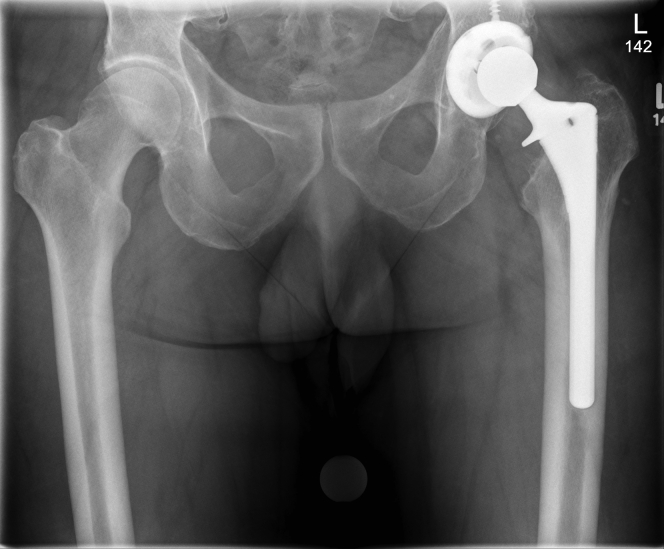
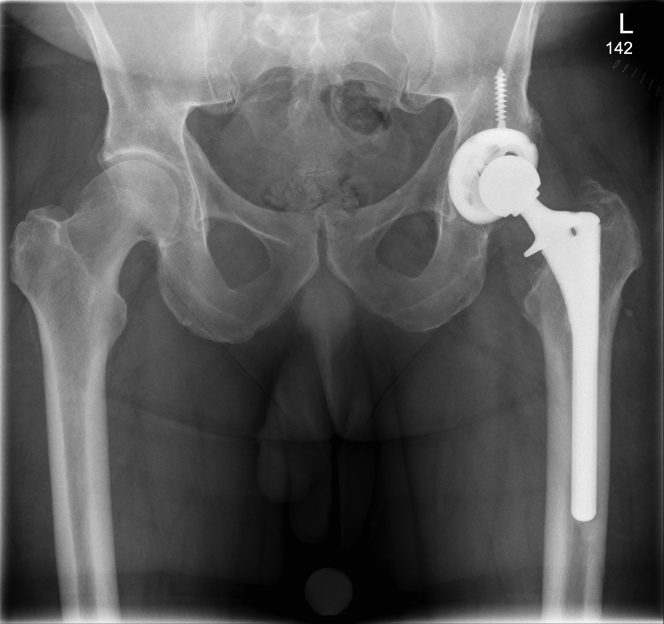
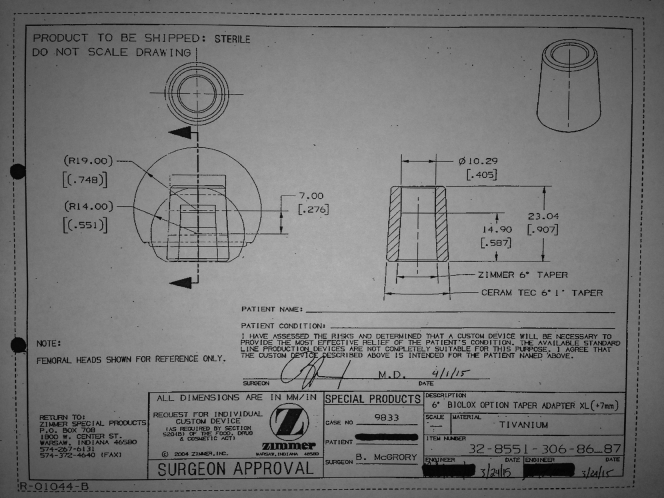
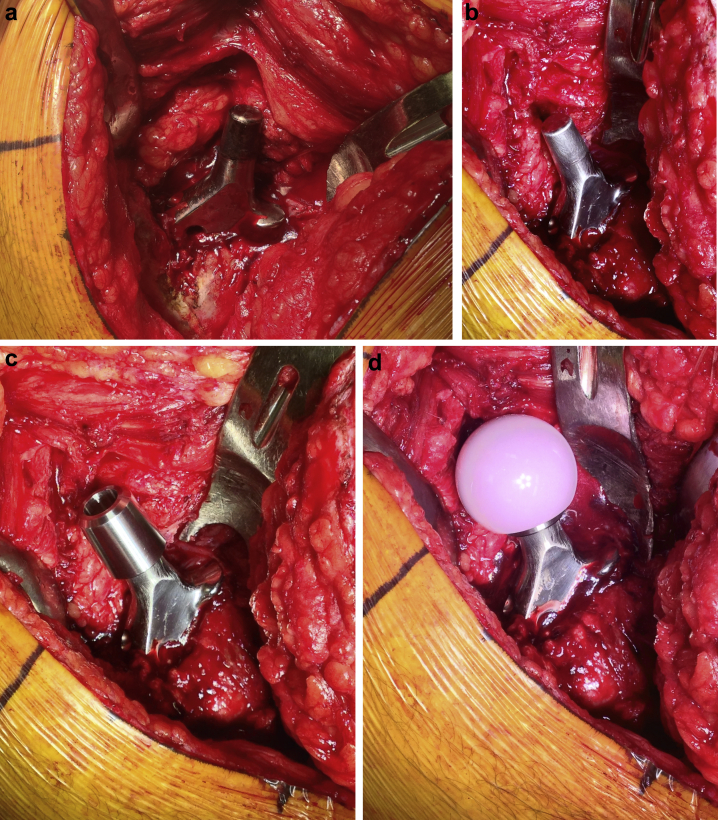
Adverse local tissue reaction associated with total hip replacement may occur when mechanically assisted crevice corrosion occurs at metal-metal modular junctions in which at least one of the components is fabricated from cobalt-chromium alloy. Complete removal of components may be associated with significant morbidity; when components are well fixed and in acceptable position, it may be appropriate to consider modular rather than complete revision. We have diagnosed mechanically assisted crevice corrosion in total hip arthroplasty patients with noncontemporary but well-fixed femoral components and found that modular conversion to a ceramic femoral head to remove a source of CoCr corrosion and fretting products was only possible by having a custom titanium sleeve manufactured. Surgical implantation with a revision style Biolox ceramic head (CeramTec, Plochingen, Germany) was then achieved.
当机械辅助缝隙腐蚀发生在金属-金属模块化连接处时,可能会出现与全髋关节置换相关的局部组织不良反应,其中至少有一个组件是由钴铬合金制造的。完全移除组件可能会伴有严重的发病率;当组件固定良好且位置可接受时,考虑进行模块化而非完全翻修可能是合适的。我们已经在全髋关节置换术患者中诊断出机械辅助缝隙腐蚀,这些患者的股骨组件并非当代产品但固定良好,并且发现只有通过定制制造钛套筒,才有可能将模块化转换为陶瓷股骨头,以消除钴铬腐蚀和微动磨损产物的来源。然后采用翻修型Biolox陶瓷头(德国普洛兴根的CeramTec公司)进行手术植入。