Robertson David J, Kramer Robin S S, Burton A Mike
Department of Psychology, University of York, York, United Kingdom.
PLoS One. 2017 Mar 22;12(3):e0173319. doi: 10.1371/journal.pone.0173319. eCollection 2017.
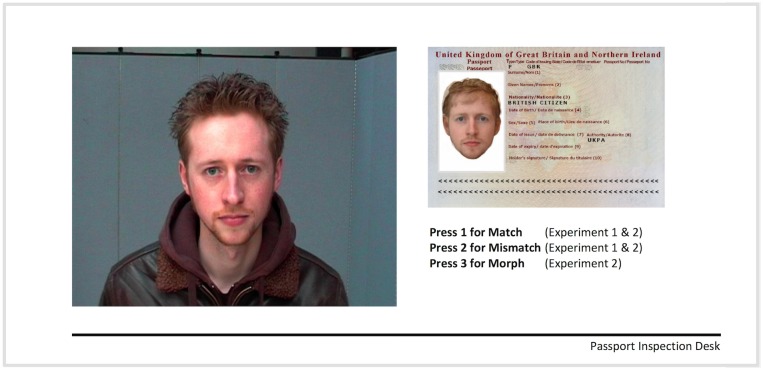
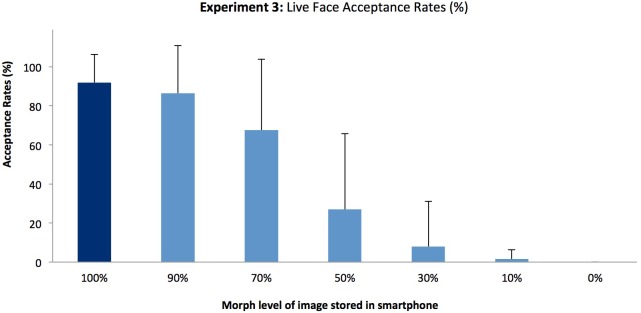
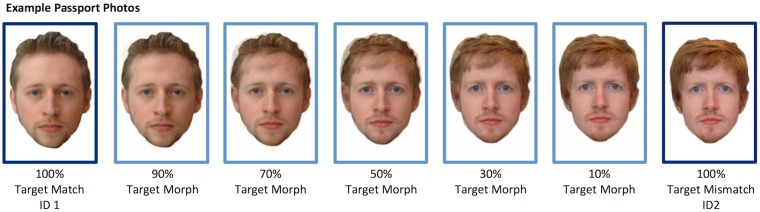
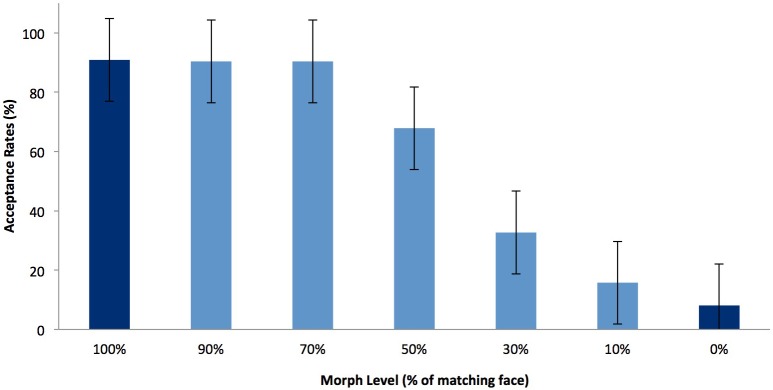
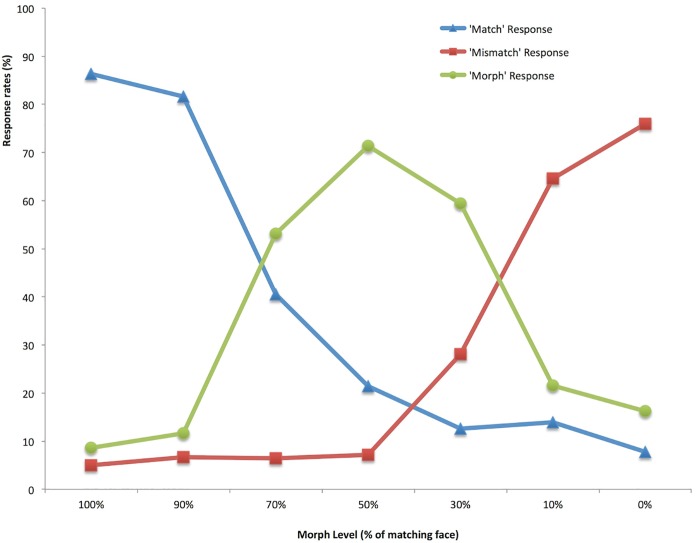
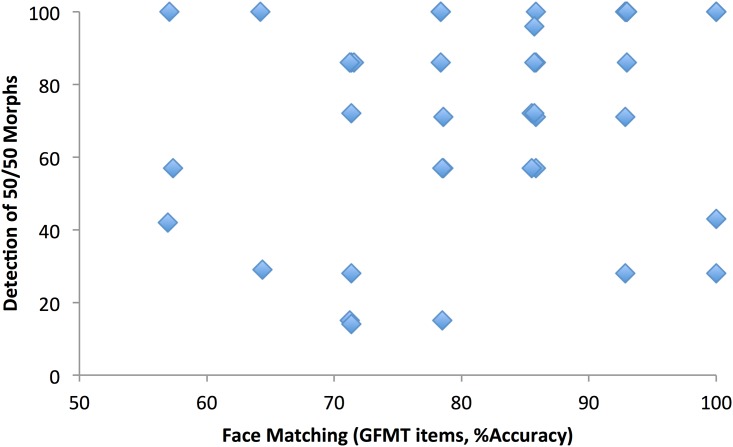
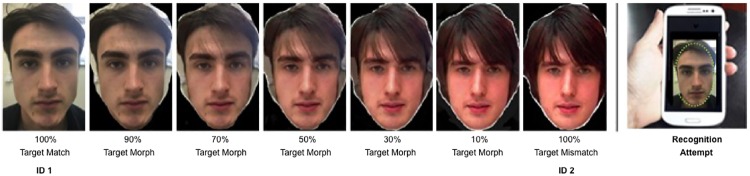
Matching unfamiliar faces is known to be difficult, and this can give an opportunity to those engaged in identity fraud. Here we examine a relatively new form of fraud, the use of photo-ID containing a graphical morph between two faces. Such a document may look sufficiently like two people to serve as ID for both. We present two experiments with human viewers, and a third with a smartphone face recognition system. In Experiment 1, viewers were asked to match pairs of faces, without being warned that one of the pair could be a morph. They very commonly accepted a morphed face as a match. However, in Experiment 2, following very short training on morph detection, their acceptance rate fell considerably. Nevertheless, there remained large individual differences in people's ability to detect a morph. In Experiment 3 we show that a smartphone makes errors at a similar rate to 'trained' human viewers-i.e. accepting a small number of morphs as genuine ID. We discuss these results in reference to the use of face photos for security.
众所周知,识别陌生面孔很困难,这可能会给身份欺诈者提供可乘之机。在此,我们研究一种相对较新的欺诈形式,即使用包含两张面孔之间图形变形的照片身份证。这样的证件可能看起来足够像两个人,从而可以作为两人的身份证件。我们进行了两项针对人类观察者的实验,以及第三项针对智能手机面部识别系统的实验。在实验1中,要求观察者匹配面孔对,但未事先告知他们其中一对可能是变形面孔。他们非常普遍地将变形面孔视为匹配对象。然而,在实验2中,经过非常简短的变形检测训练后,他们的接受率大幅下降。尽管如此,人们检测变形面孔的能力仍存在很大的个体差异。在实验3中,我们表明智能手机出错的概率与“经过训练”的人类观察者相似——即把一小部分变形面孔当作真实身份证接受。我们结合面部照片在安全方面的应用来讨论这些结果。