Le Bloa Simon, Durand Lucile, Cueff-Gauchard Valérie, Le Bars Josiane, Taupin Laure, Marteau Charlotte, Bazire Alexis, Cambon-Bonavita Marie-Anne
Ifremer, Centre Bretagne, Laboratoire de Microbiologie des Environnements Extrêmes, REM/EEP/LM2E, UMR 6197 Ifremer-CNRS-UBO, ZI Pointe du Diable, CS, Plouzané, France.
Université de Brest, Laboratoire de Microbiologie des Environnements Extrêmes, UMR 6197 Ifremer-CNRS-UBO, Technopôle Iroise, 4 place Nicolas Copernic, Plouzané, France.
PLoS One. 2017 Mar 22;12(3):e0174338. doi: 10.1371/journal.pone.0174338. eCollection 2017.
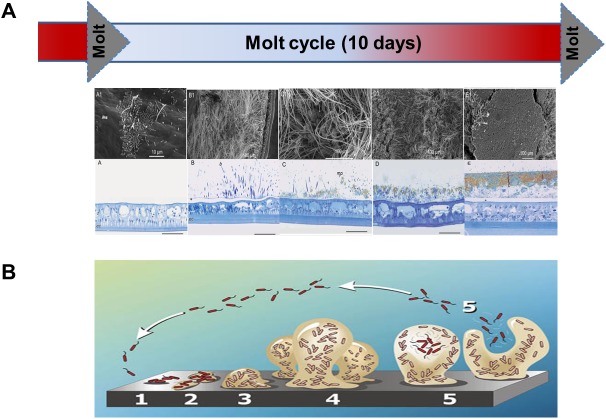
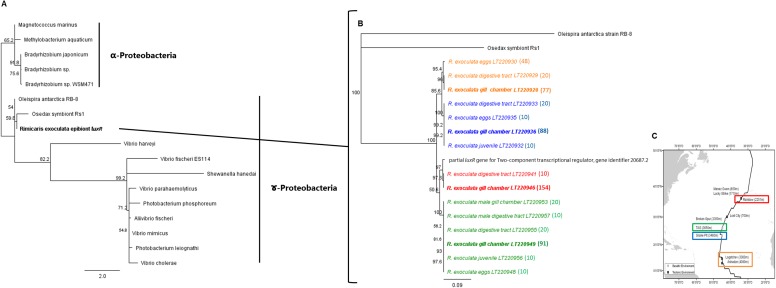
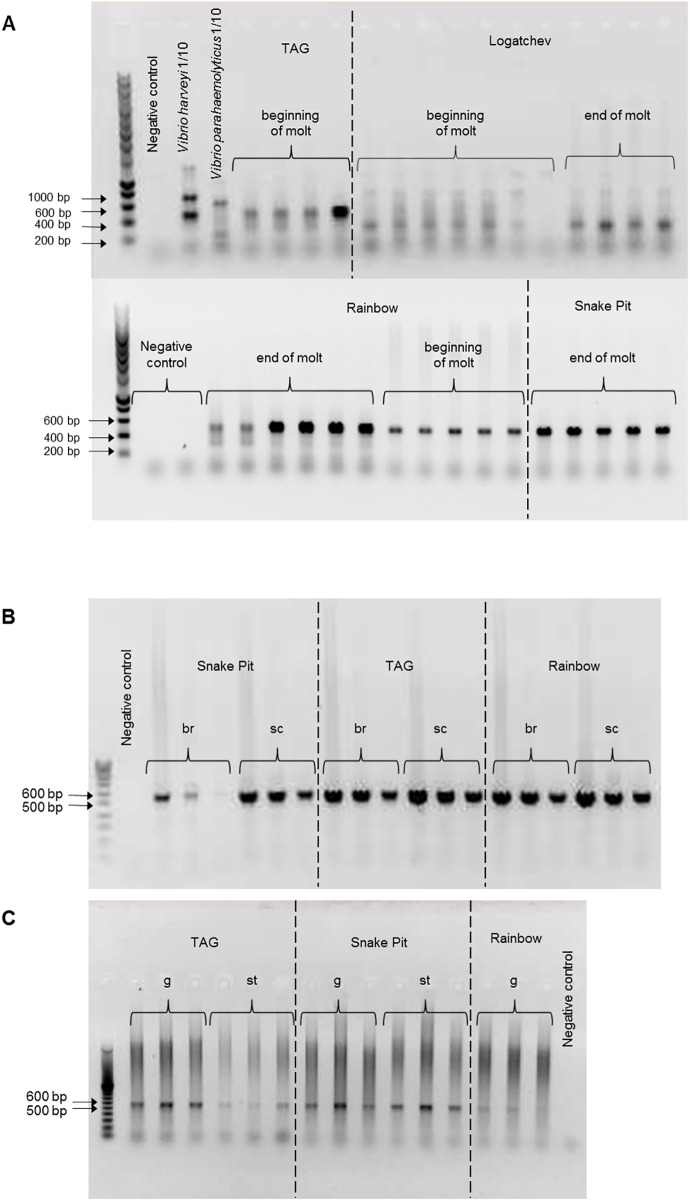
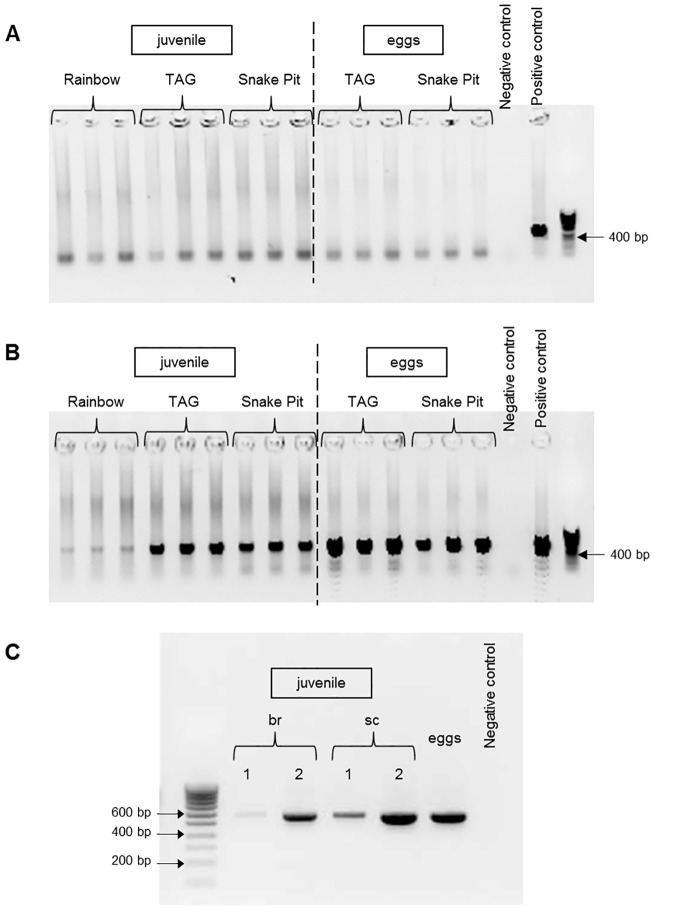
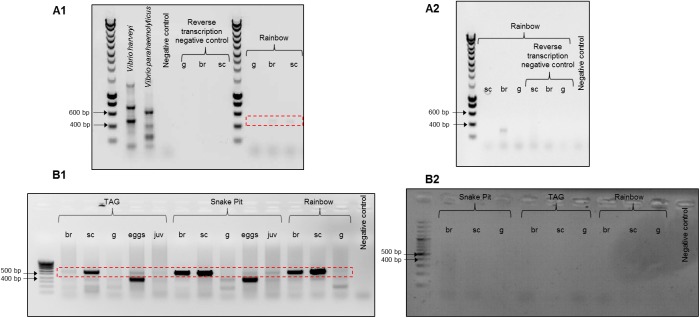
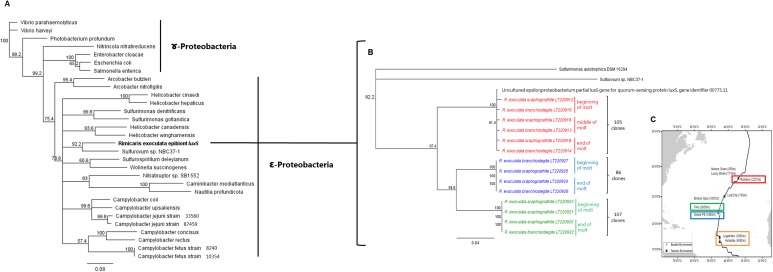
Rimicaris exoculata is a caridean shrimp that dominates the fauna at several hydrothermal vent sites of the Mid-Atlantic Ridge. It has two distinct and stable microbial communities. One of these epibiontic bacterial communities is located in the shrimp gut and has a distribution and role that are poorly understood. The second colonizes its enlarged gill chamber and is involved in host nutrition. It is eliminated after each molt, and has colonization processes reminiscent of those of a biofilm. The presence and expression of genes usually involved in quorum sensing (QS) were then studied. At four sites, Rainbow, TAG, Snake Pit and Logatchev, two lux genes were identified in the R. exoculata epibiontic community at different shrimp molt stages and life stages. RT-PCR experiments highlighted lux gene expression activity at TAG, Snake Pit and Rainbow vent sites. Their potential QS activity and their possible roles in epibiont colonization processes are discussed. Moreover, phylogenetic analysis has shown the presence of three clades for luxS (Epsilonproteobacteria) and four clades for luxR (Gammaproteobacteria) genes, each clade being restricted to a single site. These genes are more divergent than the 16S rRNA one. They could therefore be used as biogeographical genetic markers.
长眼柄糠虾(Rimicaris exoculata)是一种十足目虾类,在大西洋中脊的多个热液喷口区域的动物群落中占主导地位。它有两个不同且稳定的微生物群落。其中一个体表共生细菌群落位于虾的肠道内,其分布和作用尚不清楚。第二个群落定殖在其扩大的鳃腔中,并参与宿主营养。每次蜕皮后这个群落都会被清除,其定殖过程让人联想到生物膜的定殖过程。随后研究了通常参与群体感应(QS)的基因的存在和表达情况。在彩虹、TAG、蛇坑和洛加乔夫这四个地点,在不同蜕皮阶段和生命阶段的长眼柄糠虾体表共生群落中鉴定出了两个lux基因。RT-PCR实验突出了TAG、蛇坑和彩虹喷口区域lux基因的表达活性。讨论了它们潜在的群体感应活性及其在体表共生定殖过程中可能发挥的作用。此外,系统发育分析表明,luxS基因(ε-变形菌纲)存在三个进化枝,luxR基因(γ-变形菌纲)存在四个进化枝,每个进化枝都局限于一个地点。这些基因比16S rRNA基因的差异更大。因此,它们可以用作生物地理学遗传标记。