Goronzy Jörg J, Weyand Cornelia M
Department of Medicine, Stanford University School of Medicine, Stanford, CA 94305, USA; Department of Medicine, Palo Alto Veterans Administration Health Care System, Palo Alto, CA 94304, USA.
Immunity. 2017 Mar 21;46(3):364-378. doi: 10.1016/j.immuni.2017.03.010.
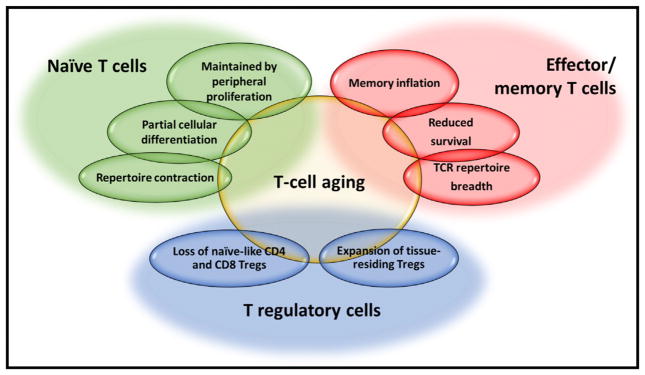
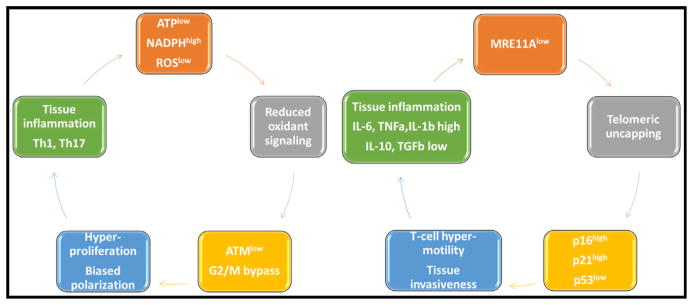
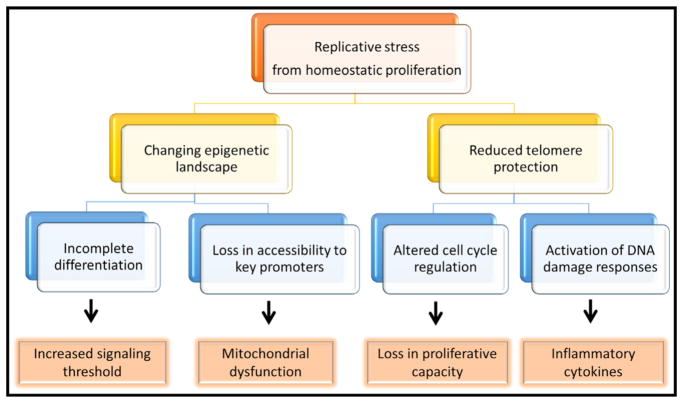
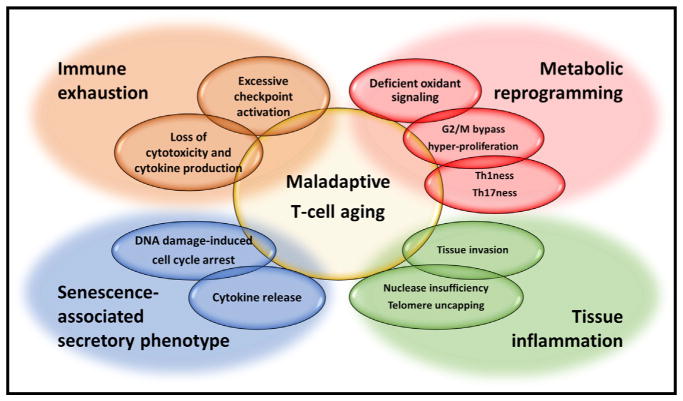
Throughout life, the T cell system adapts to shifting resources and demands, resulting in a fundamentally restructured immune system in older individuals. Here we review the cellular and molecular features of an aged immune system and discuss the trade-offs inherent to these adaptive mechanisms. Processes include homeostatic proliferation that maintains compartment size at the expense of partial loss in stemness and incomplete differentiation and the activation of negative regulatory programs, which constrain effector T cell expansion and prevent increasing oligoclonality but also interfere with memory cell generation. We propose that immune failure occurs when adaptive strategies developed by the aging T cell system fail and also discuss how, in some settings, the programs associated with T cell aging culminates in a maladaptive response that directly contributes to chronic inflammatory disease.
在整个生命过程中,T细胞系统会适应不断变化的资源和需求,导致老年人的免疫系统发生根本性的重组。在此,我们综述了衰老免疫系统的细胞和分子特征,并讨论了这些适应性机制所固有的权衡取舍。这些过程包括稳态增殖,它以干细胞特性的部分丧失和不完全分化为代价来维持细胞库大小,以及负调控程序的激活,这限制了效应T细胞的扩增并防止寡克隆性增加,但也会干扰记忆细胞的产生。我们提出,当衰老的T细胞系统所发展出的适应性策略失败时,就会发生免疫功能衰退,并且还讨论了在某些情况下,与T细胞衰老相关的程序如何最终导致一种适应不良的反应,直接促成慢性炎症性疾病。