The Liggins Institute, University of Auckland, 85 Park Road, Grafton, Auckland, New Zealand.
Tropical Medicine Research Institute, The University of the West Indies, Mona, Kingston 7, Jamaica.
EBioMedicine. 2017 Apr;18:274-280. doi: 10.1016/j.ebiom.2017.03.001. Epub 2017 Mar 8.
Severe acute malnutrition (SAM) in infants may present as one of two distinct syndromic forms: non-edematous (marasmus), with severe wasting and no nutritional edema; or edematous (kwashiorkor) with moderately severe wasting. These differences may be related to developmental changes prior to the exposure to SAM and phenotypic changes appear to persist into adulthood with differences between the two groups. We examined whether the different response to SAM and subsequent trajectories may be explained by developmentally-induced epigenetic differences.
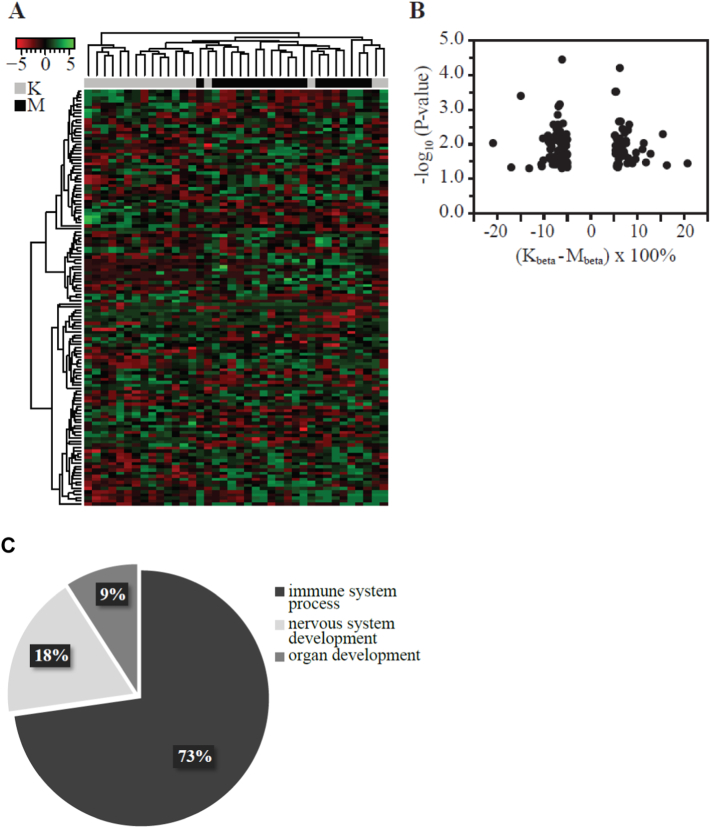
We extracted genomic DNA from muscle biopsies obtained from adult survivors of kwashiorkor (n=21) or marasmus (n=23) and compared epigenetic profiles (CpG methylation) between the two groups using the Infinium® 450K BeadChip array.
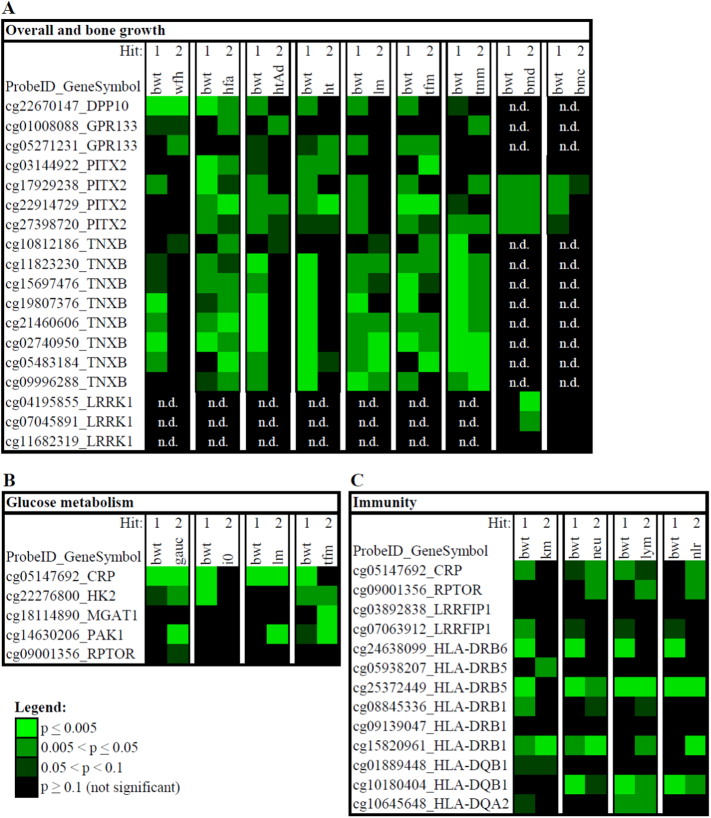
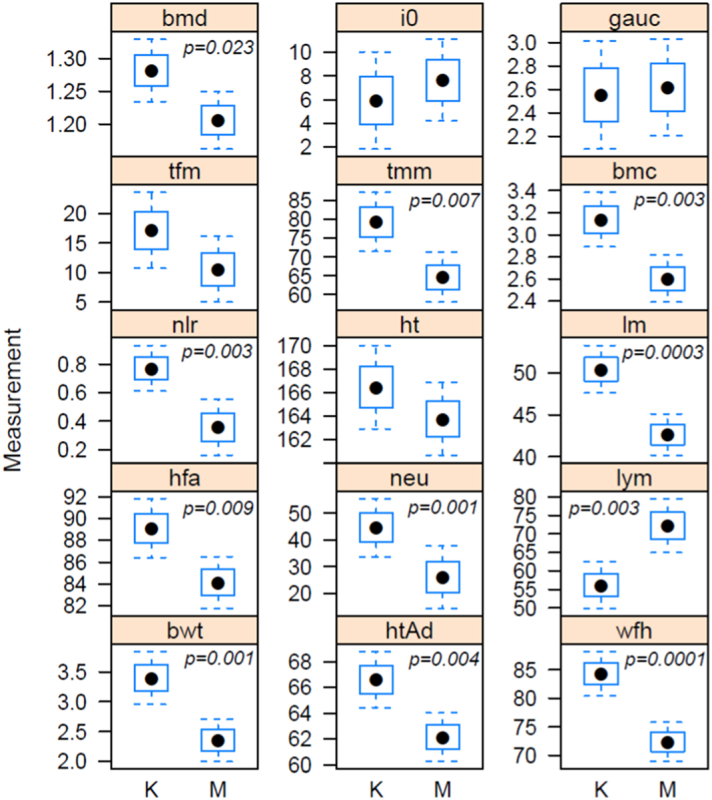
We found significant differences in methylation of CpG sites from 63 genes in skeletal muscle DNA. Gene ontology studies showed significant differential methylation of genes in immune, body composition, metabolic, musculoskeletal growth, neuronal function and cardiovascular pathways, pathways compatible with the differences in the pathophysiology of adult survivors of SAM.
These findings suggest persistent developmental influences on adult physiology in survivors of SAM. Since children who develop marasmus have lower birth weights and after rehabilitation have different intermediary metabolism, these studies provide further support for persistent developmentally-induced phenomena mediated by epigenetic processes affecting both the infant response to acute malnutrition and later life consequences.
Supported by a Grant from the Bill and Melinda Gates Foundation (Global Health OPP1066846), Grand Challenge "Discover New Ways to Achieve Healthy Growth."
Previous research has shown that infants who develop either kwashiorkor or marasmus in response to SAM differ in birth weight and subsequently have different metabolic patterns in both infancy and adulthood.
This study demonstrates epigenetic differences in the skeletal muscle of adult survivors of marasmus versus kwashiorkor and these differences are in genes that may underlie the longer-term consequences.
These data are compatible with the different clinical responses to SAM arising from developmentally-induced epigenetic changes laid down largely before birth and provide evidence for the predictive adaptive response model operating in human development.
婴儿严重急性营养不良(SAM)可能表现为两种不同的综合征形式之一:非水肿型(消瘦型),严重消瘦且无营养性水肿;或水肿型(夸希奥科型),伴中度消瘦。这些差异可能与 SAM 暴露前的发育变化有关,表型变化似乎在成年后持续存在,两组之间存在差异。我们研究了 SAM 不同的反应和随后的发展轨迹是否可以用发育诱导的表观遗传差异来解释。
我们从夸希奥科型(n=21)或消瘦型(n=23)SAM 成年幸存者的肌肉活检中提取基因组 DNA,并使用 Infinium® 450K BeadChip 阵列比较两组之间的表观遗传谱(CpG 甲基化)。
我们在骨骼肌 DNA 中发现 63 个基因的 CpG 位点的甲基化存在显著差异。基因本体论研究表明,免疫、身体成分、代谢、肌肉骨骼生长、神经元功能和心血管途径的基因存在显著差异的甲基化,这些途径与 SAM 成年幸存者的病理生理学差异一致。
这些发现表明,SAM 幸存者的成人生理学存在持续的发育影响。由于发展为消瘦型的儿童出生体重较低,康复后中间代谢也不同,因此这些研究进一步支持了由表观遗传过程介导的持续发育诱导现象,这些现象既影响婴儿对急性营养不良的反应,也影响后期的生活后果。
比尔及梅琳达·盖茨基金会(全球健康 OPP1066846)资助,大挑战“探索实现健康成长的新途径”。
以前的研究表明,SAM 患儿中出现夸希奥科型或消瘦型的婴儿在出生体重上存在差异,随后在婴儿期和成年期的代谢模式也存在差异。
本研究在肌肉骨骼中发现了消瘦型和夸希奥科型 SAM 成年幸存者的表观遗传差异,这些差异存在于可能是长期后果基础的基因中。
这些数据与 SAM 不同的临床反应一致,这些反应源于出生前的发育诱导的表观遗传变化,并为人类发育中的预测适应性反应模型提供了证据。