Nagata Keiko, Kumata Keisuke, Nakayama Yuji, Satoh Yukio, Sugihara Hirotsugu, Hara Sayuri, Matsushita Michiko, Kuwamoto Satoshi, Kato Masako, Murakami Ichiro, Hayashi Kazuhiko
1 Division of Molecular Pathology, Department of Pathology, Faculty of Medicine, Tottori University , Yonago, Japan .
2 Division of Functional Genomics, Research Center for Bioscience and Technology, Tottori University , Yonago, Japan .
Viral Immunol. 2017 Apr;30(3):240-249. doi: 10.1089/vim.2016.0179. Epub 2017 Mar 23.
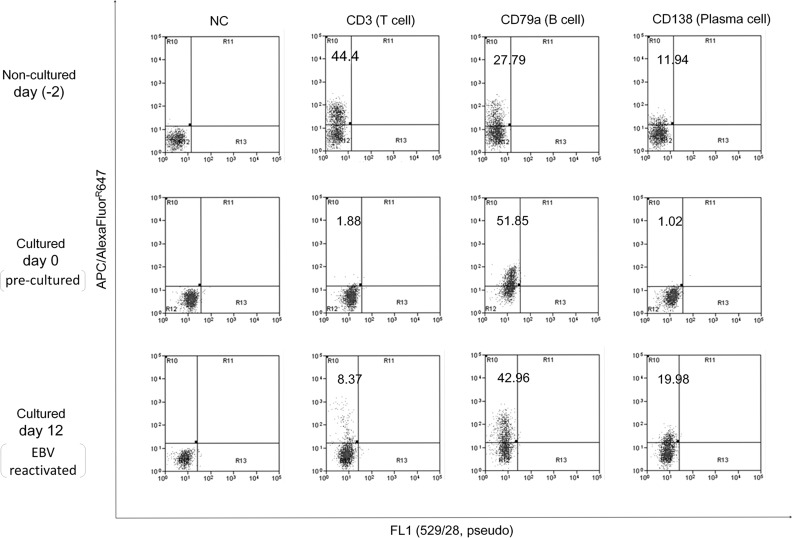
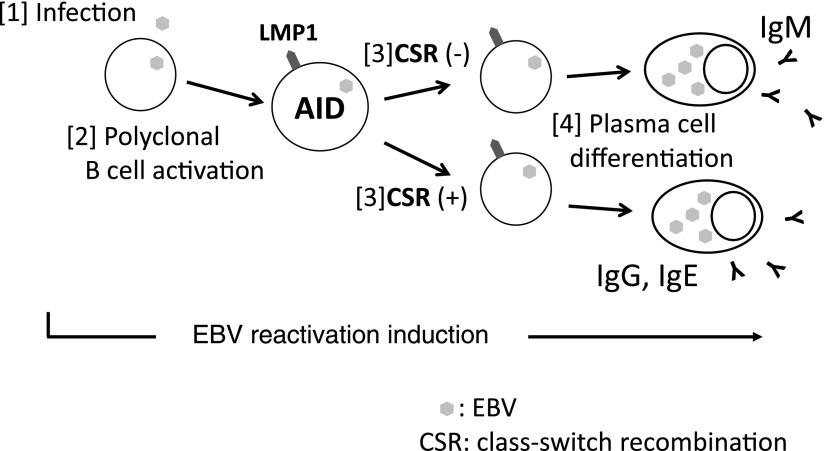
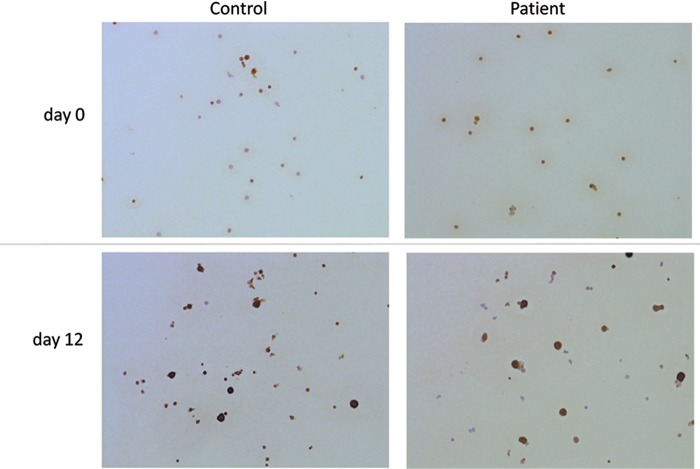
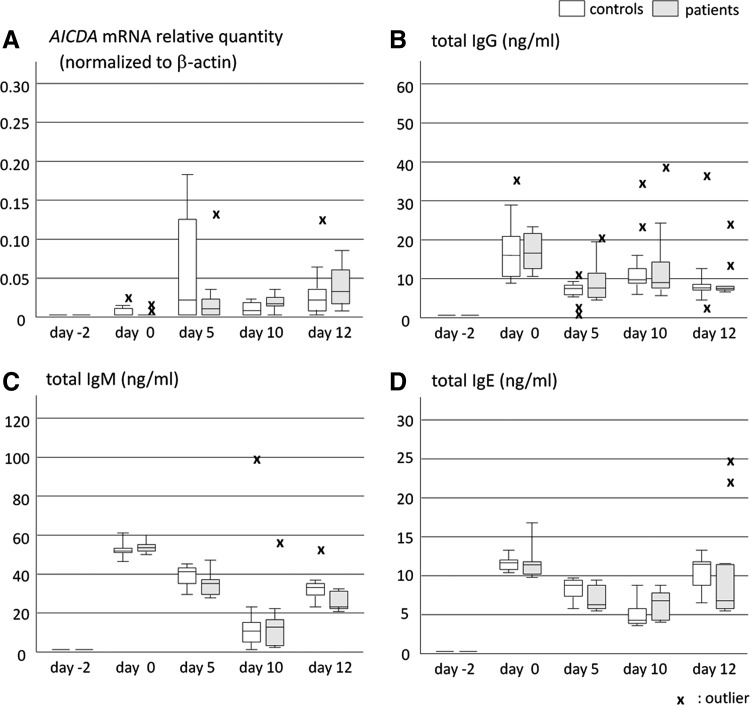
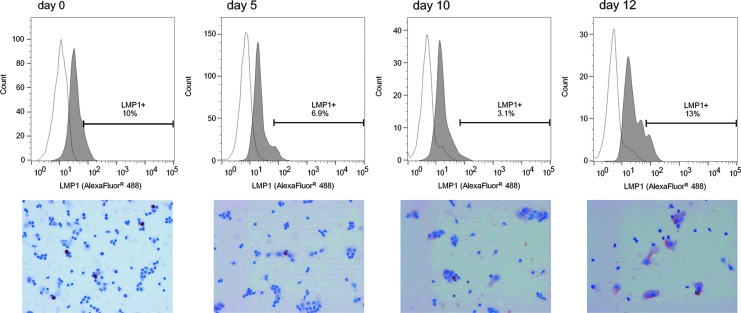
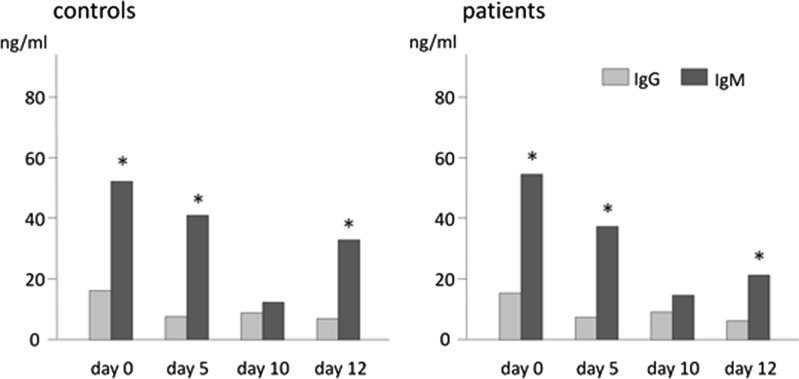
Graves' disease is an autoimmune disease that results in and is the most common cause of hyperthyroidism, and the reactivation of persisting Epstein-Barr virus (EBV) in B lymphocytes induces the differentiation of host B cells into plasma cells. We previously reported that some EBV-infected B cells had thyrotropin receptor antibodies (TRAbs) as surface immunoglobulins (Igs), and EBV reactivation induced these TRAb+EBV+ cells to produce TRAbs. EBV reactivation induces Ig production from host B cells. The purpose of the present study was to examine total Ig productions from B cell culture fluids and to detect activation-induced cytidine deaminase (AID), nuclear factor kappa B (NF-κB), and EBV latent membrane protein (LMP) 1 in culture B cells during EBV reactivation induction and then we discussed the mechanisms of EBV reactivation-induced Ig production in relation to autoimmunity. We showed that the EBV reactivation induces the production of every isotype of Ig and suggested that the Ig production was catalyzed by AID through LMP1 and NF-κB. The results that the amount of IgM was significantly larger compared with IgG suggested the polyclonal B cell activation due to LMP1. We proposed the pathway of EBV reactivation induced Ig production; B cells newly infected with EBV are activated by polyclonal B cell activation and produce Igs through plasma cell differentiation induced by EBV reactivation. LMP1-induced AID enabled B cells to undergo class-switch recombination to produce every isotype of Ig. According to this mechanism, EBV rescues autoreactive B cells to produce autoantibodies, which contribute to the development and exacerbation of autoimmune diseases.
格雷夫斯病是一种自身免疫性疾病,是甲状腺功能亢进症的最常见病因,B淋巴细胞中持续存在的EB病毒(EBV)重新激活会诱导宿主B细胞分化为浆细胞。我们之前报道过,一些受EBV感染的B细胞具有促甲状腺激素受体抗体(TRAbs)作为表面免疫球蛋白(Igs),EBV重新激活会诱导这些TRAb+EBV+细胞产生TRAbs。EBV重新激活会诱导宿主B细胞产生Ig。本研究的目的是检测B细胞培养液中的总Ig产生情况,并在EBV重新激活诱导过程中检测培养的B细胞中的激活诱导胞苷脱氨酶(AID)、核因子κB(NF-κB)和EBV潜伏膜蛋白(LMP)1,然后我们讨论了EBV重新激活诱导Ig产生与自身免疫相关的机制。我们发现EBV重新激活会诱导产生各种Ig亚型,并表明Ig的产生是由AID通过LMP1和NF-κB催化的。IgM量与IgG相比显著更大的结果提示了由于LMP1导致的多克隆B细胞激活。我们提出了EBV重新激活诱导Ig产生的途径;新感染EBV的B细胞通过多克隆B细胞激活而被激活,并通过EBV重新激活诱导的浆细胞分化产生Igs。LMP1诱导的AID使B细胞能够进行类别转换重排以产生各种Ig亚型。根据这一机制,EBV拯救自身反应性B细胞以产生自身抗体,这有助于自身免疫性疾病的发展和加重。