Lange Margaret J, Nguyen Phuong D M, Callaway Mackenzie K, Johnson Marc C, Burke Donald H
Department of Molecular Microbiology & Immunology, University of Missouri, Columbia, MO 65211, USA.
Bond Life Sciences Center, University of Missouri, Columbia, MO 65211, USA.
Nucleic Acids Res. 2017 Jun 2;45(10):6087-6097. doi: 10.1093/nar/gkx155.
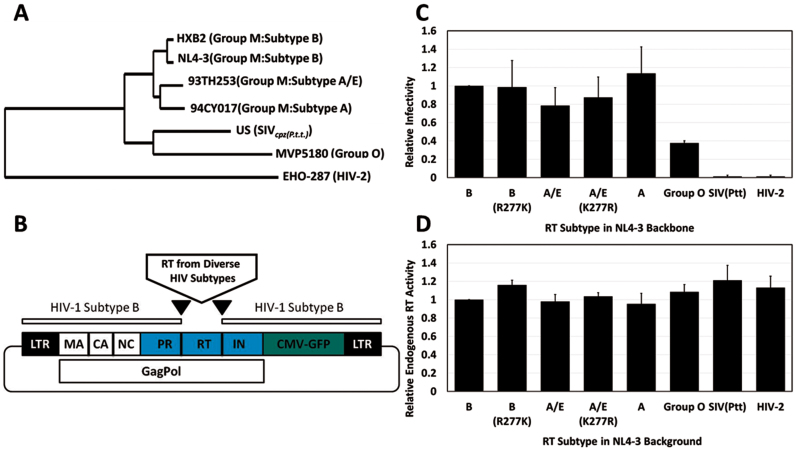
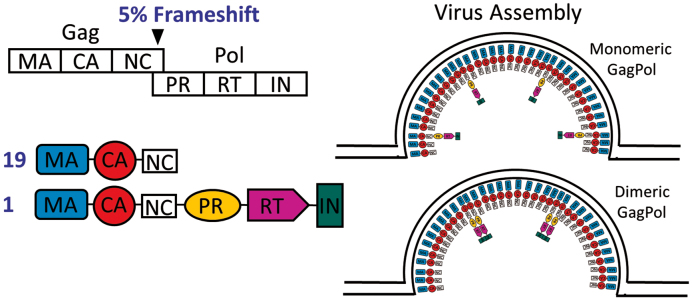
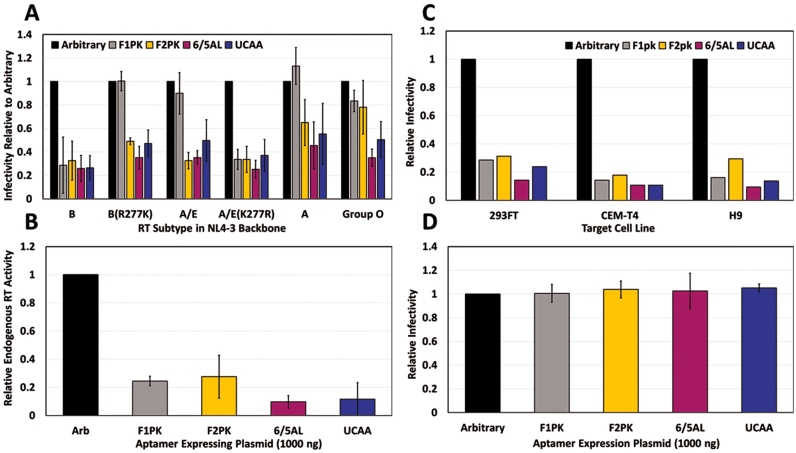
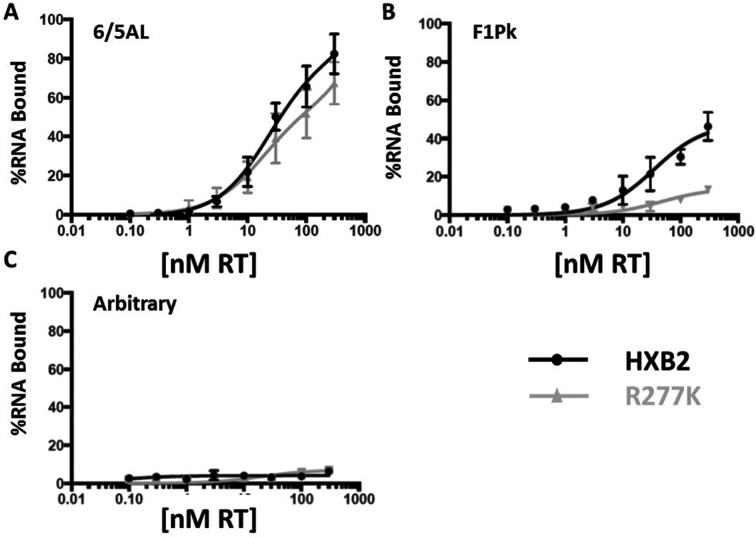
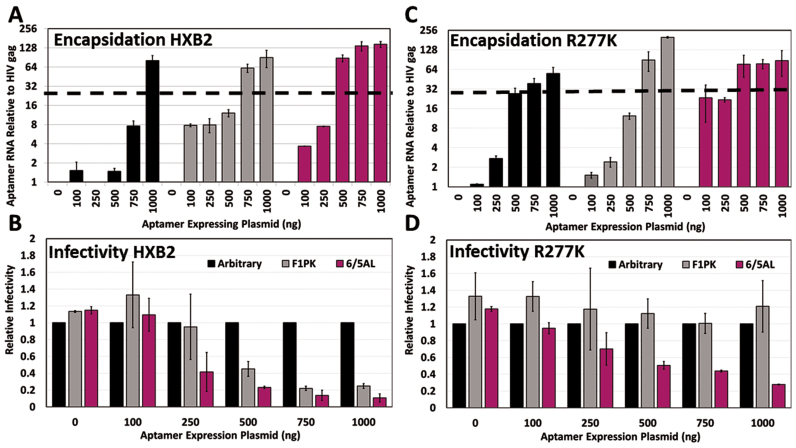
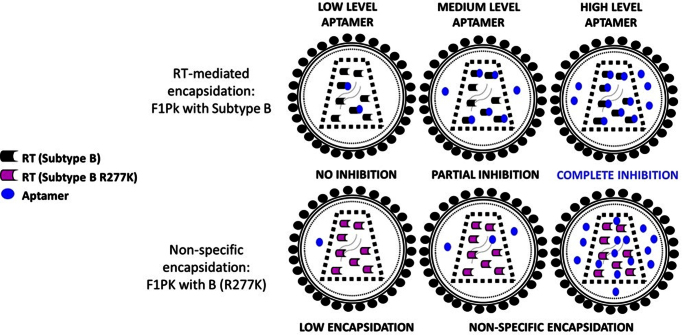
RNA aptamers that bind HIV-1 reverse transcriptase (RT) inhibit HIV-1 replication, but little is known about potential aptamer-specific viral resistance. During replication, RT interacts with diverse nucleic acids. Thus, the genetic threshold for eliciting resistance may be high for aptamers that make numerous contacts with RT. To evaluate the impact of RT-aptamer binding specificity on replication, we engineered proviral plasmids encoding diverse RTs within the backbone of HIV-1 strain NL4-3. Viruses inhibited by pseudoknot aptamers were rendered insensitive by a naturally occurring R277K variant, providing the first demonstration of aptamer-specific resistance in cell culture. Naturally occurring, pseudoknot-insensitive viruses were rendered sensitive by the inverse K277R mutation, establishing RT as the genetic locus for aptamer-mediated HIV-1 inhibition. Non-pseudoknot RNA aptamers exhibited broad-spectrum inhibition. Inhibition was observed only when virus was produced in aptamer-expressing cells, indicating that encapsidation is required. HIV-1 suppression magnitude correlated with the number of encapsidated aptamer transcripts per virion, with saturation occurring around 1:1 stoichiometry with packaged RT. Encapsidation specificity suggests that aptamers may encounter dimerized GagPol in the cytosol during viral assembly. This study provides new insights into HIV-1's capacity to escape aptamer-mediated inhibition, the potential utility of broad-spectrum aptamers to overcome resistance, and molecular interactions that occur during viral assembly.
与HIV-1逆转录酶(RT)结合的RNA适配体可抑制HIV-1复制,但对于潜在的适配体特异性病毒抗性了解甚少。在复制过程中,RT与多种核酸相互作用。因此,对于与RT有大量接触的适配体而言,引发抗性的遗传阈值可能很高。为了评估RT-适配体结合特异性对复制的影响,我们构建了在HIV-1 NL4-3毒株骨架内编码多种RT的前病毒质粒。被假结适配体抑制的病毒对天然存在的R277K变体不敏感,这首次在细胞培养中证明了适配体特异性抗性。天然存在的对假结不敏感的病毒通过反向K277R突变变得敏感,确定RT为适配体介导的HIV-1抑制的遗传位点。非假结RNA适配体表现出广谱抑制作用。仅当在表达适配体的细胞中产生病毒时才观察到抑制作用,这表明需要进行衣壳化。HIV-1的抑制程度与每个病毒粒子中衣壳化的适配体转录本数量相关,在与包装的RT的化学计量比约为1:1时达到饱和。衣壳化特异性表明,在病毒组装过程中,适配体可能在细胞质中遇到二聚化的GagPol。这项研究为HIV-1逃避适配体介导的抑制的能力、广谱适配体克服抗性的潜在效用以及病毒组装过程中发生的分子相互作用提供了新的见解。