Bury Katarzyna, Wegrzyn Katarzyna, Konieczny Igor
Department of Molecular and Cellular Biology, Intercollegiate Faculty of Biotechnology of University of Gdansk and Medical University of Gdansk, Abrahama 58, 80-308 Gdansk, Poland.
Nucleic Acids Res. 2017 Apr 20;45(7):3953-3966. doi: 10.1093/nar/gkx166.
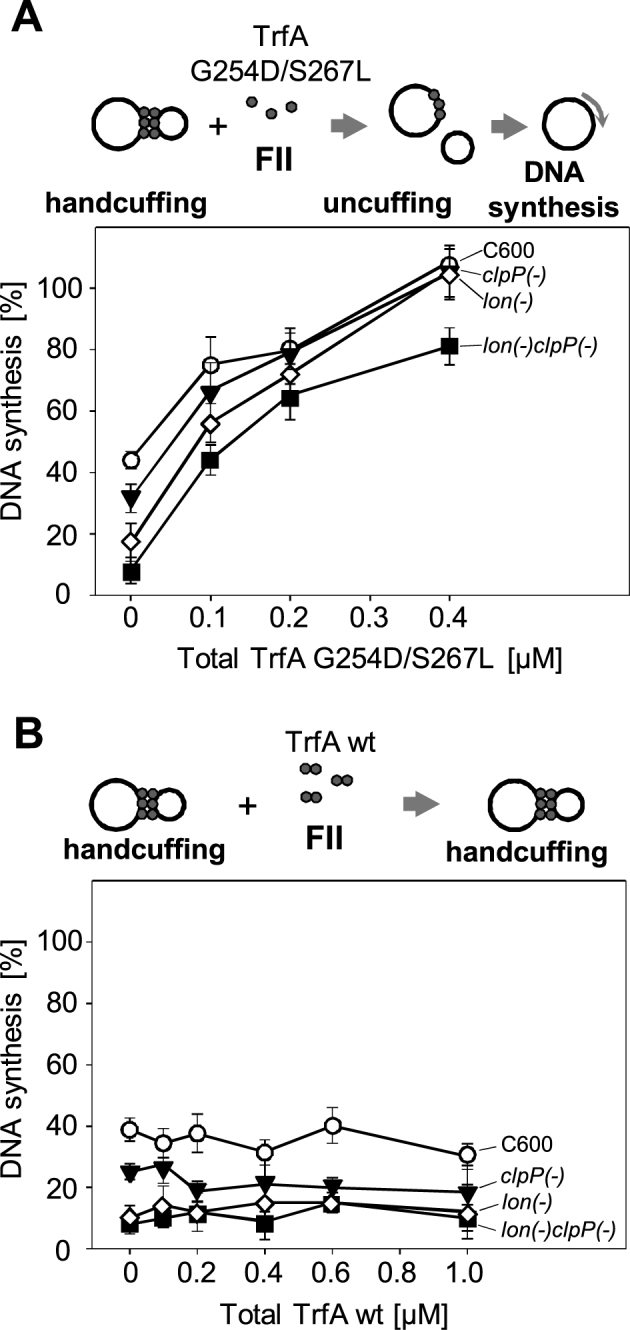
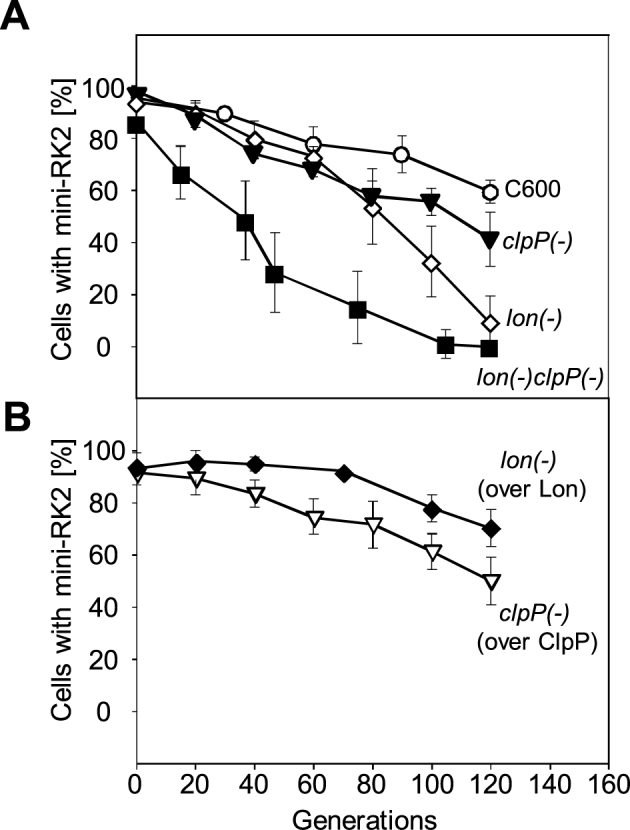
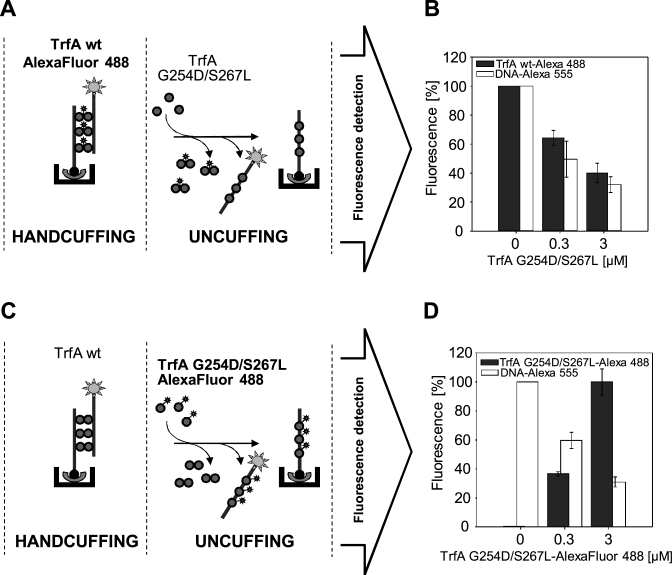
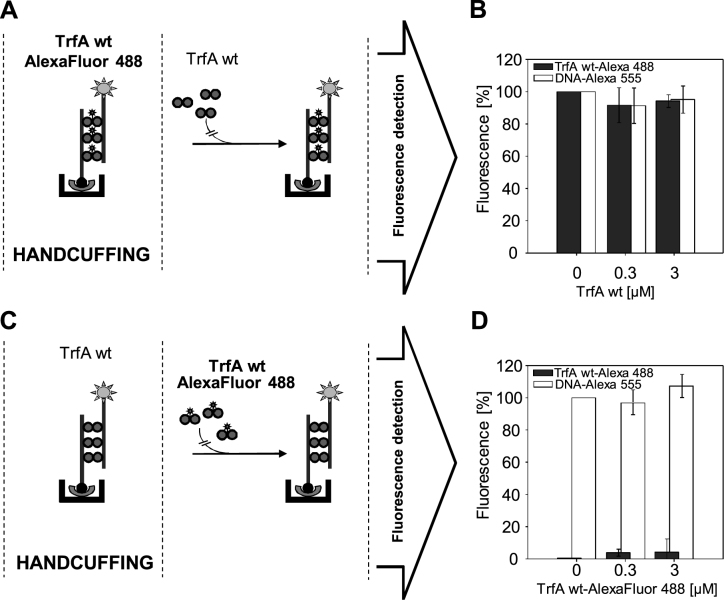
Specific nucleoprotein complexes are formed strictly to prevent over-initiation of DNA replication. An example of those is the so-called handcuff complex, in which two plasmid molecules are coupled together with plasmid-encoded replication initiation protein (Rep). In this work, we elucidate the mechanism of the handcuff complex disruption. In vitro tests, including dissociation progress analysis, demonstrate that the dimeric variants of plasmid RK2 replication initiation protein TrfA are involved in assembling the plasmid handcuff complex which, as we found, reveals high stability. Particular proteases, namely Lon and ClpAP, disrupt the handcuff by degrading TrfA, thus affecting plasmid stability. Moreover, our data demonstrate that TrfA monomers are able to dissociate handcuffed plasmid molecules. Those monomers displace TrfA molecules, which are involved in handcuff formation, and through interaction with the uncoupled plasmid replication origins they re-initiate DNA synthesis. We discuss the relevance of both Rep monomers and host proteases for plasmid maintenance under vegetative and stress conditions.
特定的核蛋白复合物严格形成以防止DNA复制的过度起始。其中一个例子就是所谓的手铐复合物,在该复合物中,两个质粒分子与质粒编码的复制起始蛋白(Rep)结合在一起。在这项工作中,我们阐明了手铐复合物破坏的机制。包括解离进程分析在内的体外试验表明,质粒RK2复制起始蛋白TrfA的二聚体变体参与了质粒手铐复合物的组装,正如我们所发现的,该复合物具有很高的稳定性。特定的蛋白酶,即Lon和ClpAP,通过降解TrfA破坏手铐复合物,从而影响质粒稳定性。此外,我们的数据表明,TrfA单体能够解离被手铐锁住的质粒分子。这些单体取代参与手铐形成的TrfA分子,并通过与未结合的质粒复制起点相互作用重新启动DNA合成。我们讨论了Rep单体和宿主蛋白酶在营养和应激条件下对质粒维持的相关性。