Jung Jaewook, Moon Jongho, Lee Donghoon, Won Dongho
Department of Computer Engineering, Sungkyunkwan University, 2066 Seoburo, Suwon, Gyeonggido 440-746, Korea.
Sensors (Basel). 2017 Mar 21;17(3):644. doi: 10.3390/s17030644.
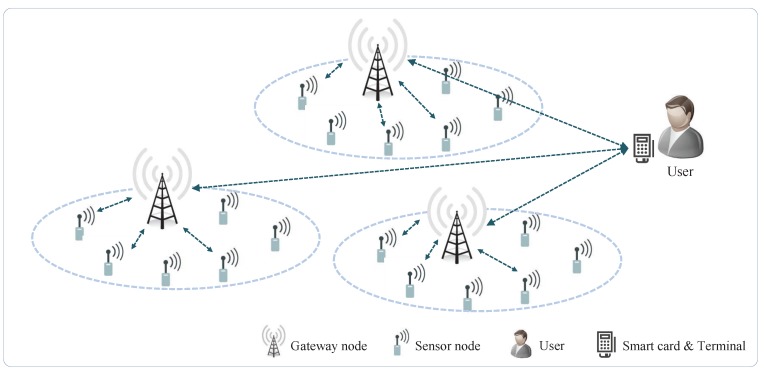
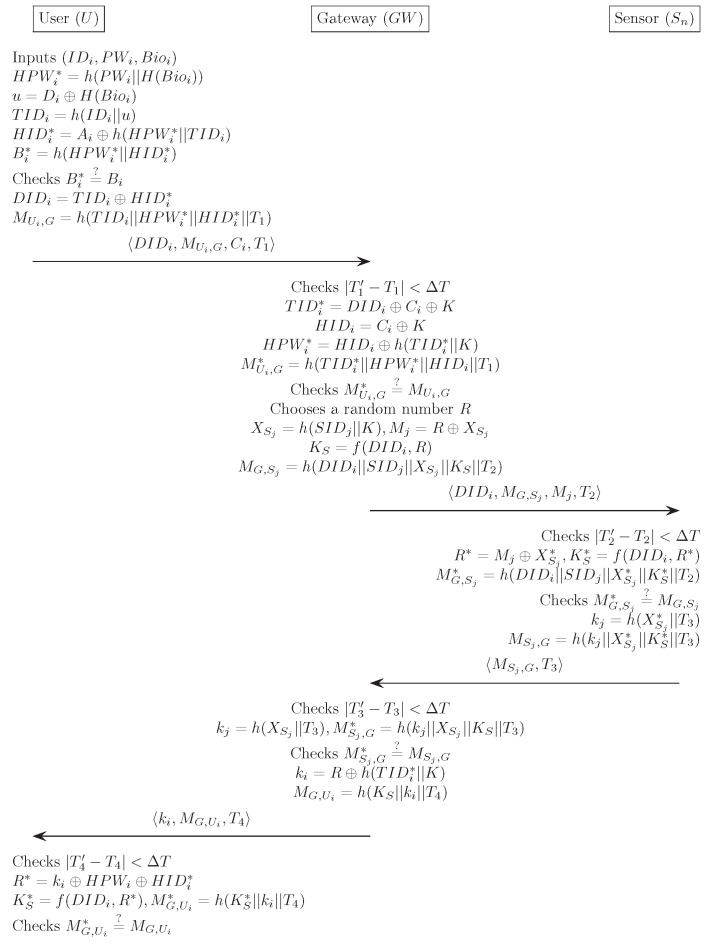
At present, users can utilize an authenticated key agreement protocol in a Wireless Sensor Network (WSN) to securely obtain desired information, and numerous studies have investigated authentication techniques to construct efficient, robust WSNs. Chang et al. recently presented an authenticated key agreement mechanism for WSNs and claimed that their authentication mechanism can both prevent various types of attacks, as well as preserve security properties. However, we have discovered that Chang et al's method possesses some security weaknesses. First, their mechanism cannot guarantee protection against a password guessing attack, user impersonation attack or session key compromise. Second, the mechanism results in a high load on the gateway node because the gateway node should always maintain the verifier tables. Third, there is no session key verification process in the authentication phase. To this end, we describe how the previously-stated weaknesses occur and propose a security-enhanced version for WSNs. We present a detailed analysis of the security and performance of our authenticated key agreement mechanism, which not only enhances security compared to that of related schemes, but also takes efficiency into consideration.
目前,用户可以在无线传感器网络(WSN)中使用经过认证的密钥协商协议来安全地获取所需信息,并且许多研究已经探讨了构建高效、健壮的无线传感器网络的认证技术。Chang等人最近提出了一种用于无线传感器网络的认证密钥协商机制,并声称他们的认证机制既可以防止各种类型的攻击,又能保持安全属性。然而,我们发现Chang等人的方法存在一些安全弱点。首先,他们的机制无法保证抵御密码猜测攻击、用户假冒攻击或会话密钥泄露。其次,该机制会给网关节点带来高负载,因为网关节点需要始终维护验证表。第三,认证阶段没有会话密钥验证过程。为此,我们描述了上述弱点是如何出现的,并提出了一个针对无线传感器网络的安全增强版本。我们对我们的认证密钥协商机制的安全性和性能进行了详细分析,该机制不仅与相关方案相比增强了安全性,还考虑了效率。